
Archaeology
75 episodes

#6150: Under the Other Sticky Notes
A bird, a fridge, a fan, and one red light that nobody remembers turning on. The least professional episode we've ever made.
#6081: What If You Stripped Israel Down to Its Original Architecture?
The four-room house, the volute capital, and the question of whether an indigenous Judean architecture can be recovered — or only reinvented.

#5993: Why Every Renovation Show Looks the Same
Shiplap, white quartz, open plan — why does every renovation show produce the identical room, and who's really choosing it?

#5976: What North of North Assumes You Know About Inuit
A crash course in Inuit history, language, and modern life — the context the show assumes you already have.
#5891: Four Ways Humanity Kept Records for 1,200 Years
The Shōsōin never burned. The Vatican lost a third of its archive. The Geniza kept 400,000 fragments by accident. Four preservation strategies.
#5846: Who Tells a Star the Show Is a Bad Idea?
Céline Dion's Paris return split critics down the middle — and one review got punished harder than the show itself.

#5836: Counting Every Letter: Ancient Text Integrity Systems
Before checksums existed, scribes counted every letter of the Torah. How did ancient error-correction actually work?
#5828: Punched Cards: The 200-Year Reign of Cardboard Computing
From Jacquard's silk looms to NSA key tapes, how holes in cardboard ran the world for two centuries — and why we can still read them.
#5824: Herod's Four Walls: Why Only One Became the Kotel
Herod built four retaining walls around the Temple Mount. Three survive today — but only one became Judaism's holiest prayer site. Here's why.
#5803: Who Built Jerusalem's Old City Walls?
The stone ring around Jerusalem's Old City is younger than you think — and the legend about its architects is wrong.
#5801: Who Were the Canaanites, Hittites, and Israelites?
The Bible's lists of ancient peoples are theological claims, not census records — and the Hittites are two entirely different peoples wearing one n...
#5800: A Friday in 700 BCE Jerusalem
What did an ordinary Friday actually look like in First Temple Jerusalem? Grinding stones, stew, and intestinal worms.
#5684: Who Built the Dome of the Rock?
The stones are documented. The dirt underneath them has never been dug. Why the Temple Mount is archaeology's biggest open question.
#5642: What Archaeology Says About the Bible
From the Tel Dan Stele to the missing First Temple — what secular archaeology has actually confirmed, disputed, and refuted in the Bible.
#5590: What Alaskan Crab Deckhands Actually Do
18-hour shifts, 800-pound steel pots, and a pay structure that's basically a lottery ticket. The real job behind the TV show.
#5494: How Ancient Jerusalem Outgrew Its Own Walls
Jerusalem's Old City walls are Ottoman, not ancient — and the original city sits outside them. Tracing 4,000 years of expansion and contraction.

#5493: Jerusalem Before Sukkot: Reconstructing the Pilgrim City
What did Jerusalem feel like to residents when Sukkot tripled the city? Archaeology and ancient sources reconstruct the transformation.
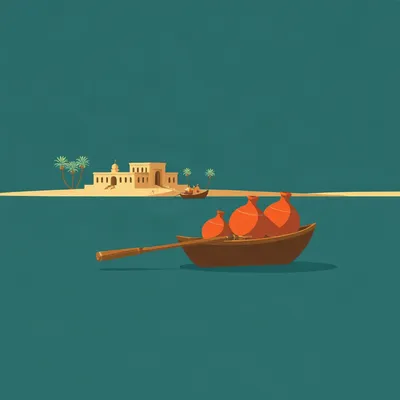
#5353: Egypt's 700,000-Pilgrim Party at Bubastis
Herodotus called it Egypt's biggest festival — a boozy Nile flotilla of 700,000 pilgrims bound for the cat goddess's city.
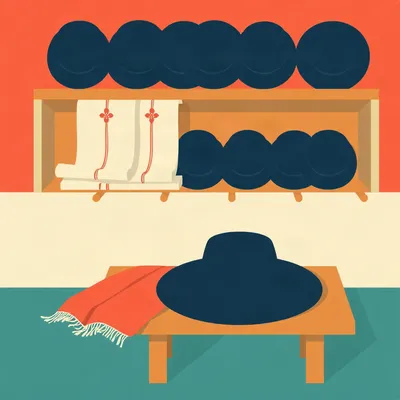
#5352: What Do You Picture When You Hear "Religious Jew"?
Most religious Jews don't wear black hats and side curls. So why is that the image everyone pictures?
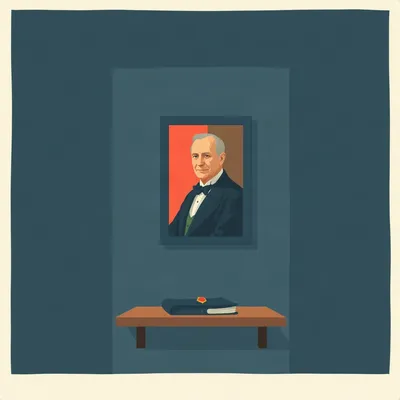
#5297: How North Korea Built a God: Titles, Pins, and Portrait Dust
Portraits you must dust daily, lapel pins over your heart, a calendar that starts at a leader's birth — how the DPRK manufactured devotion.

#5262: How the Talmud Outlived Every Book Burning
From the 1242 Paris burning to Sefaria's AI agents, the chain of transmission was never in the books — it was in the network.

#5241: How the Library of Congress Became a Universal Library
A fire, a retired book collector, and a copyright law nobody thought through — how three accidents built the world's largest library.
#5224: When Hands Learned to Cut: Engraving and the First Metals
Half-million-year-old shell grooves, 9,000-year-old copper beads, and the feedback loop that turned cutting lines into an entire civilization.

#5140: Teletext: The One-Way Internet That Won't Die
Before dial-up, there was teletext — scores hidden in TV signals. Why it felt like the internet, and why the Dutch never turned it off.