
History of Technology
292 episodes
#6156: Why Civilization Waited 12,000 Years to Take Off
Ancient engineers built geared computers and self-healing concrete. So why did the industrial takeoff wait until 1760?
#6152: Whatever Happened to the One-Time Pad?
The math is unbreakable. The humans are the problem. Tracing the one-time pad from 1882 codebooks to quantum key distribution.
#6110: The Chatbot OpenAI Almost Shelved
Instruction models existed for months. Then a rumour about Anthropic pushed OpenAI to ship a chat box in two weeks.
#6102: Project Cybersyn: Chile's 1972 Telex Economy
Chile ran a national economy on telex machines and hand-drawn slides fifty years before chatbots. What actually worked?

#6081: What If You Stripped Israel Down to Its Original Architecture?
The four-room house, the volute capital, and the question of whether an indigenous Judean architecture can be recovered — or only reinvented.
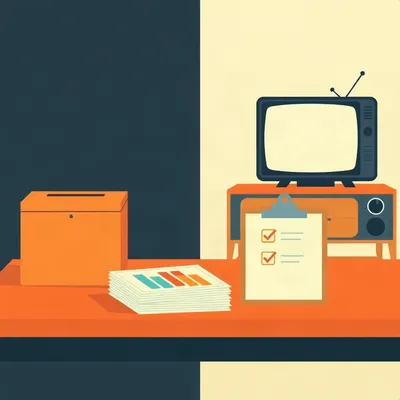
#6075: Israel's Pollsters: Who Calls the Race Before You Vote
Nine days out, a tour of Israel's polling culture — the pollsters who matter, the famous misses, and the numbers to watch on election night.
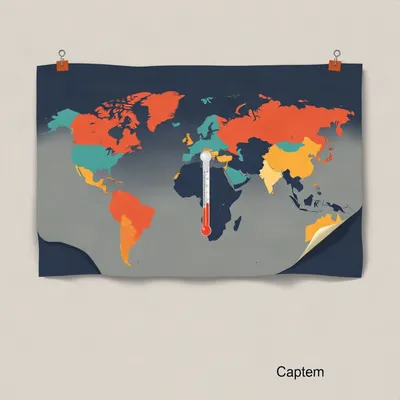
#6053: Köppen's 30 Boxes vs. a Changing Planet
Köppen squeezes the planet into 30 boxes — and the hottest places can't change class, even as they heat. What the map hides.
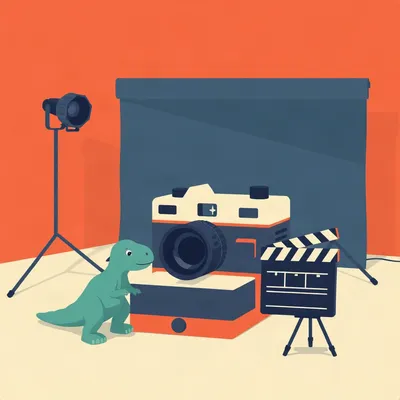
#5987: The LEGO Cam: When LEGO Gave Kids a Movie Studio
It won Toy of the Year and flopped anyway. The LEGO Studios set that handed kids a camera, an editing suite, and a dinosaur.

#5979: Why We Shake Hands: A 2,800-Year History
The handshake wasn't inevitable — it won. From Assyrian treaty reliefs to Quaker radicalism, how one gesture conquered the world.
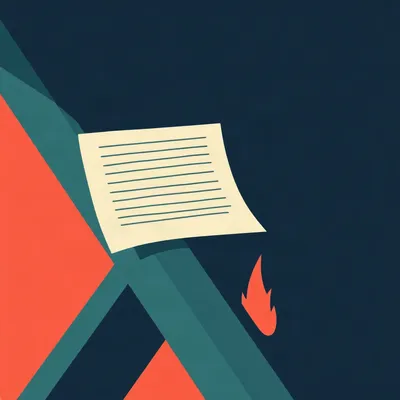
#5932: What the 1964 White Paper on the Twin Towers Actually Said
Three pages from 1964 concluded a 707 impact would cause only local damage. Fire was never in the analysis.

#5928: Believing Without Belonging: The Religion of One
A growing crowd believes in God but belongs to no tradition. The research has a name for them — and the numbers are messier than you'd think.

#5924: Living Among the Dead: Cemetery Housing, Cairo to Manila
Cairo's City of the Dead holds roughly a million residents. Manila North, six thousand. Nobody has ever counted the global total.
#5920: The Psychiatrist in Those 1950s Patient Films
A drug salesman's papers, a bathtub, and the 1950s interviews with Dr. Heinz Edgar Lehmann that still pull millions of views.

#5917: The Women Who Were Computers Before Computers Existed
Before machines did the math, people did — and most of them were women. Reconstructing the desk of the human computer.
#5906: Running a Company Like a Spy Agency
What if an ordinary company ran on intelligence-style need-to-know? Oak Ridge and a 1977 CIA self-audit already ran the experiment.

#5891: Four Ways Humanity Kept Records for 1,200 Years
The Shōsōin never burned. The Vatican lost a third of its archive. The Geniza kept 400,000 fragments by accident. Four preservation strategies.
#5890: Fifteen Miles an Hour Through a Metal Pipe
Paris ran 427 km of pneumatic tube under its streets and moved 30 million messages a year. Then the fax machine replaced it.
#5887: Gears That Did Calculus: Mechanical Computers
From the Antikythera mechanism to battleship fire control, how gears and cams did real math — and why the approach never fully died.
#5886: From Leviticus to the Kilogram: Honest Scales
Ancient Athens had ten inspectors and a rock. The kilogram had one cylinder in a vault. Both were asking the same question.
#5885: The World's Oldest Software Still Running
From a 1958 Pentagon contract system to Voyager's 68KB computer, some software refuses to die. What's the oldest code still in production?
#5875: The Laminated Card Doctrine
We finally give the laminated card its own episode — the crash that started the checklist, the hospital numbers, and where the faith breaks.
#5849: Who Invented Computer Science—and Was It Ever a Trade?
The founders wanted a science of computation. We built a job credential instead—and the argument hasn't changed since 1968.
#5844: Five of the Buggiest Software Ever Shipped
Windows ME, Sonic '06, Big Rigs, and more — the software where the bugs weren't a problem, they were the product.

#5828: Punched Cards: The 200-Year Reign of Cardboard Computing
From Jacquard's silk looms to NSA key tapes, how holes in cardboard ran the world for two centuries — and why we can still read them.