
Natural and formal sciences: physics, chemistry, biology, earth science, and mathematics.
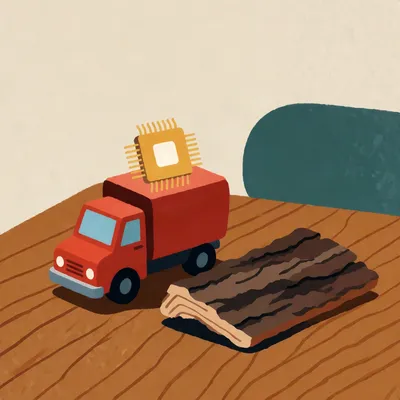
#6667: A Quantum Chip, a Toy Truck, and a Wild Giant Anteater
Wild giant anteaters use marked trees as a slow message board, and quantum entanglement cannot send a message without a classical channel.
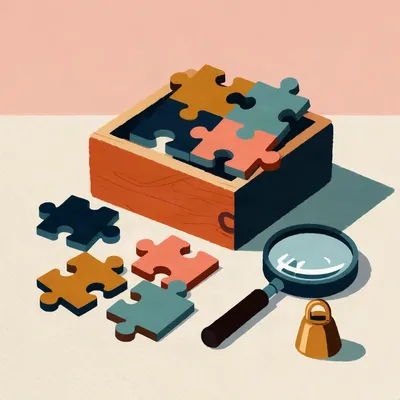
#6645: No Addictive Personality Type, Just Shared Traits
An analysis of 175 studies found neuroticism and urgency are linked to addiction, even though no single 'addictive personality' type exists.
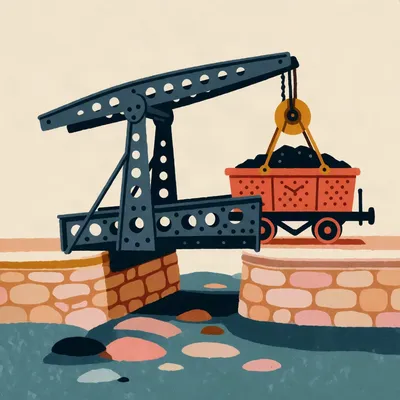
#6642: Why Brunel the Tortoise Refused a Meccano Drawbridge
An 86-year-old tortoise cut his commute from 26 minutes to 4 using a Meccano drawbridge, then figured out the counterweight and walked around.
#6607: How Water Dowsing Works Without Finding Water
In a German test, dowsers set their own 83% success threshold and scored 52.3%, barely above a coin flip.
#6589: Why Standing in Line Feels Longer Than Walking
Houston airport cut baggage complaints to near zero by making passengers walk six times farther, increasing total wait time.
#6505: Why Blanket Forts Beat Expensive Portable Vocal Booths
A blanket fort dampens room reflections for under eighty-five dollars, but no portable fabric rig can stop outside noise from entering.
#6490: What the Evidence on Daylight Saving Actually Shows
A foundational claim about permanent sleep debt from springing forward traces back to a study of just nine adults in Finland tracked for one week.
#6487: Turning Acoustic Physics into a Math Problem
A 7,200-microphone wall at DLR solves acoustic inverse problems using less power than a home stereo amplifier.
#6459: Why the Gaussian Distribution Fails in Plain Sight
A single trading day accounted for 78 percent of the kurtosis across ten thousand US stock market observations.
#6441: Why the Body Sets Its Own Thermostat High
A fever is not the body overheating; it is the hypothalamus resetting its own thermostat upward, rarely passing forty-one degrees Celsius.
#6440: Why We Learn Algebra and Overcalculate Pi
NASA navigates interplanetary probes using just fifteen decimal places of pi, leaving an error of half an inch over forty billion miles.
#6410: Why Morning Voice Happens and What Warming Up Does
Overnight, cilia slow down and mucus pools at the vocal folds, leaving voices stiff and prone to irritation.
#6405: Why Daily Singing Disappeared and How to Rebuild It
Danish composer C.E.F. Weyse designed 1837 morning songs specifically within a single octave so untrained citizens could sing them without straining.
#6395: Why 3M Primer 94 Sticks to Everything
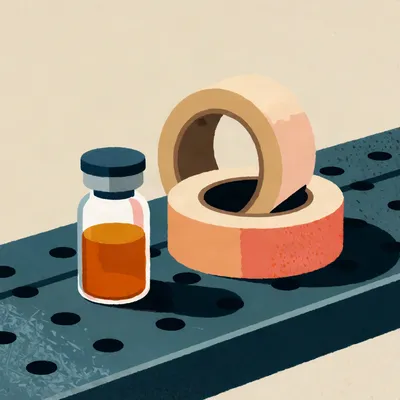
A tiny active payload of under six percent solids allows 3M Primer 94 to physically diffuse into low-surface-energy plastics like polypropylene.
#6386: Where Harmonizable Processes Actually Work
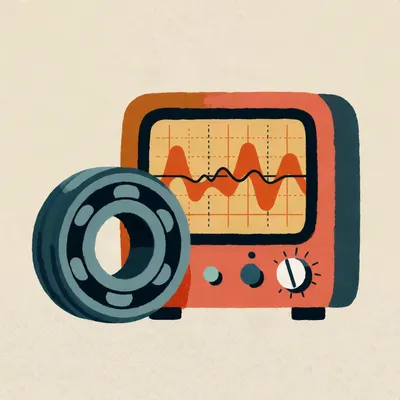
A cracked bearing hits on a schedule, turning vibration into correlated frequencies that standard stationary models average away.
#6374: What Theoretical Physicists Actually Do All Day
Bureau of Labor data counted 18,350 US physicists, but APS data shows 58% of graduates enter industry under titles like engineer.
#6373: MWP 4 Kids: Why the Moon Changes Shape
The moon never actually shrinks or loses a piece; it remains a complete sphere illuminated on one half by the sun as it orbits Earth.
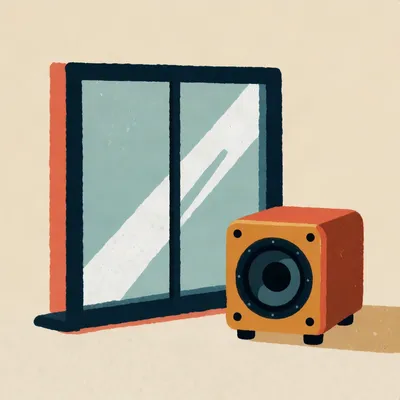
#6367: Why Windows Struggle with Bass
Standard double-glazed windows can experience a resonance drop near 124 hertz, directly inside the frequency band of intrusive music bass.
#6363: When Automated Proofs Leave Mathematicians Grieving
OpenAI deployed roughly ten thousand autonomous agents for eighty-eight hours to claim a singularity proof for 3D Navier–Stokes.
#6362: Where Mathematicians Actually Work and How AI Fits In
A surge of over 700 automated AI proof manuscripts hit the mathematics community in October, testing how researchers verify claims.