
Archaeology
75 episodes · Page 2 of 4
#5049: How Deep Does an Engraving Need to Be?
Why engraving outlasts stickers and ink — and what NASA specs reveal about carving for the ages.
#4867: Greenland's Coldest Inhabited Place: How 646 People Survive
Qaanaaq, Greenland, endures weeks below -40°C. How do 646 people survive the planet's most consistently lethal cold?
#4729: How Coffee Was Discovered Before Chemistry
From fermented mush to roasted beans — how early humans discovered impossible foods without any chemistry.

#4539: Athens Beyond the Acropolis: A Jerusalem Comparison
What does daily life in Athens actually feel like? Think Jerusalem — palimpsest streets, community cats, and a rhythm all its own.
#4513: 5 Bizarre Instruments to Short-Circuit Your Next Dinner Party
Five bizarre instruments that turn you from a guest into an event — no flute required.
#4508: How Concrete Conquered Stone
Roman concrete self-healed for 2,000 years. So why did stone lose out?

#4283: The Nightclub Confrontation That Exposed a Toxic Pipeline
How looksmaxxing forums, livestreaming platforms, and algorithmic amplification converge to radicalize teenagers.

#4027: The Hand on the Head: Blessing Across Millennia
A spontaneous blessing in a Jerusalem cafe opens up 3,000 years of embodied tradition—from Jacob's crossed hands to the Friday night table.
#4016: What's Really Inside That Jerusalem Trench
Those concrete pipes and giant cable spools? It's not what you think. Here's what's actually happening underground.
#3858: Why We Carve: 75,000 Years of Marking What Matters
From a Dremel in Jerusalem to 75,000-year-old cave engravings — the ancient impulse to make a permanent mark.
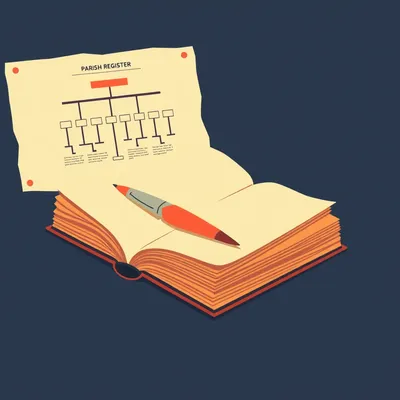
#3682: How Far Back Can You Trace Your Family Tree?
Why most genealogists hit a wall around 1600 — and who can trace their lineage back 2,500 years.
#3642: Why Archaeologists Matter Beyond the Dig
Archaeology isn't just about ancient pottery. It shapes infrastructure, convicts war criminals, and informs climate adaptation today.
#3641: Archaeology’s Ray Gun Era: Drones, LiDAR & AI on Digs
Drones, ground-penetrating radar, and AI are transforming archaeology. The fine brush is just 5% of the story.
#3640: The Desert Empire That Out-Romaned Rome
The Nabataeans weren't just traders with pretty buildings. They built working water systems in 80mm of rain and invented the Arabic alphabet.
#3628: Why German Comedy Is the Control Group for Jokes
Why deadpan lands in Dublin but not Tokyo, and what Hofstede’s cultural dimensions predict about your sense of humor.
#3323: The 15-Word Blessing That Survived the Temple
How a three-verse biblical command became a mass spectacle drawing 100,000 people at the Western Wall.
#3307: Two Temples, One Mountain: What Archaeology Reveals
Solomon's Temple was smaller than a basketball court. Herod's Second Temple had stones heavier than a jumbo jet.

#3263: Mansfield's Wandering Boulders: Geology Meets Folklore
Why one Connecticut town has 4x the boulders of neighboring areas—and built a culture around them.

#3249: Why Gold, Silver, and Bronze? The 5,000-Year-Old Metal Hierarchy Explained
Gold, silver, bronze—why this exact ranking? Chemistry, the sun, and a mountain of silver in Bolivia.
#3205: Why Pomegranate Wine Isn't Everywhere
Pomegranate wine is 8,000 years old—older than the pyramids. So why can't you find it in stores?
#3144: When Walls Talk: Graffiti's 17,000-Year Story
From Pompeii to Melbourne 2025 — how cities decide what stays on walls and what gets scrubbed.
#3073: What 40,000-Year-Old Paint Teaches Us About Digital Storage
Cave paintings outlasted carved stone. Now engineers are using that chemistry to build千年-proof discs.

#3072: What Archival Actually Means in Your Pen
The AP seal isn't a durability guarantee. Here's what makes a marker truly archival.
#3032: The Karankawa Beyond the Cannibalism Myth
Who were the Karankawa? New genetic evidence and archaeology reveal a sophisticated maritime culture.