

The human past, language, religion, philosophy, arts, media, and food.
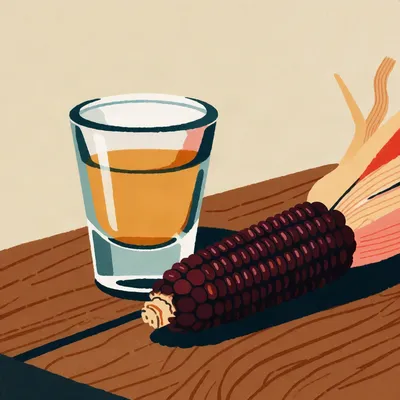
#6534: Why People Pay to Drink Terrible Spirits
Jeppson's Malört shot sales jumped from 400,000 to nearly eight million annually despite sommeliers comparing it to pencil shavings.
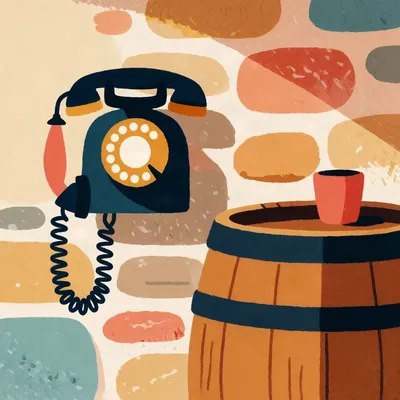
#6533: How Economics Broke and Rebuilt Israeli Wine
A nineteenth-century Bordeaux baron funded Israel's modern wine industry, installing its first phone inside a cellar wall.

#6532: Train Your Wine Palate with Side-by-Side Tasting
Tasting two wines side-by-side with only one difference between them is the fastest way to train a palate without memorizing jargon.
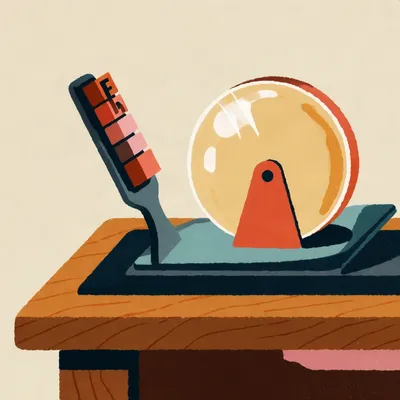
#6529: How Typesetting Shifted From Metal to Software
Between 1985 and 1995, roughly 4,000 North American trade typesetting firms dissolved as software put page composition directly into designers' hands.
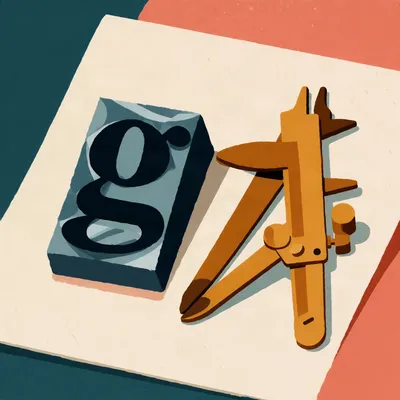
#6528: Why Typography Science Keeps Disproving Type Rules
A century of legibility studies found no reliable difference in reading performance between serif and sans serif typefaces.
#6483: What Kills Ad-Free Social Networks
Out of dozens of ad-free ethical social networks launched to escape Big Tech, only one non-venture platform, Dreamwidth, managed to survive.
#6461: Why Easy-to-Read Fonts Must Break Harmony
Traditional type design relies on uniform shapes, but Atkinson Hyperlegible breaks visual harmony so low-vision readers can tell letters apart.
#6439: Choosing Dream Dinners to Attack Your Own Method
A good dinner guest isn't someone who validates your habits, but a historical foil like Pliny the Elder or Patton built to challenge them.

#6437: Samaritan Hebrew Kept the Letters but Lost the Sound
While Samaritan script directly descends from Paleo-Hebrew, its liturgical chant has lost almost all traditional guttural consonants.
#6403: When Civilizations Made Slowness an Obligation
In Republican Rome, commerce was named negotium: literally the mere negation of leisure.
#6358: Why Cross-Age Friendships Depend on Shared Places
Across 25 European nations, only 18% of young adults report a cross-age friendship, while fewer than 10% of older adults count one as a confidant.

#6352: Hilbert Flumingtop on Sixty-Three Boxes
A deep dive into sixty-three numbered archive boxes, eleven invoiced jobs, and custom pencil grips designed for snout and claw ergonomics.
#6321: How Interpreters Speak While Listening
Eye-tracking studies show professional interpreters look at likely items on a screen before a speaker even utters the predictable word.
#6275: Why Medieval Pottage Depended on Grain Markets
During the Great Famine of 1315, wheat prices quadrupled from five to twenty shillings a quarter, devastating staple pottage pots across Europe.
#6251: How Ancient Markets Fought Fraudulent Measures
An Athenian decree from 120 BC specified container rim widths down to half-fingers to prevent merchants from rigging heaped grain measures.
#6250: Why Satisfaction Is Not Enough for a Good Life
Aristotle argues that human flourishing requires exercising rational capacities excellently across a complete life, not just feeling satisfied.
#6249: Why Caused Choices Can Still Count as Free Will
In the 2020 PhilPapers Survey, over 62 percent of professional philosophers endorsed or leaned toward compatibilism between free will and determinism.
#6248: Why Death Might Harm Us Without Hurting
Thomas Nagel's deprivation account argues death harms us not through bad sensations, but by cutting off future goods we could have experienced.
#6247: Why Meaning Is Neither Pure Feeling nor Plain Duty
Studies show people identifying as givers report higher life meaning than takers, but distinctly less moment-to-moment happiness.
#6246: Why Is There Something Rather Than Nothing?
Peter van Inwagen argued an empty world has probability zero because there are infinitely many populated possible worlds and only one empty one.