
Taxonomy and Classification
123 episodes

#6470: Why Computer Science Publishes in Conferences
When NeurIPS tested its review process with duplicate submissions, half the papers accepted by one committee were rejected by another.

#6466: Conferences Rule Machine Learning, Not Journals
At NeurIPS 2025, over 21,000 papers required nearly 22,000 reviewers, yet fewer than half a percent earned oral presentations.
#6459: Why the Gaussian Distribution Fails in Plain Sight
A single trading day accounted for 78 percent of the kurtosis across ten thousand US stock market observations.
#6440: Why We Learn Algebra and Overcalculate Pi
NASA navigates interplanetary probes using just fifteen decimal places of pi, leaving an error of half an inch over forty billion miles.
#6385: Why Weighting Software Scores Fails to Pick Winners
Adding an identical copy of an existing tool can flip the entire leaderboard in standard decision analysis models.
#6374: What Theoretical Physicists Actually Do All Day
Bureau of Labor data counted 18,350 US physicists, but APS data shows 58% of graduates enter industry under titles like engineer.

#6352: Hilbert Flumingtop on Sixty-Three Boxes
A deep dive into sixty-three numbered archive boxes, eleven invoiced jobs, and custom pencil grips designed for snout and claw ergonomics.
#6316: Why Protein Design Ignores Astronomical Counts
A hundred amino acids can form roughly 10 to the 130th possible sequences, far exceeding the number of atoms in the observable universe.
#6270: How Long Pregnancy Cells Linger in the Body
Fetal cells enter maternal blood as early as the seventh week of gestation, sometimes persisting in bone marrow for over thirty years.
#6252: How the Kilogram Leaves the Basement
A third consensus value for the kilogram took effect on March first, differing by five micrograms from its predecessor.
#6246: Why Is There Something Rather Than Nothing?
Peter van Inwagen argued an empty world has probability zero because there are infinitely many populated possible worlds and only one empty one.
#6206: Monte Carlo: How Random Guesses Solve Impossible Problems
From solitaire at Los Alamos to neutron diffusion, why rolling dice beats careful grids — and how many runs is enough.
#6109: Anteater Biology, With an Actual Anteater
A donkey and a sloth finally interview their anteater producer about tongues, claws, and sixty million years of family resemblance.
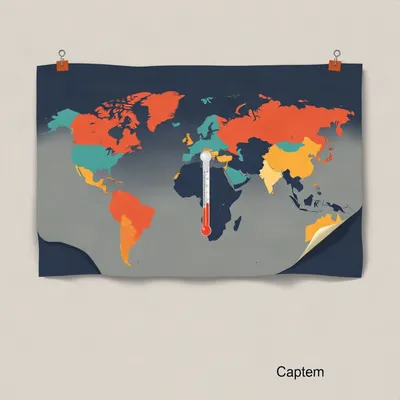
#6053: Köppen's 30 Boxes vs. a Changing Planet
Köppen squeezes the planet into 30 boxes — and the hottest places can't change class, even as they heat. What the map hides.
#6016: What 70 Billion Parameters Actually Means
A single artificial neuron, built from scratch — then the hard part: does that neuron analogy still describe a real transformer?
#5935: How Pressure Actually Bonds VHB Tape
Fifteen pounds of force isn't fifteen psi of pressure. That gap is why your whiteboard might fall off the wall.
#5925: Plus Codes, Geohash, and the Open Addressing Gap
Google's Plus Codes promise offline, self-contained location — but the shortened form quietly reintroduces a dependency the standard was designed t...

#5891: Four Ways Humanity Kept Records for 1,200 Years
The Shōsōin never burned. The Vatican lost a third of its archive. The Geniza kept 400,000 fragments by accident. Four preservation strategies.
#5887: Gears That Did Calculus: Mechanical Computers
From the Antikythera mechanism to battleship fire control, how gears and cams did real math — and why the approach never fully died.
#5876: Sloth Leaf Medicine: What's Real and What Isn't
A serious look at sloth leaf medicine — the rotation, the Cecropia pharmacology, and the fur microbiome nobody was told about.
#5797: How Many Nuclear Tests Have There Really Been?
Three credible sources, three different numbers — and the gap isn't new explosions. It's what each one decided to count.

#5737: Why Measuring a $4 Spudger Tip Is Weirdly Hard
A listener wants to put a number on his spudger's tip thickness. Turns out that's a real metrology problem.
#5732: Why You Own 40 Unlabeled Power Supplies
Three standards bodies tried to fix DC connectors. The box of mystery bricks in your closet is the result.
#5708: The Islands Between Two Oceans
Fifteen obscure sub-Antarctic islands, the governments that run them, and the penguin who holds a noble title.