
Internet Infrastructure
167 episodes
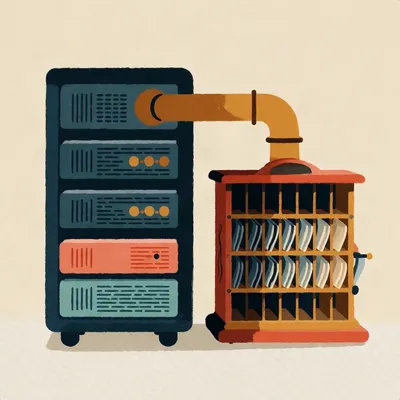
#6394: Why API Email Still Relies on SMTP
Connection pooling cut Mailgun's delivery time from ninety seconds down to roughly six hundred milliseconds per message.

#6371: Why Private IP Addresses Look the Way They Do
RFC 1918 reserved 16.8 million addresses in 10.0.0.0/8, but using it does not make a home network any faster or more professional.

#6349: Splitting Model Layers Across the Internet
Splitting model layers over a wide-area network yields under two tokens per second until scheduling, speculation, and pipelining step in.
#6183: Private Podcast Feeds: Tokens, Buckets, and Basic Auth
How do you keep a podcast feed for four people away from everyone else? Tokens, buckets, and the auth podcast apps barely support.

#6102: Project Cybersyn: Chile's 1972 Telex Economy
Chile ran a national economy on telex machines and hand-drawn slides fifty years before chatbots. What actually worked?

#6041: How CENO Moves a Web Page Into a Censored Country
A walk through CENO's actual plumbing: signed caches, volunteer bridges, and why the chain is deliberately short.
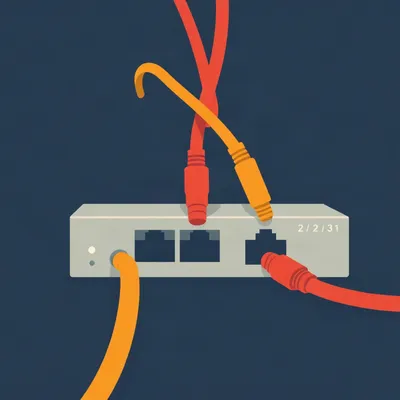
#5904: Multi-WAN Beyond Failover: OPNsense vs OpenWrt
You stacked your links, failover works — so why does a dropped WAN still kill every session? Load balancing, mwan3, and what bonding actually solves.

#5861: Inside Cloudflare's Bot Check: TLS, JA4, and the Sand-Timer
What actually happens during those two seconds of "Checking your browser"? The verdict is made before a single byte of JavaScript runs.

#5831: Managed vs Layer 3: Two Switch Axes, One Empty Box
Managed and Layer 3 aren't the same thing — they're orthogonal. One quadrant of the matrix is a product that basically doesn't exist.

#5818: 46,434 Mailing Lists That Still Work
Daniel wants a public town hall. Turns out the oldest tool on the internet — the mailing list — might be the right one.
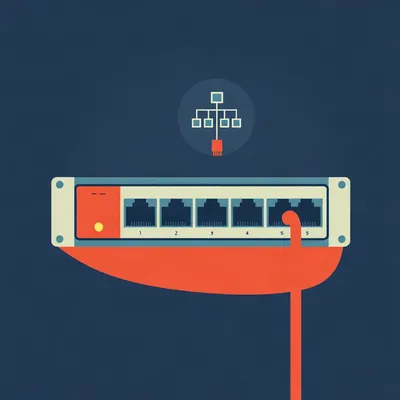
#5766: SNMP: The 40-Year-Old Stopgap Running Your Rack
SNMP was designed as a temporary fix. Four decades later it's on every switch, UPS, and router you own. Here's how it actually works.
#5710: Tristan da Cunha: Life on the World's Most Remote Island
222 people, one village, and a dialect that conjugates like a single person — what life is actually like on the world's most remote inhabited island.

#5700: Did the Internet's Pioneers Know What They Were Building?
Vint Cerf says they didn't know — and they did. How early internet subculture formed, where it lived, and whether it survived.

#5607: BYO Modem, But Only If We Approve It
Bezeq lets you bring your own modem — if it's on the list and you hand over its serial number. Is that security, or provisioning in a costume?

#5582: Who Invented the Internet? Actually, Seven People
The first message ever sent was "LO" — then the system crashed. The real story of the internet is a stack of seven layers, not one genius.

#5563: Your Fiber Is Dark: What You Can Actually Test
Your ONT is dark and there's no sync light to watch. Here's what a PON power meter can actually tell you before you call the ISP.
#5544: Open Source Wi-Fi Controllers: Why Mixing AP Vendors Is So Hard
OpenWISP, OpenSOHO, DAWN, TIP OpenWiFi, FreeSDN — six real projects, one shared wall: closed firmware.

#5534: When Your Carrier Sells You Coverage It Can't Deliver
Daniel's phone went from reliable to useless after a cheap SIM swap. Here's what's actually happening when a network claims coverage it can't deliver.
#5486: Why Hebrew URLs Turn Into Percent-Sign Gibberish
Hebrew renders fine in the domain but explodes into percent-hex in the path. Two different standards explain the split.
#5484: When Governments Own the Pipes: Telecom's Open-Access Model
Could the state own all telecom infrastructure while private companies compete on top? New Zealand and Stockholm already tried it.

#5378: SIP Speakers, Multicast, and the One-Way Page
How SIP one-way paging actually works — and why multicast turns 500 speakers into a single call.

#5248: Why HF Radio Beats Fiber When Governments Pull the Plug
HF loss doesn't scale with distance — it scales with ionospheric hops. And that changes everything about embassy comms.

#5247: Why HF Radio Still Matters When Networks Fail
HF and shortwave are the same band — and it's the only comms path no host nation can switch off. Here's why it persists.

#4849: VPN on Public Wi-Fi: What's Actually Protected?
Your VPN isn't doing what you think. Here's what's actually at risk on airport Wi-Fi in 2026.