
Data Storage
159 episodes
#6431: Why Four Cloud Data Warehouses Coexist
Despite scrapers counting nearly 200,000 users, Snowflake has just over 13,000 paying customers who average roughly $340,000 a year each.
#6429: Why Postgres Needs an Analytical Partner
Under roughly five terabytes of analytical data, a single configured machine often beats a distributed cluster on both cost and latency.
#6428: Self-Hosting an Analytical Stack Around Postgres
A complete reporting pipeline with Kafka and Debezium can run on just five gigabytes of RAM in Docker.
#6427: Why Database Replication Is Not Archival
Postgres replication slots default to retaining an unlimited volume of write-ahead logs, meaning a stalled pipeline can crash its source database.
#6370: Why Modern Audio Datasets Ship as Parquet Files
Parquet files store metadata at the end so clients can query durations or transcripts via HTTP range requests without downloading audio bytes.
#6331: Backing Up Gmail with Got Your Back
Got Your Back pulls Gmail into individual local EML files using the Gmail API, enabling incremental backups that Google Takeout cannot do.
#6268: Storing Ledgers in Postgres and Ticks in Kdb+
Postgres numeric types support up to 131,072 digits before the decimal, but exact arithmetic carries steep computational costs.
#6186: A Virtual Disk Inside Your Linux Filesystem
Loop devices let a plain file act as a real disk — format it, encrypt it, mount it from fstab. Here's what works, and what bites back.
#6096: How Long Does an M-Disc Actually Last?
A thousand years, or a hundred and eighty? What a burned disc on a Jerusalem patio can — and can't — tell us about archival storage.

#5997: Counting Our Listeners, Then Planning a Cave
What Podtrac actually measures, why downloads jumped 79% while listeners stayed flat, and how long you'd need in a cave to hear it all.
#5967: How UEFI, Secure Boot, and the Boot Chain Actually Work
Twenty years of Linux and nobody explains the firmware. Here's the boot chain, the keys, and what's changing in 2026.
#5947: Who Actually Trades on Polymarket?
Three percent of wallets drive 90% of Polymarket's volume — and most retail accounts quietly lose money. Here's who's really on the other side.
#5829: Printing Files on Paper That Outlasts the Software
Optar and PaperBack turn any file into machine-readable dots on paper. The paper lasts centuries — the codec might not.
#5828: Punched Cards: The 200-Year Reign of Cardboard Computing
From Jacquard's silk looms to NSA key tapes, how holes in cardboard ran the world for two centuries — and why we can still read them.
#5827: LTFS Explained: Tape That Acts Like a Disk
LTFS makes tape pretend to be a filesystem — but 37-second seeks decide whether it can anchor a searchable archive.
#5782: Unraid in a VM: When the License Is the Wall
Daniel wants Unraid's parity array without Synology's lock-in. The technology works. The licensing is the wall.
#5760: Pinterest Is a Pointer, Not a Backup
A Pin is a URL with a thumbnail, not a picture. If you're archiving images instead of mood-boarding them, that distinction matters.
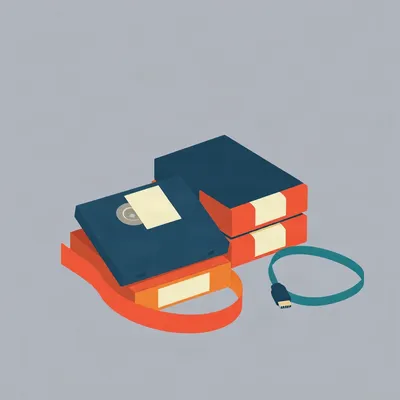
#5705: Tape Isn't a Pool: How LTO Really Works on Linux
Tape on Linux needs no driver — but it also doesn't behave like ZFS. Here's how LTO really integrates, and why "pool" means something else.
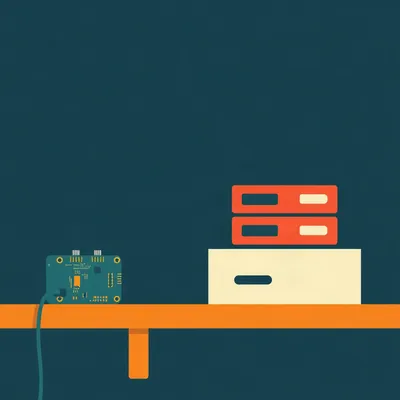
#5522: Building a Podcast Backup Appliance
One listener wants a single-purpose box that pulls every episode to local storage he controls. Turns out the software exists — the packaging doesn't.
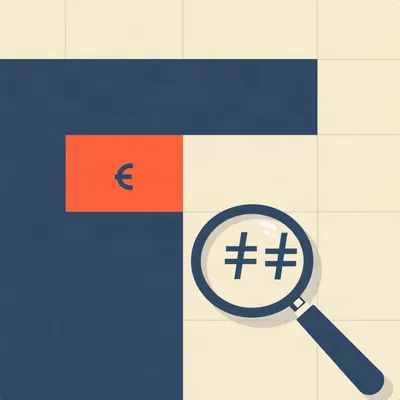
#5487: Why Your Spreadsheet Mangles José's Name
A deep dive into character sets, from ASCII to UTF-8, and why José becomes "José" in your spreadsheet.
#5387: Who Decides What Your Keyboard Knows?
Your keyboard's word list was probably frozen in 2014. Here's who maintains the open-source dictionaries — and why Gboard's stays fresh.
#5327: Catching Duplicate Submissions Before They Burn Credits
A dropped webhook response caused a double submission. Here's how to build a screener that catches duplicates before generation runs.

#5253: Zeroization: Wiping Keys, Not Data
Destroying a 256-bit key takes milliseconds. Overwriting a terabyte takes hours. That gap is the whole story.
#5207: Hard Drives Are Having Their Biggest Boom in a Decade
Everyone assumes flash killed the spinning disk. Seagate's 52% margins and sold-out capacity through 2028 say otherwise.