
Wi Fi
141 episodes
#6476: Bluetooth Microphone Quality and the Audio Ceiling
A sixteen kilohertz sampling rate caps headset speech capture at eight kilohertz, setting a strict hard ceiling for Bluetooth call audio.
#6446: What Home Fiber Optic Cables Actually Do to Your Eyes
A typical home fiber terminal outputs under 4 milliwatts, far below the 166-milliwatt international safety limit for single-mode fiber.
#6445: Why That In-Wall Fiber Link Refuses to Turn On
On a ten-meter fiber run, a single mated connector pair can cause twenty times more signal loss than the entire length of glass.
#6371: Why Private IP Addresses Look the Way They Do
RFC 1918 reserved 16.8 million addresses in 10.0.0.0/8, but using it does not make a home network any faster or more professional.

#6010: Ten Ridiculous Wearables, Ranked by Sincerity
Brainwave cat ears, a tomato-dispensing shoulder robot, and a $3,000 sock tracker — all built with total sincerity.
#5905: Bare Linux Routing vs OPNsense: What Actually Wins?
You can build a router on plain Debian or Ubuntu. The question is whether you should — and what it costs you over ten years.
#5904: Multi-WAN Beyond Failover: OPNsense vs OpenWrt
You stacked your links, failover works — so why does a dropped WAN still kill every session? Load balancing, mwan3, and what bonding actually solves.

#5850: Ambient Computing: Why Glasses Beat the Phone
Weiser's 1991 vision said tech should disappear. Thirty-five years later, the device that finally worked wasn't new — it was glasses.
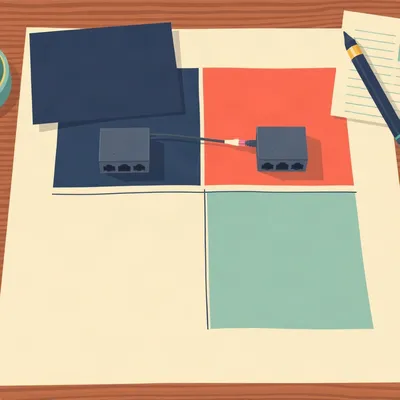
#5831: Managed vs Layer 3: Two Switch Axes, One Empty Box
Managed and Layer 3 aren't the same thing — they're orthogonal. One quadrant of the matrix is a product that basically doesn't exist.
#5733: Why Your Raspberry Pi's Wi-Fi Keeps Dropping
The antenna on your Pi isn't the problem — where it sits is. What actually keeps an SBC link alive.
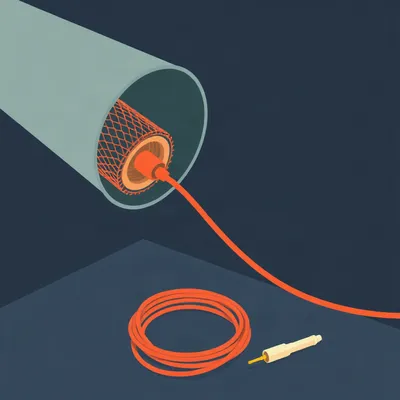
#5665: Fiber Through the Conduit: Bends, Dust, and Pull Socks
A failed Ethernet crimp caps a link at 100 megabit. Can the same conduit carry 10GBASE-SR fiber instead?
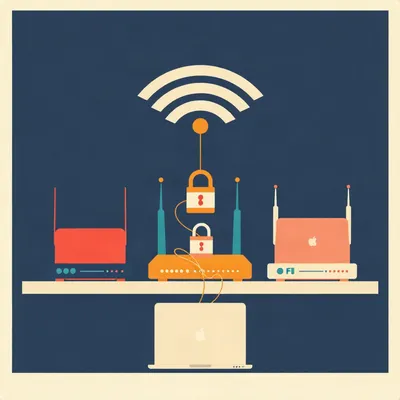
#5544: Open Source Wi-Fi Controllers: Why Mixing AP Vendors Is So Hard
OpenWISP, OpenSOHO, DAWN, TIP OpenWiFi, FreeSDN — six real projects, one shared wall: closed firmware.
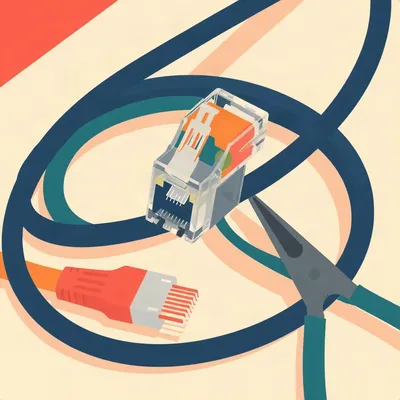
#5541: Re-terminating a Keystone Jack After a Bad Ethernet Run
A DIY Ethernet run came up at 80 Mbps on 2.5G fiber. Here's what went wrong and whether re-termination is a skill worth learning.
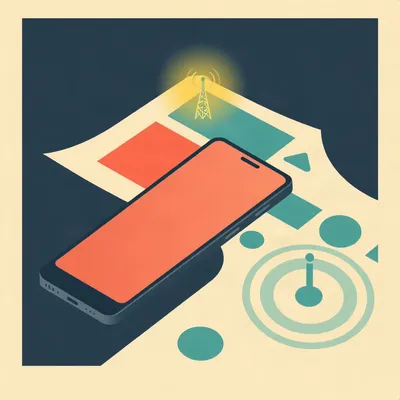
#5534: When Your Carrier Sells You Coverage It Can't Deliver
Daniel's phone went from reliable to useless after a cheap SIM swap. Here's what's actually happening when a network claims coverage it can't deliver.
#5526: Can a Phone Bond Two Cellular Links?
Android can bond Wi-Fi and cellular — but two cellular data paths at once? That's where the hardware and the OS both say no.

#5516: Wall Anchors: Why Your Holes Keep Failing
Nylon anchors don't fill gaps — they multiply grip. Here's what actually works when your hole is compromised.

#5395: Six Colors, One Hospital Corridor
A pediatric ward's six-color corridor system reveals what good interface design looks like when people are scared and lost.
#5383: Android's Open Core, Closed Governance
Android's code is open, but its roadmap isn't. What happens when Google changes the core and developers just have to cope?
#5282: Wi-Fi IoT Without the Cloud Lock-In
Wi-Fi IoT ships locked to vendor clouds by default. Here's what it takes to break out — and where Wi-Fi is actually the right tool.
#5281: Why Your Cheap Phone Plan Feels Broken
Same phone, same spot, same 5G bars — so why does a cheap carrier crawl? It's not the signal.
#5248: Why HF Radio Beats Fiber When Governments Pull the Plug
HF loss doesn't scale with distance — it scales with ionospheric hops. And that changes everything about embassy comms.

#4849: VPN on Public Wi-Fi: What's Actually Protected?
Your VPN isn't doing what you think. Here's what's actually at risk on airport Wi-Fi in 2026.

#4807: What Actually Burns in Ireland vs. Israel
Same job, radically different fires. How climate and construction shape a firefighter's daily reality.
#4803: How Digital Road Signs Talk to Cars
How roadside radios broadcast stop signs and traffic data directly to vehicles over 5.9 GHz.