
Statistics
43 episodes
#6200: What Israeli Election Polls Hide Behind Seat Counts
A new open source tool simulates 100,000 election allocations from a single poll — and shows why "4 seats" is less certain than it sounds.

#6075: Israel's Pollsters: Who Calls the Race Before You Vote
Nine days out, a tour of Israel's polling culture — the pollsters who matter, the famous misses, and the numbers to watch on election night.

#6054: Seven Percent for a Decade: What Open Data Portals Actually Delivered
A decade of open data portals moved the share of fully open datasets from 7% to... 7%. What would a real publishing pipeline look like?

#5954: Layered Safeguards and the Math Behind Them
Three safeguards at 90% each seems bulletproof—until shared failure modes collapse the math.
#5789: Build First, Ask Later: Hermits Who Dug Cathedrals
No permits, no blueprints, no training. Two categories of builders who did the unreasonable — and what they share.

#5716: One in 13 Million: What It Takes to Be an Astronaut
Only 631–780 humans have ever reached space. Here's the training gauntlet — and the mental toll — behind that number.

#5600: Alien Abductions: 4 Million Claims, Zero Evidence
Nearly four million Americans say they've been abducted. Not one has produced a lab-verifiable artifact. What's going on?

#5210: How the Placebo Trial Became the Gold Standard
Control groups, placebos, blinding, randomization — four inventions across 250 years, assembled into medicine's most trusted method.
#5209: Sensitivity, Specificity & the Numbers Doctors Use
A field guide to the numbers in a medical paper — what sensitivity, effect size, and risk ratio actually answer, and when they mislead.

#5205: Measuring Rooms From One Photo
One photo, one reference ruler, and a geometry trick from 1999 that measures objects without any AI at all.

#5161: How Statistics Get Misread: A Field Guide
Averages, rates, correlations — the ten categories of statistics most likely to fool a general audience, and why the number is usually right.

#5145: What Life Expectancy Really Meant in the 1600s
That "people died at 35" statistic? It's mostly measuring dead children, not short adult lives.

#5046: Mapping Purple: How Texas Really Votes
Texas isn't just red. We break down the blue cities, red rural expanse, and the purple suburbs that decide elections.

#5039: Who Actually Counts Wars? The Data Behind the Headlines
The UN doesn't track wars. Here's who does, how they define them, and what the numbers really show.
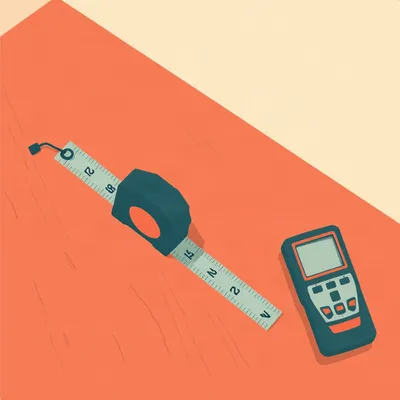
#4977: The Measurement Ladder: From Tape Measures to Point Clouds
Seven rungs of physical measurement, from steel tape to laser scanners. Where error lives and what you trade at each step.

#4953: What Actually Drives Crime Rates?
Youth bulges, alcohol, lead exposure — the surprising science of what makes crime rise and fall.

#4788: How Weather Prediction Became a Science
From hand calculations to chaos theory to machine learning — the full arc of forecasting.
#4468: What a Log Scale Actually Does to Your Sensor Data
Log scales don't smooth data — they change the ruler you're measuring with. Here's when to use them and when they'll break.

#3823: How Cities Can Enforce Construction Noise with Real-Time Data
Can cities actually enforce noise limits with real-time sound data? We explore the tech, the gaps, and who's doing it right.
#3706: Is Hookup Culture Real? What the Data Actually Says
Median partner counts haven't budged in decades. So why are STD rates soaring and religious norms crumbling?

#3451: Why Career Changers Peak at Age 39
The average age for a major career change is 39. Here's what the data reveals about midlife pivots.
#3324: How Companies Actually Measure Their Carbon Emissions
Spreadsheets, supplier calls, and accounting choices that can change your reported emissions by 10x.

#3089: How Climate Consensus Actually Formed
The surprising journey from skepticism to scientific certainty — and what the data says about summer 2026.
#3045: How Many People Actually Lack Clean Water?
The 2.2 billion figure is more complicated than it looks. Here's what the data actually says.