
Weather and Atmosphere
59 episodes
#6053: Köppen's 30 Boxes vs. a Changing Planet
Köppen squeezes the planet into 30 boxes — and the hottest places can't change class, even as they heat. What the map hides.

#5794: Starfish Prime: When the US Nuked Space
In 1962, the US detonated a 1.4-megaton warhead 400 km above the Pacific. The sky turned green for 90 minutes.
#5668: Why Depression Drains Your Energy
Light, melanopsin, and inflammation — the two very different mechanisms behind seasonal and non-seasonal depression fatigue.
#5561: Fog, Light, and the Limits of Sight
Fog is a cloud sitting on the road. Here's the physics of why it forms fast, what it does to light, and why there's no safe driving visibility.

#5558: Landing on the Edge: Cork Fog to Carrier Decks
What does it actually take to land a heavy jet when the margin between calculated and flown is razor thin?
#5345: Forecasting for Cranes, Fires, and 15-Minute Decisions
The public five-day forecast is a loss leader. Here's what bespoke weather looks like when money and lives ride on it.
#5322: How New Is the Air You're Breathing?
A sealed air pillow from AliExpress leads to a genuinely strange question: how old are the molecules you're breathing right now?
#5299: Why Bright Lights Make Fog Worse
More light isn't safer light. Why fog, glare, and the moth effect turn your emergency flares against you.

#5194: Designing Buildings to Age Beautifully
Copper turns green, lime plaster hardens, concrete just stains. What if architects designed for year 100 instead of day one?
#5064: What a Polar Station Stocks for a Year of Isolation
The hidden logistics of keeping isolated crews fed, healthy, and sane for months without resupply.
#4926: How Arson Investigators Read the Ashes
How fire investigators distinguish arson from accident in an age of climate change and political tension.
#4877: Hunting the Year-Round Swamp Climate
Where on Earth is it always hot, humid, and buggy? And what does the body do when sweat stops working?

#4867: Greenland's Coldest Inhabited Place: How 646 People Survive
Qaanaaq, Greenland, endures weeks below -40°C. How do 646 people survive the planet's most consistently lethal cold?

#4866: How Aircraft and Skyscrapers Survive Lightning Strikes
How do planes and buildings take million-volt hits and keep working? The engineering is surprisingly different.
#4859: Why We Miss 60 Earthquakes for Every One We Feel
The Earth moved under Daniel's falafel and he felt nothing. That tiny quake reveals a staggering fact about our planet.
#4816: Can Your Body Learn to Tolerate a Swamp?
Why 32°C in Tel Aviv feels worse than 35°C in Jerusalem — and how fast your body can adapt.
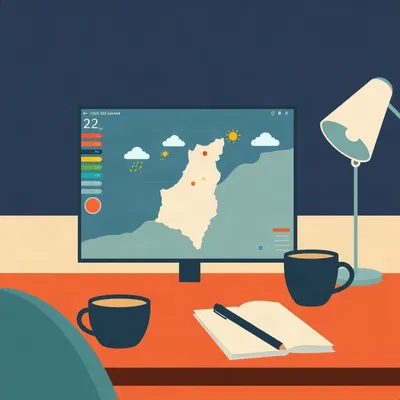
#4792: Shadowing an IMS Forecaster in 2026
What does a human forecaster actually do when AI models already handle 95% of the routine work?
#4788: How Weather Prediction Became a Science
From hand calculations to chaos theory to machine learning — the full arc of forecasting.
#4771: The Nine Dials That Tell Us If Earth Is Still Working
Six of nine planetary boundaries are already crossed. Here's what the dashboard says about our safe operating space.
#4674: Why Earth's Heat Has a Ceiling (And 57°C Is a Lie)
Why 40°C is routine but 57°C is impossible, and what that means for your body, your car's thermometer, and heatwave deaths.

#4673: What "Feels Like" Really Means on Your Weather App
Heat index, wind chill, and why two apps can give different numbers on the same street. The science behind that little number.
#4322: Storrs Secrets: Turbines, Duckpin, and Puppets
A working 1860s turbine, duckpin bowling’s impossible perfect game, and a world-class puppet museum in one small town.
#4102: Can Pine Furniture Survive Outdoors?
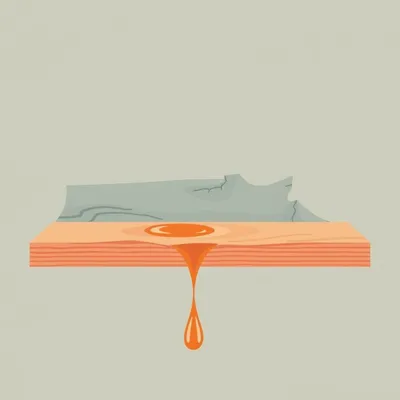
Why coating pine for outdoor use often makes things worse — and what actually works.
#3979: Why Rain Hits Different in Cork vs Jerusalem
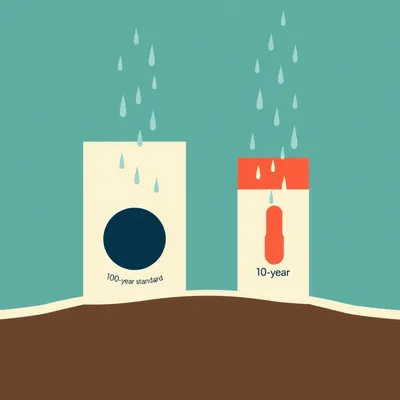
Why moderate rain knocks out power in Jerusalem but not Cork — and what "design return periods" reveal about infrastructure.