
Physics
107 episodes

#6673: Where Bizarre Language Textbook Sentences Came From
The 1855 phrasebook English As She Is Spoke was written by a man who spoke no English, translating Portuguese through a French dictionary.

#6653: How Lighthouses Learned to Blink Their Names
Before flashing optics, a red lighthouse beam lost 60% of its light—so engineers invented a language of timed darkness.
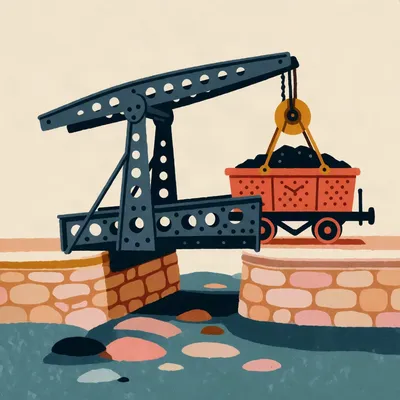
#6642: Why Brunel the Tortoise Refused a Meccano Drawbridge
An 86-year-old tortoise cut his commute from 26 minutes to 4 using a Meccano drawbridge, then figured out the counterweight and walked around.
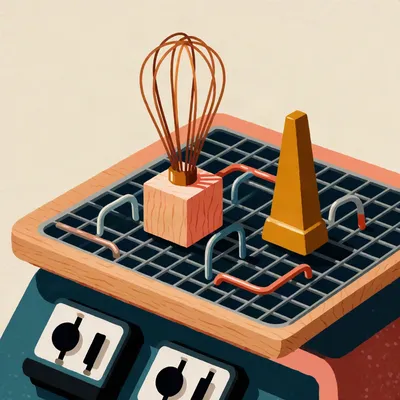
#6626: How a Wooden Mouse Proved Machine Learning Worked
In 1950, Claude Shannon built a wooden mouse that learned a 25-square maze using telephone relays and solved it in 18 seconds.
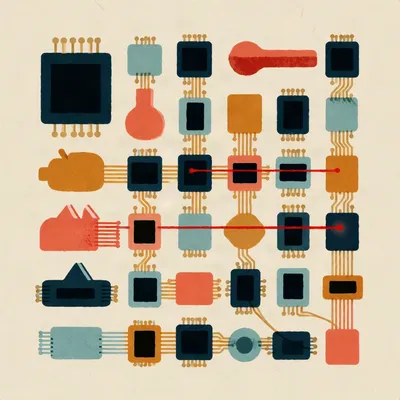
#6487: Turning Acoustic Physics into a Math Problem
A 7,200-microphone wall at DLR solves acoustic inverse problems using less power than a home stereo amplifier.
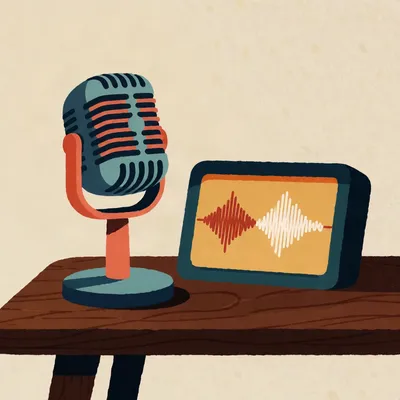
#6473: Why Whispering Breaks Speech Recognition Physics
Whispering completely removes fundamental frequency and pitch, forcing speech recognition models to rely on subtle duration cues.
#6440: Why We Learn Algebra and Overcalculate Pi
NASA navigates interplanetary probes using just fifteen decimal places of pi, leaving an error of half an inch over forty billion miles.

#6374: What Theoretical Physicists Actually Do All Day
Bureau of Labor data counted 18,350 US physicists, but APS data shows 58% of graduates enter industry under titles like engineer.

#6363: When Automated Proofs Leave Mathematicians Grieving
OpenAI deployed roughly ten thousand autonomous agents for eighty-eight hours to claim a singularity proof for 3D Navier–Stokes.
#6360: What Counts as a Mathematical Proof
A proof excludes exceptions through structure rather than exhaustive testing across every possible case.

#6292: Mark Mehlman on Predicting Random Signals When Statistics Drift
A harmonizable process is mathematically identical to an orthogonal projection of a stationary process living in a larger space.
#6259: What Facial Exercises Actually Change
In a 2018 JAMA Dermatology trial, blinded doctors estimated facial exercise participants looked nearly three years younger.

#6252: How the Kilogram Leaves the Basement
A third consensus value for the kilogram took effect on March first, differing by five micrograms from its predecessor.

#6246: Why Is There Something Rather Than Nothing?
Peter van Inwagen argued an empty world has probability zero because there are infinitely many populated possible worlds and only one empty one.
#6142: We Gave 4 AI Models the Same Toast Prompt
Four models, one buttered-toast physics question. Three invented studies that never existed — and the oldest model was the most fun.

#5986: Electronics Kits for Toddlers? What Actually Works
No kit exists for a 15-month-old — but the age question splits into three windows: kits at 5, breadboards at 10, microcontrollers at 13.
#5887: Gears That Did Calculus: Mechanical Computers
From the Antikythera mechanism to battleship fire control, how gears and cams did real math — and why the approach never fully died.
#5886: From Leviticus to the Kilogram: Honest Scales
Ancient Athens had ten inspectors and a rock. The kilogram had one cylinder in a vault. Both were asking the same question.
#5882: Half of All Energy Becomes Heat. Now What?
Half the world's energy ends up as waste heat — but only 6% is worth recovering. Inside the cities that built the pipes anyway.
#5840: Why Voice Clones Lisp: Sibilants, Codecs, and the Sounds We Lose
Sibilants and plosives are the most fragile sounds in speech — and every stage of the audio chain is quietly built to destroy them.
#5789: Build First, Ask Later: Hermits Who Dug Cathedrals
No permits, no blueprints, no training. Two categories of builders who did the unreasonable — and what they share.
#5783: Can a Dremel Be Gym Equipment?
A Dremel afternoon left Daniel drenched in sweat. Turns out the research on power tool physical load barely covers his tool at all.

#5761: Why You Shouldn't Dremel Your Antique Silver
A rotary tool removes metal in seconds that took a century to form. Here's what museums do instead — and why shine isn't the goal.
#5758: Why Your Outlet Is 120 Volts and Europe's Is 230
The US isn't really a 120-volt country — it's 120/240 split-phase. Here's the engineering logic behind the numbers on your panel.