
Books and Literature
28 episodes
#6106: なぜ日本は今も光ディスクを手放さないのか
新幹線を走らせる国が、いまだにブルーレイを買い続ける。最先端技術の国に残る、意外と合理的な理由を探ります。
#5891: Four Ways Humanity Kept Records for 1,200 Years
The Shōsōin never burned. The Vatican lost a third of its archive. The Geniza kept 400,000 fragments by accident. Four preservation strategies.
#5837: Atlas Obscura: 33,000 Hidden Places and a Boardroom Coup
A rotating circle of plants in Argentina, a boiling river 400 miles from any volcano, and the founders who got voted off the board.
#5835: What Do You Call the Urge to Know Obscure Things?
There's no single name for the pull toward transporter bridges, strange borders, and overlooked infrastructure. The vocabulary exists — it's just s...
#5778: How J.K. Rowling Builds Characters That Last
Two notebooks, color-coded spreadsheets, and a pseudonym: how J.K. Rowling builds characters that outlive their pages.

#5699: From Dawkins to "Karen": How Memes Really Spread
A biologist coined "meme" in 1976. Fifty years later, a Switch trailer screenshot became "Karen." How did we get here?
#5615: Philadelphia, Here I Come: Friel's Split Man on Stage
One actor can't hold Gar O'Donnell — so Brian Friel used two. Inside the 1964 play that split a man in half on stage.
#5614: The Master of Drinks Ran the Room
The symposiarch controlled the wine ratio, the room, and the penalties — and poetry was the skill that proved you belonged.
#5173: Why Actors Keep Auditioning: The Grit Behind the Craft
Most SAG-AFTRA members earn under $26K from acting. So why do they keep auditioning? Research on grit and calling offers surprising answers.
#5141: Teletubbies vs. Sesame Street: What Kids' TV Is Really For
Didactic or creative? The philosophy baked into every kids' show—from Sesame Street to Teletubbies to Bluey.
#4833: How to Label a Historical Book Without Destroying It
Wheat starch paste, acid-free paper, and graphite pencil — the surprisingly specific protocol for labeling old books safely.
#4706: One Grain of Rice: The Art of Hyper-Specific Documentaries
From a single parking space to one grain of rice — why filmmakers make documentaries so narrow they shouldn't work, yet somehow do.
#4677: Beyond the Itinerary: Travel Writing That Actually Works
Bill Bryson made travel writing feel alive. Who's carrying that torch to places he never explored?
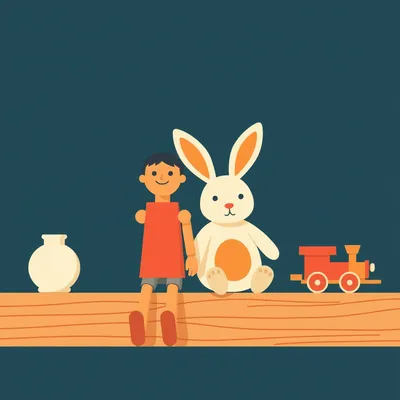
#4473: The Hidden Worlds We Build From Stuffed Animals and Baby Babble
Why do we keep imagining that toys, babies, and pets have rich secret lives when we're not watching?
#3941: Imp, Goblin, Gremlin: What's the Difference?
Three small creatures, three completely different origins, functions, and fears. Untangling the folklore.
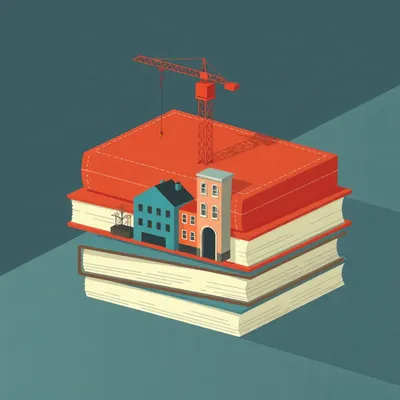
#3862: Why Your Books Got the City Centre Wrong
Is the "poor inner city" a literary myth? Jerusalem's luxury towers vs. Dickens' slums.
#3663: Warm Absurdism: The Genre Daniel Actually Loves
What connects Nathan for You, Waiting for Godot, and The Matrix? It's not sci-fi — it's absurdist humanism.
#3154: What Actually Counts as the First Musical?
The Black Crook, The Beggar's Opera, or Show Boat? The origin of musical theater reveals what we value about the form.
#2810: Every Catalog Is an Argument
From clay spine labels at Ebla to the Pinakes of Alexandria — how organizing knowledge shaped civilization.
#2737: How Word Spacing Changed Human Thinking
How studying medieval word spacing revealed the origins of silent reading — and why funding esoteric research matters.
#2734: How Hebrew Printing Defied Book Burnings
The first Hebrew printed book dates to 1475 — and it was Rashi’s commentary, not the Bible.
#2729: Why Medieval Libraries Sounded Like Beehives
For most of history, reading was an oral act. Silent reading is a surprisingly recent invention.
#2715: Why Studebaker Owners Are Different
What drives thousands of people to obsess over a car brand that died in 1966? It's more than nostalgia.
#2262: Documentaries About Parking Lots and Drying Paint
A tour of the most baffling documentaries ever made, from a 10-hour film of paint drying to a feature-length portrait of a single parking lot.