There's no such thing as not having an accent. There's only having the one the machine was measured against.
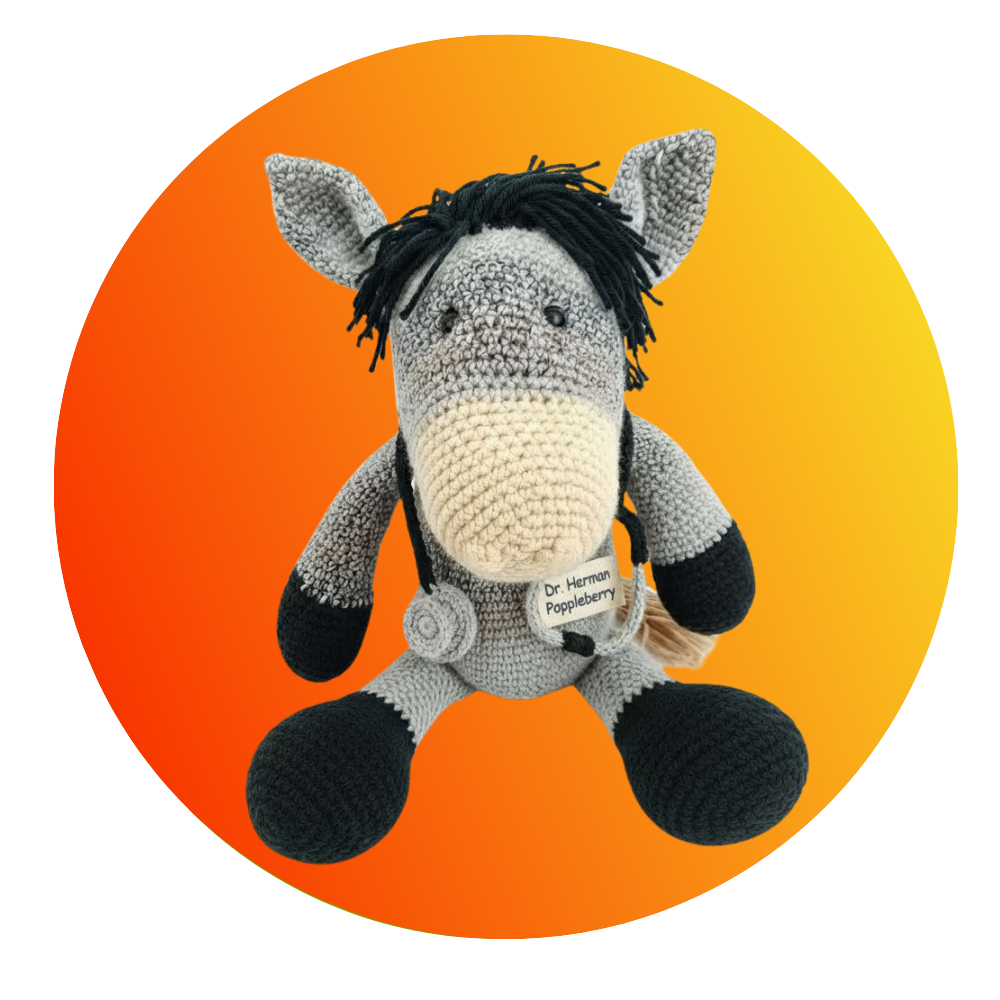
That's the whole episode in one sentence, and it's also the trap. Because the interface everyone actually meets is a dropdown, and the dropdown is not where the work happens.
Daniel sent us a prompt about exactly this. How speech-to-text models have handled accents within English, whether having one costs you accuracy versus choosing, his words, just regular English, whether picking your own accent in a model that offers one actually biases it toward your speech or just makes you feel better, and whether the whole accent-selection feature fades away as models go multilingual and stop being told anything.
And there's a nice wrinkle in there. The phrase just regular English. He knows it's a fiction, that's why he put it that way.
Daniel's Irish. He's allowed one regular English per lifetime, and that was it.
So the structure of the answer is a little upside down. The dropdown looks like the feature, and everything we know says the real accent handling lives in the training data and the fine-tunes, a floor below where the user can reach. Let's take the gap first, then the dropdown, then the multilingual question.
Go.
Historically the default was one model, one standard, and everyone else measured as an error rate. There's a longitudinal audit accepted at SLT this year, Metzger and colleagues, sixteen systems released between twenty twenty-one and twenty twenty-five, eight accent datasets, and their framing is blunt. Standard ASR benchmarks, in their words, effectuate an Anglocentric language policy. Two accents function as the reference, Mainstream US English and Standard Southern British English, and every other variety of English is scored as deviation from them.
Scored as deviation. Meaning if you speak Irish English, your speech isn't a variety. It's a margin of error.
That's their argument, yes. They quote a line about how the absence of an official policy often serves only to reinforce the power and hegemony of prestige varieties and marginalize others.
My favourite kind of policy. The one that exists by denying it's a policy.
And the numbers back it up. Average gaps across the datasets run from nine percent absolute word error rate between Standard Southern British English and Irish English, up to twenty-six percent absolute between Mainstream US English and Vietnamese English on one of the ALLSTAR sections.
Twenty-six percent absolute. That's not a rounding problem. That's the difference between a transcript you'd send to your boss and one you'd send to your enemies.
Right, and it's not shrinking. The audit's most quotable finding is that minority-accent performance sometimes worsens by sixty-five percent absolute word error rate between generations of systems. Sixty-five. So you buy the new model, the one with the launch video, and your accent got worse.
Which is the exact opposite of the marketing story, where every release closes the gap because the model got bigger and more multilingual.
The audit tested that directly. Statistically significant improvement over time showed up in only two of their eight datasets, and in one of those, the four most recent models reversed the trend. Their phrasing is that the disparity is stubborn, not reliably declining as a function of time. And there's a companion finding I find strange. Audio compression predicts accent fairness more than model scale. Which says the codec you fed the audio through matters more than how many parameters are listening.
So the elephant in the server room is a compression artifact.
Whisper specifically. On the Edinburgh accents corpus, EdAcc, Whisper averages just under twenty percent word error rate. On clean US English read speech, two point seven. Sevenfold difference, same model, and the worst drops are for Indian, Jamaican and Nigerian speakers.
I want to stay on the failure mode for a second, because substitution isn't the interesting part. Getting a word wrong is something a human does too.
Agreed. The interesting part is what the decoder-style models do when they're lost. There's a paper from this year, Do LLM Decoders Listen Fairly, around forty-three thousand utterances, and on Indian-accented speech Whisper's insertion rate, text that appears in the transcript that nobody said, spikes to over nine percent at large-v3. And the spike is non-monotonic, which is the really damning part. Smaller model, fewer insertions. Bigger model, more confident invention.
The bigger model doesn't hear better. It hallucinates more fluently.
And it gets worse when you stress it. Inject silence into the audio and the accent bias amplifies by a factor of up to about four and a half, because the silence triggers demographic-selective hallucination. Under chunk masking they found repetition loops accounting for the overwhelming majority of insertions. So the model doesn't go quiet when it fails. It talks.
That's the part I'd want Daniel to hear, actually. The symptom isn't the machine missing your words. It's the machine adding words you never said, confidently, in a register that looks like a real transcript.
And second-language speakers get the worst of it across the board. There's an ICASSP paper this year that ran Whisper and Seamless-M4T across twenty-six accent groups and found, their words, large fluctuations in word error rate, indicating significant fairness gaps.
Twenty-six groups. Even the fairness analysis needs a spreadsheet.
There's one more number I'd sit with, though. An earlier audit of the Speech Accent Archive, twenty-seven hundred speakers, two hundred-plus first languages, found that the disparities correlate with the political alignment of the speaker's birth country with respect to US geopolitical power. Even controlling for the linguistic factors. So the error rate tracks geopolitics, not phonetics.
Which is either a profound finding about data or a very roundabout way of ranking allies.
Now the practical question hiding inside Daniel's prompt. How would you know you're on the wrong side of the gap? Because nobody ships you your error rate.
By comparison, I assume. You can't see your number. You can only see the difference.
That's the method the audit itself uses. MUSE as a control accent in every dataset, same task, and the gap is the finding. At home, the version is the same utterance under different locale settings, or the same sentence you and a MUSE-speaking friend both dictate. The symptoms are recognizable too. Proper nouns and names get mangled first. There's a whole project called AfriNames about ASR models butchering African names. Filler words and disfluencies get dropped. And in the bad cases, whole clauses of hallucinated insertion rather than omission.
So the diagnostic is: your name comes out wrong, your fillers vanish, and occasionally the machine invents a sentence for you.
That's a clean checklist, and I don't like how well it describes my own dictation.
Yours. You speak Hebrew with an accent nobody can place. Which, per this literature, makes you the least classifiable man in Jerusalem.
It's a gift. The model can't discriminate against my accent because it can't decide what it is.
Hilbert's Mid-Show Haiku. The dropdown. Fifteen Englishes offered. One of them is mine. The machine hears all of them wrong.
Fifteen, by the way, is a real count. Apple's dictation settings list fifteen English variants.
Six for Windows voice typing. Australia, Canada, India, New Zealand, UK, US. And that's the interface. Now the question Daniel actually asked. Does picking your own in that list do anything?
My instinct is that it does something, because it feels like it must. Every setting that exists exists for a reason.
That instinct is exactly what I'd want to check, because the direct evidence is thin to the point of vanishing. Nobody has published a controlled study of a consumer accent dropdown versus default English. The closest thing is a small Siri study from twenty twenty-four, thirty-six clips, thirteen accents, nine English locales, seven hundred transcripts, and the per-locale breakdown never surfaced in anything I could get at.
Seven hundred transcripts and the answer stayed inside the repository.
So you build the answer from the pieces around it. And the pieces point in an uncomfortable direction. When accent conditioning is built into the model, it works. There's an open project, whisper-accent, that freezes Whisper and feeds it learned accent embeddings through adaptive layer normalization. Fourteen percent word error rate on accented English for the small model, thirteen for medium, against about seventeen and a half for the same-sized vanilla models. Three or four points absolute from accent conditioning alone. That's real.
But that's the model being told, at the level of its normalization layers, what accent it's hearing. The dropdown is you telling it in a text box.
And there's the gap. Whisper has a prompt parameter, the thing people put transcribe in British English into, and OpenAI's own developer community describes it as not really accepting instructions, more for style, like punctuation. The prompt biases the decoder toward token sequences. It doesn't tell the model anything about acoustics.
Meaning the sentence transcribe in British English is doing the same job as the black cat played cheerfully with the pink elephant.
Functionally, yes. It's English text priming the decoder. The content is decorative. And it's worse than decorative, because the prompt eats tokens. There's a practical ceiling around two hundred and twenty-four tokens before you start truncating the audio context, so every word of your accent instruction is audio the model gets less of.
You're spending the machine's memory on a spell it can't read.
And there are documented snags. Users in Wales prompting with English context and getting their English speech transcribed into Welsh. Another one where English audio came out translated into Malay. The prompt can actively push the model into the wrong language, which is a spectacular own goal for a setting whose only job was to help your accent.
So the dropdown is at best a shrug and at worst a trapdoor.
At the same time, I don't want to overstate it, because prompting isn't nothing in general. Context-aware prompting work on Arabic reports around twenty percent relative error reduction on accented Modern Standard Arabic, and a Google paper last year found elicitor prompts improving Whisper by up to twenty-four percent relative. But that's contextual vocabulary biasing, guiding the decoder toward likely words. It's not accent selection, and the gains on dialectal Arabic dropped to under ten percent, which tells you where the ceiling is.
And at the other end, the intervention ladder. You said fine-tuning beats everything.
Consistently, in every paper I looked at. Regional adapters on a Qwen Omni model get six to ten percent word error rate on Indian, Indonesian and Latin American accented conversational English, and entity recall, the names and proper nouns, jumps from the mid-fifties to over eighty percent. Meanwhile the test-time trick of steering the model's internal representations toward an accent direction, there's a paper this year titled A Probe Shift Is Not a Fairness Fix, gets you under point-seven percentage points. Less than a point.
So the ladder is, fine-tune and get five points, prompt and get fractions of one. And the dropdown lives somewhere below the bottom rung.
Below it, or beside it, doing a different job entirely. Some of those locale settings change which model runs. On Siri, English UK and English US historically weren't the same recognizer underneath, they were different downloads with different training. So the setting isn't fake there, it's a model swap, and the model swap is a real intervention. The placebo reading is when the setting feeds a prompt into a multilingual model that was never listening.
Which is increasingly the case. Everything new is multilingual and told nothing.
That's Daniel's last question, and it's where the terminology gets interesting, because he used the word alingual, and I went looking for it. No speech recognition source uses it. The only hit is a machine translation paper from two thousand and nine about alingual concepts, aligning parallel corpora. In ASR it doesn't exist as a technical term.
So Daniel coined it, or imported it from the commentary side.
From the LLM discourse, I'd guess. It's a good coinage, it just isn't a category anyone in speech works with. What exists is the real thing underneath it. Whisper, Seamless-M4T, the models in the audit's table going up to one literally named Omnilingual in twenty twenty-five. All of them infer language and variety from the audio rather than being told. Their whole architecture is agnostic to your dropdown.
So the structural argument writes itself. If the model auto-detects, the dropdown is redundant at best.
Redundant, or a mis-specification hazard. Here's the counter-intuitive part, though. Accent identification isn't being removed from these systems. It's being built in, internally. There's a design from twenty twenty-one, Dyn-ASR, that runs language ID and accent ID on-device to route audio to accent-specific models, using under a twelfth of the memory of the alternatives. Newer work trains an accent classifier and then masks the spectrogram regions driving its prediction, so the recognizer becomes accent-invariant by literally hiding accent from itself. And there's a paper this year generating speaker embeddings from natural-language prompts. A thirties male speaker with an Indian accent, in as text, out comes a synthetic profile.
Wait. The accent prompt doesn't work when the user types it, and works beautifully when it's typed into the embedding generator. Same sentence, different plumbing.
Same words, completely different mechanism. One biases token sequences. The other steers the model's speaker representation. That's the whole tragedy of the dropdown in one comparison.
So the honest forecast is the labels go away and the conditioning stays.
The labels migrate from the settings screen to the pipeline. The user-facing feature declines, yes, I'd bet on that, multilingual models make it redundant and vendors hate maintaining locale lists nobody understands. But accent conditioning becomes automatic, invisible. And the catch is that everything now depends on the auto-detected accent being right, and the hallucination evidence says detecting variety is precisely where these models fail most visibly.
The machine that can't hear a Vietnamese English speaker correctly is now also the machine deciding, silently, what accent it's hearing.
At least the dropdown told you what it thought. Badly, but in writing.
Herman, one more thing you said earlier. You called the dropdown the user-facing accent choice. But there's no setting for a foreign accent in English at all, is there. Fifteen variants, and they're all regional. Indian English is on Apple's list because India is a market. Vietnamese English isn't on anyone's list.
No, and that's a sharp asymmetry. The dropdown offers the accents that map onto national markets. The accents that suffer most, second-language varieties, the ones in the twenty-six percent gap, have no row in the settings at all. The feature doesn't fail them. It declines to acknowledge them.
Twenty-six percent, and the menu has nothing for them. That's the part I'd call a policy.
Herman's... no, go on.
I was just going to ask what you'd tell Daniel to actually do. Irish English, the nine percent gap end of the range, on a model that mostly works for him.
Honestly? The same utterance under two settings, compared. It's a two-minute experiment and it's the only diagnostic anyone has. And proper nouns as the test case, because that's where the gap shows first. If the names survive, stay. If the machine starts writing sentences for you, the setting isn't your problem, the model is.
Don't ask whether the setting works. Ask whether your name comes out spelled right.
Corn, how many Englishes do you suppose the council's phone system offers? I'll tell you. None. You get Hebrew, Arabic, Russian, and a thing they call English.
The recordings?
The recordings are fine. The problem is the other end. I called the municipal records office three weeks ago about a rates letter, and they've moved to a voice system that types what you say and files it. The operator reads your words back off a screen now. Doesn't listen anymore. The machine listens.
And the machine doesn't care for your English.
The machine has decided I am difficult. The operator is a patient man named Tawil. He reads back what the machine wrote and I correct him and he corrects the form and the machine overwrites the correction on save. We have been through this four times. My surname is Flumingtop. The machine is committed to Fleming-Topp with a hyphen it invented. Tawil says the hyphen is not personal.
He's defending the machine's honour.
He's been there nineteen years, he says, and it's the first system that types for him, and it's saved him the writing, so he keeps it. The letter is still wrong. The rates stand at forty-one shekels a month and I am not paying a surcharge on a hyphen.
Did you try spelling the surname to it?
I did that in week two. You spell to the machine and it writes the spelling as a word. I got a letter addressed to Eff Ell You Em. That one I kept. The original rates letter too, the paper one from before, when a person typed it and got the name right. The paper is better than the system they replaced it with.
That's the part I believe most. The old letter's right, the new letter's wrong, and you're paying the difference.
Tawil does his best. He phones me back on Fridays to say it's still not fixed. That's more than the machine does.
Forty-one shekels a month and a man who phones you back on Fridays. The paper's right and the system's wrong, and only one of them knows it.
The rates letter's actually a good small picture of the whole thing. The machine writes what it already believes the name should be. The correction doesn't survive contact with the save button.
The man who knows it's wrong keeps the system anyway, because it saved him the writing. That's the adoption problem in one office.
If I take one thing from today, it's the size of the intervention ladder. Accent conditioning inside the model buys you three, four, five points. Steering the representations buys you under one. And the setting on your phone buys you a feeling. The distance between what works and what's offered is the whole story.
Mine is the sixty-five percent. A new generation of model made a minority accent worse by that much. Anyone waiting for the upgrade to fix their accent is waiting on a trend that isn't there.
The open question I'd leave with Daniel. When the dropdown disappears and the accent conditioning goes internal, who checks that the auto-detected accent was right? The model that hallucinates on the accents it mishears is the same model now deciding, silently, what it's hearing. Somebody has to run the comparison, and at the moment that somebody is you, with two recordings and a Saturday afternoon.
If you take one thing from this, make it the checklist. Your name, your fillers, your invented clauses. That's how you know.
If you want to go deeper, we've talked about ASR before, how it got good, what happens to a fine-tune when a voice ages, and what to do after you've fine-tuned one. Those are in the archive.
Producer credit to Hilbert Flumingtop, who kept the letter.
If this was your kind of episode, go back for episode ten, How ASR Went From Frustration To ... Whisper Magic; episode five, Fine-Tuning ASR For Maximal Usability; and episode seven, Building Custom ASR Tools. This has been My Weird Prompts, the human-AI collaboration podcast. Find us at my weird prompts dot com, and leave a review if the mood strikes.
We'll be back soon.
See you tomorrow.