
Twentieth Century
93 episodes · Page 2 of 4

#5340: The Rise and Fall of the Aristocracy
Aristocracy meant rule by the best—a legal class, not just wealth. Why did the word vanish into "the one percent"?
#5332: The Real Story Behind Lunch Atop a Skyscraper
That famous photo wasn't the Empire State Building, wasn't a candid moment, and the "fearless Mohawk" legend is false. Here's what really happened.

#5311: Churchill's McKinsey Interview: When Oratory Meets the Case
Churchill's rhetoric was architectural, every sentence load-bearing. McKinsey wants the answer in sixty seconds. Let's roleplay the collision.
#5297: How North Korea Built a God: Titles, Pins, and Portrait Dust
Portraits you must dust daily, lapel pins over your heart, a calendar that starts at a leader's birth — how the DPRK manufactured devotion.
#5242: Two Neighbors, Two Invasion Plans
Canada drew up a plan to invade the U.S. in 1921. The friendly-neighbor story is only 80 years old.
#5241: How the Library of Congress Became a Universal Library
A fire, a retired book collector, and a copyright law nobody thought through — how three accidents built the world's largest library.

#5238: Robber Barons: Builders or Plunderers?
Rockefeller cut kerosene prices by 90% — and the top 1% owned half of America. Both facts are true. So why can't we agree?

#5168: Ten Inventors You've Never Heard Of
From the yellow traffic light to the geoid model behind GPS — ten inventors whose quiet work reshaped daily life, and why we forgot them.
#5162: Retirement Was Invented: Work, Aging, and the Pension Cliff
Retirement as a funded life stage is barely a century old. Here's what pre-industrial work lives actually looked like — and why the cliff-edge pers...
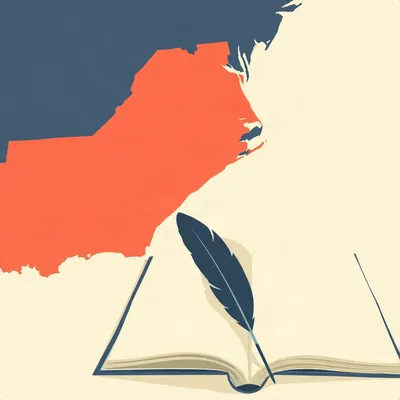
#5143: The Chickasaw Nation: A Dinner Guest Briefing
Who are the Chickasaw? A quick briefing on their history, removal, government, and current leadership transition.

#5140: Teletext: The One-Way Internet That Won't Die
Before dial-up, there was teletext — scores hidden in TV signals. Why it felt like the internet, and why the Dutch never turned it off.
#5067: Who Gets to Investigate the State?
From medieval England to October 7th — how nations investigate their own worst failures, and why the fight over who asks the questions never ends.
#5066: East Jerusalem Under Jordan: More Than Just a Border
What did 19 years of Jordanian rule actually mean for East Jerusalem? It's a story of legal integration and deliberate neglect.
#5040: The 130,000-Person Secret: Beyond Oppenheimer's Story
The Manhattan Project wasn't just physicists on a mesa. It was 130,000 workers, secret cities, and an industrial effort we rarely hear about.
#4984: Shanghai's Real vs. Romanticized Art Deco
How much of Shanghai's "Paris of the East" glamour is real, and what was lost to redevelopment?
#4857: How States Square the Circle on Assassination
From the Hashashin to drone strikes: how states build parallel legal systems for assassination.
#4856: How 9/11 Investigations Started Before the Second Plane Hit
FBI agents were on the ground at the World Trade Center before the South Tower was hit. The investigation started at 8:46 AM.
#4746: Did 9/11 Create the Security State?
How a single morning reshaped surveillance, intelligence, and daily life for a quarter century.
#4721: New England's Puritan Legacy: Why Connecticut Feels Different
Why does Connecticut feel so different from New York? It's not just culture—it's a 400-year-old theology shaping laws, signs, and daily life.
#4651: From Medici Bankrolls to 501(c)(3) Filings
Tracing the thread from Renaissance patrons funding cathedrals to the modern nonprofit sector of think tanks and foundations.
#4625: How Connecticut's Puritan DNA Drives Its Innovation
Why a state with blue laws until 2012 also birthed the helicopter, the submarine, and modern sex therapy.

#4538: Inside Dubai: Pearls, Oil, and the 90% Expat Nation
Dubai's towers hide a deeper story: a tiny citizen class, a 90% expat workforce, and two economic collapses that forced reinvention.
#4440: Before Denim: The Terrible Trousers That Rivets Killed
Before 1873, workers wore trousers that rotted, unraveled, or sandpapered their legs. Then a Nevada tailor fixed it with a copper rivet.
#4421: The Doublet Changed My Posture
Which pre-industrial garments actually change how you move and how others treat you? The doublet wins.