
Osint
134 episodes · Page 2 of 6
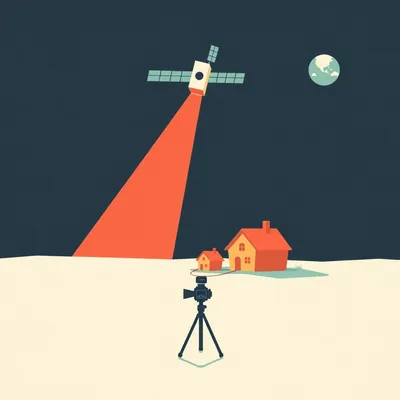
#3919: When Militants Want You to Watch Their Training
Hezbollah and Hamas don't hide their military drills from satellites. They broadcast them. Here's why.
#3845: Telegram’s Espionage Pipeline: How the IRGC Recruits Israelis
One Israeli spotted an IRGC recruitment channel on Telegram. He reported it. Then nothing.
#3843: Tracing the Grey Economy's Hidden Pipes
How journalists trace fraud from Tel Aviv boiler rooms to trafficking networks using public records and patience.

#3780: How Open-Source Satellites Spot Missile Launches
Thermal satellite data you can access for free can detect missile plumes. Here's what that tells us about classified military capabilities.
#3773: Mossad's Secret Influence Branch: 11-Year Photo Trap
A secret Mossad unit uses AI personas and decade-old photos to undermine Iran from within. One photograph took down a minister.

#3763: How Iran Could Hide a Nuclear Stockpile
What if Iran's enriched uranium isn't at Natanz or Fordow — but split across dozens of hidden basements?

#3741: What Israeli Detectives Actually Do All Day
TV detectives solve cases in 42 minutes. Real ones spend months on fraud, counter-terrorism, and paperwork.

#3623: How to Hide an Airbase in Plain Sight
From secret Israeli desert runways to modern camouflage — how militaries hide airstrips from satellites.
#3622: How OSINT Spots Electronic Warfare
How hobbyists track GPS jamming, radar ghosts, and the hidden signals of modern conflict.
#3392: Inside the AI Targeting Pipeline: Who Really Picks the Targets?
How AI finds, fixes, and nominates military targets — and why "human oversight" may be more ceremonial than real.
#3383: How the IAEA Watches Iran When the Door Is Locked
Iran has locked out inspectors. Here's how the IAEA still tracks its nuclear program through forensic evidence and satellite imagery.
#3358: Why Spies Still Use Dead Drops in 2026
Encryption is everywhere, so why risk a physical exchange? The answer reveals the limits of digital security.
#3348: Inside Iran's Pickaxe Mountain Nuclear Facility
A deeper, more fortified nuclear site than Fordow — and inspectors can't get inside.
#3347: Iran’s 60% Uranium: Where Is It Really?
Where is Iran hiding 142 kg of near-weapons-grade uranium? We break down the bunkers, the car washes, and the breakout timelines.
#3340: Why a Dead Attacker Still Gets Evidence Markers
Why investigators treat a dead attacker's scene like an active crime scene — and what those yellow numbered placards actually mean.
#3336: Why "Entombed" Uranium Won't Stay Buried
Iran's enriched uranium is "entombed" after strikes — but debris removal, tunneling, and seismic risks make recovery likely.
#3313: Allies and Espionage: The Threat Assessment Reality
Why "ally" doesn't mean "low threat" in counterintelligence — and how Israel, Germany, and Five Eyes all prove it.

#3176: Why Hilltops Still Win Modern Wars
Elevation isn't just about visibility — it's about radar horizons, electronic warfare, and ballistic physics.

#3141: How Search Teams Use $500 Torches to See 2km
How SAR teams deploy throwers, flood lights, and beacons as coordinated systems — and the physics that makes 2km throw possible.

#3063: Inside the Secret Service Advance Team
How 200 specialized agents secure every presidential movement — from hotel ballrooms to G20 summits.
#3052: The Boring Art of Professional Surveillance
Real surveillance is boredom by design, grey man theory, and choreographed teams — not Hollywood van work.
#2633: How Live UA Map Bridges Conflict Information Gaps
A curated conflict map that trades raw speed for verified, de-duplicated event tracking — used by civilians in active warzones.

#2455: How Protection Details Spot the Threat Before It Happens
The Marines developed a system for noticing what doesn't belong. Now it's the core of executive protection training.

#2437: The False Precision of GPS Coordinates
Why 8 decimal places of GPS data is mostly noise, and how tectonic plates move faster than your coordinate system updates.