Daniel sent us this one, and it's a question that's been rattling around my head too. Iran's highly enriched uranium stockpile — most of it at sixty percent — is supposedly enough for ten nuclear warheads if converted. The material is almost certainly buried deep underground, beyond the reach of even the most advanced bunker-busters. But we don't actually know where it is, what physical form it's in, or whether it's still at sixty percent or already something much more dangerous. So the question is: what are the plausible theories on storage, distribution, and enrichment status? Herman, you've been tracking this.

I have, and the timing on this prompt is almost unnerving. The IAEA's next quarterly report is due any day now — late June — and the new Director General, Rafael Grossi, has been unusually tight-lipped about what's in it. The last report in May pegged Iran's declared sixty percent stockpile at roughly a hundred and forty-two kilograms of uranium hexafluoride equivalent. That's the number everyone's working from. But here's the thing — "declared" is doing a lot of heavy lifting there.
The IAEA has lost continuity of knowledge at Iran's nuclear sites at least three times since twenty twenty-one. When inspectors get locked out, you lose the ability to verify that the material you saw last time is the same material you're looking at now. It could have been moved, converted, enriched further — you're relying on Iran's accounting. And their accounting has historically been, let's say, creative.
The nuclear equivalent of "the dog ate my homework.
Except the homework can level a city. So before we even get into storage theories, we need to nail down what "sixty percent enriched" actually means. Because I've seen a lot of coverage that treats it like it's basically weapons-grade, and that's not right.
Where's the line?
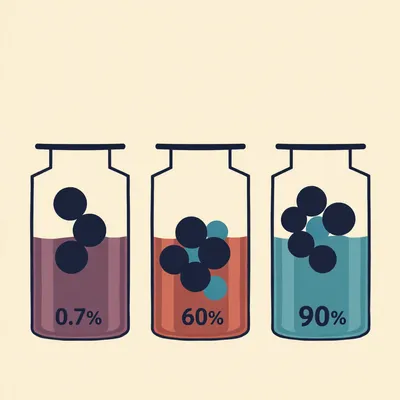
Weapons-grade is typically defined as eighty percent enrichment or higher, with most weapon designs using ninety percent or above — what's called super-grade. Sixty percent is a strange middle ground. It's too enriched for most civilian reactor fuel, which tops out around five percent. But it's not quite at the point where you can build a straightforward implosion device. You either need to enrich it further, or you need a much more sophisticated weapon design that can work with lower-grade material. The ten-warhead figure that gets cited assumes two things: first, that the hundred and forty-two kilograms gets converted from uranium hexafluoride gas into metal, and second, that the weapon design is efficient enough to use roughly fourteen to fifteen kilograms of ninety percent equivalent per core. If the design is less efficient, you get fewer warheads. If they've already enriched beyond sixty percent, you get more.
The ten-warhead number is basically the worst plausible case assuming everything goes right for them.
And "goes right" includes having the metallurgical capability to cast hemispherical cores, which is not trivial. You can't just pour uranium into a mold and call it a warhead. The tolerances are extremely tight, and the phase stability of the metal matters enormously. But we're getting ahead of ourselves. The first question the prompt asks is about storage — where and how — and the answer depends almost entirely on physical form. So let's start there.
Walk me through the forms. What are we actually talking about when we say "a hundred and forty-two kilograms of enriched uranium"?
Three possibilities, each with totally different implications. First, uranium hexafluoride gas — UF6. That's what comes out of the centrifuges. It's a gas at the temperatures and pressures used in enrichment cascades, though it solidifies at room temperature and atmospheric pressure. It's intensely corrosive, reacts violently with moisture, and has to be stored in specialized nickel-alloy cylinders. Second possibility: they've converted it to uranium oxide powder — U3O8, the stuff you'd feed into a fuel fabrication plant. Much more chemically stable, safer to store, but you can't feed it back into centrifuges without reconverting it to UF6 first. Third: uranium metal. That's the endgame form for a weapon core. Requires a whole separate industrial process — converting oxide to tetrafluoride, then to metal using a thermite-like reaction with magnesium or calcium. Each form tells you something different about intent.
If you're Iran and you want to keep your options open for rapid breakout, you keep it as gas. If you want survivability against a strike, you convert to solid.
UF6 cylinders are vulnerable. A direct hit that breaches a cylinder releases a plume of hydrofluoric acid and uranyl fluoride — it's a radiological hazard, and you lose the material. But keeping it as gas means you can feed it directly into centrifuges for the final sprint to ninety percent. The breakout clock is measured in days, not weeks or months. If you've converted to oxide or metal, you've bought yourself storage security but you've added a chemical conversion step back to gas before you can enrich further. That adds time, and time is what the international community wants.
What does the evidence suggest they've actually done?
This is where it gets interesting. There's satellite imagery from the Isfahan Uranium Conversion Facility showing increased truck traffic and heat signatures since late twenty twenty-five that are consistent with the uranium dioxide to uranium tetrafluoride reduction line operating. That's the step between oxide and metal. It doesn't prove they're making metal, but it strongly suggests they're moving material out of the gas phase and into solid form. The question is how much.
The IAEA can't just walk in and check?
They can check declared facilities. Isfahan is declared. But the conversion process itself is not prohibited under the JCPOA or Iran's safeguards agreements — Iran has the right to convert its own material. The IAEA can verify the amounts going in and out, but if Iran says "we converted fifty kilograms of UF6 to oxide for safer storage" and the numbers roughly balance, the inspectors don't have grounds to object. The concern is whether some of that material is being diverted before conversion, or whether the oxide is being further processed to metal at an undeclared site.
We've got partial evidence of conversion to solid form. That raises the next question — is it easier to hide a hundred and forty-two kilos of gas or a hundred and forty-two kilos of powder?
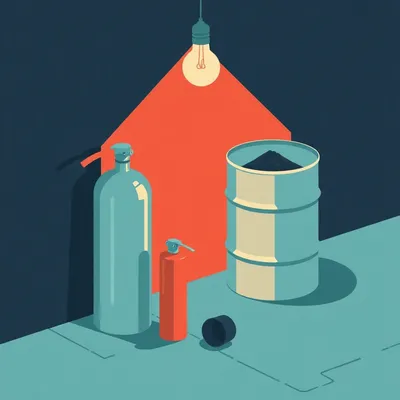
Neither is particularly hard, honestly. A hundred and forty-two kilograms of uranium as UF6 occupies about seven or eight standard thirty-inch cylinders — each about the size of a small fire extinguisher. As oxide powder, it's maybe three or four five-gallon drums. As metal, it's a sphere about the size of a bowling ball. We're not talking about hiding an aircraft carrier here. The volume is small enough that you could move it in a panel van. The challenge isn't hiding the material itself — it's hiding the infrastructure needed to do anything useful with it.
Which brings us to the geography question. One site or many?
Let's do the single-site case first, because that's the known template. The Fordow Fuel Enrichment Plant is buried eighty meters under a mountain near Qom. That's the gold standard for hardened facilities. The US GBU-fifty-seven Massive Ordnance Penetrator can punch through about sixty meters of reinforced concrete, but Fordow has eighty meters of rock plus an unknown number of blast doors and active air defense. It's not invulnerable, but it's about as close as you can get without digging into the mantle.
We know there are centrifuges there.
We know there were. Fordow was configured for IR-one centrifuges under the JCPOA. After the US withdrawal and Iran's subsequent ramp-up, they installed IR-six machines — those are roughly ten to twelve times more efficient than the IR-ones. A cascade of a thousand IR-six centrifuges fed with sixty percent UF6 can produce about twenty-five kilograms of ninety percent enriched material in ten to fourteen days. That's one warhead's worth of super-grade metal. The question is whether those cascades are still at Fordow, or whether they've been moved.
That's the distributed storage theory, and it's the one that keeps intelligence analysts up at night. After the twenty twenty-four sabotage at the Shahid Ahmadi Roshan facility in Natanz — that's the centrifuge assembly plant — Iran moved a significant portion of its centrifuge production underground to a new site near Isfahan. Open-source satellite analysts picked up the excavation in early twenty twenty-five. The pattern suggests Iran has learned the lesson of the Stuxnet era: don't put all your enrichment capacity in one place where a single strike or cyberattack can cripple it.
If they've distributed the centrifuges, it stands to reason they've distributed the feed material too.
That's the logic. And the distribution doesn't have to be to hardened bunkers. This is where the "urban sanctuary" theory comes in.
That sounds ominous.
The idea is that Iran has prepositioned small quantities of sixty percent material — or even further-enriched material — in civilian-adjacent locations. University laboratories, hospital research reactors, industrial parks, possibly even private residences. The precedent here isn't other nuclear programs — it's Hezbollah's rocket storage doctrine in southern Lebanon. You store munitions in or under civilian infrastructure so that any strike against them produces casualties that can be weaponized diplomatically.
A human-shield deterrent.
And Iran has form here. In twenty twenty-three, IAEA inspectors discovered undeclared centrifuge components at a site in Turquzabad — hidden in what was ostensibly a car wash facility. That's not a bunker under a mountain. That's a commercial building in a populated area. If you can hide centrifuge components in a car wash, you can hide a few cylinders of UF6 in a university basement.
The car wash detail is genuinely unsettling.
It should be. And Turquzabad wasn't even the first time. There was the Lavisan site, the Parchin military complex where they razed buildings and scraped topsoil before inspectors arrived, the Kalaye Electric Company workshop in Tehran where they conducted early centrifuge tests in the nineteen nineties. Iran has a long history of using dual-use civilian facilities as cover for nuclear work. The urban sanctuary theory isn't speculation pulled from nowhere — it's pattern recognition.
If I'm an Iranian nuclear planner, and I've got a hundred and forty-two kilos of sixty percent material, what's my optimal distribution?
The consensus among analysts I've read — and I should say this is informed speculation, not confirmed intelligence — is a hybrid model. The bulk of the material, maybe eighty to a hundred kilograms as UF6, stays at Fordow. That's your rapid breakout reserve. You keep it as gas, you keep it connected to operating centrifuge cascades, and you maintain the ability to sprint to ninety percent in under two weeks. The remaining forty to sixty kilograms gets converted to oxide or metal and distributed to three to five secondary sites. Some of those are hardened — there's a facility near Tabriz that's been excavated into a hillside, and another near Shiraz with suspicious underground construction. Some may be urban.
The urban ones — those are the ones that don't show up on satellite imagery.
A hardened bunker requires excavation. You can see that from orbit. But if you're storing material in an existing building with a basement, there's no construction signature. The only way to find it is human intelligence — someone on the ground who knows what's in room B-seventeen of the physics building at Sharif University, or whatever the actual location is. And human intelligence inside Iran's nuclear program is extremely scarce. TheMossad has had some spectacular successes — the theft of the nuclear archive from a Tehran warehouse in twenty eighteen, the assassination of Mohsen Fakhrizadeh in twenty twenty — but those operations took years to develop. You can't run them on demand.
We've got a hybrid storage model — bulk at Fordow, smaller caches distributed, some possibly urban. That covers the "where" and the "how many." Now the really uncomfortable question: is the enrichment process toward weapons-grade already underway or even finished?
This is where the continuity of knowledge gaps become terrifying. The IAEA's inability to verify centrifuge production at the new underground site near Natanz — that was discovered via open-source satellite analysis in March of this year, not because Iran declared it — means we don't know what those machines are doing. Iran could have been feeding sixty percent material through IR-six cascades for months without anyone outside knowing.
What's the timeline if they did?
Let me walk through the math. You start with a hundred and forty-two kilograms of uranium as UF6 at sixty percent enrichment. The separative work required to go from sixty percent to ninety percent is actually much less than what it took to get from natural uranium to sixty percent. A cascade of a thousand IR-six centrifuges — that's a relatively modest setup — fed with sixty percent UF6 can produce about twenty-five kilograms of ninety percent enriched uranium metal in ten to fourteen days. That's one warhead core. If you've got multiple cascades running in parallel, you could produce enough for several warheads in the same timeframe. And if they started this process six months ago, we're talking about a stockpile that might already be at ninety percent, converted to metal, and machined into components.
Ten to fourteen days from sixty to ninety. That's not a breakout window, that's a long weekend.
It's worse when you consider that the IR-six isn't even Iran's most advanced centrifuge. They've been testing the IR-nine, which is reportedly even more efficient. The breakout timeline that gets cited in policy discussions — "Iran is months away from a bomb" — assumes they're starting from their declared facilities with known centrifuge numbers. If they've got undeclared cascades running undeclared feed material, the timeline could be zero. They might already be there.
What would we see if they were doing the final metallurgical steps?
This is the key intelligence indicator that I wish more coverage focused on. Enrichment is hard to detect remotely — the centrifuges are underground, the power consumption can be masked, the thermal signature is minimal. But metallurgy is harder to hide. To convert uranium oxide to metal, you need a vacuum arc furnace or a similar high-temperature system. To cast hemispherical cores, you need specialized molds, a controlled-atmosphere casting chamber, and machining equipment that can handle uranium's pyrophoric properties — uranium metal shavings ignite spontaneously in air. The equipment is specialized enough that you can track its procurement. If Iran starts importing vacuum arc furnaces, or if they start manufacturing the specific types of graphite crucibles used for uranium casting, that's the signal. That tells you weaponization is underway regardless of what the centrifuges are doing.
Have we seen any of those signals?
There have been concerning procurement attempts. In late twenty twenty-four, German intelligence intercepted an Iranian front company trying to acquire a vacuum induction melting system through a shell company in Malaysia. The shipment was blocked. But that's one attempt we know about. The question is how many we don't know about. Iran's procurement networks have been operating for decades — they know how to evade export controls, use cutouts, falsify end-user certificates. Khan network that supplied Pakistan and Libya ran for years before it was exposed, and Iran learned a lot from that playbook.
The Pakistan comparison is worth pulling on. How did they handle storage before their first test?
Khan network distributed enriched material across multiple safe houses in Lahore and Karachi. Not military bases — residential neighborhoods. The material was moved in unmarked vehicles, stored in basements, and guarded by personnel in civilian clothes. When the Pakistani nuclear program needed to assemble its first devices in the late nineteen eighties, the components were brought together from multiple locations only at the final stage. Iran has studied this model. The parallels between Khan's distribution network and the urban sanctuary theory are not coincidental.
We're looking at a situation where the material could be anywhere, in any form, at any enrichment level, and we might not know until it's too late. That's not a comforting picture.
No, and I want to be clear about something — I'm not saying Iran definitely has ninety percent material hidden in a Tehran basement. I'm saying the verification gaps mean we can't rule it out. And in nuclear nonproliferation, "we can't rule it out" is a policy crisis. The entire international safeguards system is built on the assumption that declared material stays declared and that inspectors can verify its location and form. When that assumption breaks down, you're left with inferences from satellite imagery, signals intelligence, and human sources — all of which can be wrong or incomplete.
The prompt mentions that much of the material is believed to be beyond the range of bunker-buster bombs. Is that actually true for the known sites?
For Fordow, yes — eighty meters of mountain is beyond the reliable penetration depth of any conventional munition in the US arsenal. The GBU-fifty-seven Massive Ordnance Penetrator is rated for sixty meters of reinforced concrete, but rock is different from concrete, and Iran has likely added blast doors, void spaces, and other countermeasures that degrade penetrator performance. You'd need multiple strikes on the same entry point, and even then, you're not guaranteed to destroy the centrifuge halls. For the newer sites near Isfahan and Natanz, the depth is less certain. Open-source analysts estimate thirty to fifty meters, which puts them within the MOP's theoretical range but not its reliable range. And for urban sites, the depth is irrelevant because you can't drop a thirty-thousand-pound bomb on a university in Tehran without causing a strategic catastrophe.
Which circles back to the urban sanctuary theory. If the material is in populated areas, the military option is effectively off the table.
It's not entirely off the table — special operations forces can conduct ground raids, as we saw with the archive theft in twenty eighteen — but that's a vastly higher-risk operation than an airstrike. And it doesn't scale. You can raid one warehouse. You can't simultaneously raid five university basements, two hospital storage rooms, and a car wash in Turquzabad. The distributed model defeats the raid model.
What do we actually know versus what we're inferring? Let's put a scorecard on this.
Here's what we know. One: Iran has declared a hundred and forty-two kilograms of sixty percent enriched UF6 equivalent. Two: some portion of that has likely been converted to solid form based on activity at Isfahan. Three: Iran has operating centrifuge cascades at Fordow and an undeclared underground site near Natanz. Four: the IAEA has lost continuity of knowledge multiple times. Five: Iran has a history of hiding nuclear activities in civilian-adjacent facilities.
What are we inferring?
We're inferring that the material is distributed across multiple sites, some hardened and some not. We're inferring that at least some remains as UF6 gas for breakout capability. We're inferring that further enrichment may have occurred at undeclared cascades. And we're inferring that if metallurgical work is underway, we'd only detect it through procurement intelligence, not on-site inspection. Those are reasonable inferences based on Iran's past behavior and technical constraints, but they're still inferences.
The procurement angle — you mentioned vacuum arc furnaces. What else should someone watching this issue look for?
A few specific items. Tributyl phosphate — that's a solvent used in plutonium separation, not directly relevant here but indicative of a broader weapons program. Maraging steel — that's a high-strength steel used in centrifuge rotors; importing it would suggest centrifuge expansion. Beryllium — used as a neutron reflector in warhead cores. And the big one: hemispherical casting molds. Those are so specialized that there's basically no civilian application. If you see Iran trying to acquire them, or the graphite machining capability to make them domestically, the game has changed.
The IAEA reports — you said to watch for "continuity of knowledge" language.
That's the canary in the coal mine. When the IAEA says it "continues to verify the non-diversion of declared nuclear material," that's the baseline reassurance. When it says it has "lost continuity of knowledge" at a particular facility, that means inspectors were denied access long enough that the material balance could have changed. Every time that phrase appears, assume material has been moved or converted. The frequency of that language in IAEA reports has been increasing since twenty twenty-one. The June report that's due any day now — watch that language carefully.
If the report shows a sudden drop in declared sixty percent inventory, what does that tell you?
One of two things, both bad. Either Iran has converted the material to metal — which means weaponization is underway — or they've diverted it to an undeclared site where it can be enriched further without oversight. Either way, the breakout clock that policymakers are using is wrong. You can't estimate breakout time if you don't know where the material is or what form it's in.
What's the most likely scenario, in your view?
I think the hybrid model I described is closest to reality. The bulk of the sixty percent material stays at Fordow as UF6 — that maintains the rapid breakout option that gives Iran leverage in negotiations. Smaller quantities have been converted to oxide or metal and distributed to hardened secondary sites and possibly urban locations for survivability. I don't think they've enriched to ninety percent yet, but I think they've positioned themselves to do so in a matter of days if they decide the strategic moment has arrived. And I think they've done enough metallurgical groundwork — procuring equipment, training personnel, possibly conducting non-nuclear casting tests with surrogate materials — that the final weaponization step could happen faster than most estimates assume.
The "strategic moment" — what would that look like?
A breakdown of deterrence. If Iran believes it's about to face a military strike that could destroy its nuclear infrastructure, the rational move is to sprint to a weapon before the strike lands. A nuclear weapon — even an untested one — changes the calculus. It's the ultimate insurance policy. The concern is that Iran might dash to ninety percent, cast a core, and declare itself a nuclear weapons state without ever conducting a test. You don't need to test a gun-type device to be reasonably confident it'll work — the physics are well understood since nineteen forty-five. And at that point, any military strike becomes an attack on a nuclear-armed state, with all the escalation risks that implies.
The ambiguity about storage and form isn't a bug — it's the feature. It's the entire strategic game.
Iran benefits from uncertainty. If the US and Israel knew exactly where the material was and what form it was in, they could plan a strike with confidence. The ambiguity forces caution. It's the nuclear equivalent of "don't come any closer, I might have a gun in my pocket." You don't have to show the gun. You just have to make the other guy wonder.
The international community's response options in a confirmed urban storage scenario?
That's the open question that keeps me up at night. If Iran has ninety percent material in a civilian-adjacent location, what do you do? You can't bomb it without mass casualties. You can't raid it without risking a firefight in a populated area. You can try cyber operations to disable any associated equipment, but if the material is already in metal form, there's nothing to disable — it's just a chunk of metal waiting to be assembled. Sanctions and diplomacy don't work on a fait accompli. You're left with a very narrow set of unattractive options, and that's exactly where Iran wants you.
The next IAEA report might tell us a lot, or it might tell us nothing, and either outcome is alarming for different reasons.
Welcome to nuclear verification. Where the data is sparse, the stakes are existential, and the most important information is what you're not being told.
Let's pull this together for anyone trying to track this issue. The most likely storage configuration is a hybrid: bulk UF6 at Fordow for rapid breakout, smaller solid-form caches at three to five secondary sites, some possibly urban. The key indicator to watch isn't enrichment level — it's chemical form. If Iran starts importing or manufacturing metallurgical equipment, that's the weaponization signal regardless of what the centrifuges are doing. And in IAEA reports, every instance of "lost continuity of knowledge" means material may have moved or been converted. The breakout clock isn't months — if undeclared cascades are running, it could be zero.
That's the summary. I'd add one thing for listeners who want to go deeper on the verification challenges. The broader question of how you verify nuclear disarmament when inspectors can't access every site — it's the same problem we're seeing here with enrichment. The tools are satellite imagery, signals intelligence, procurement tracking, and environmental sampling. None of them are perfect, and all of them can be defeated by a determined state actor.
The fundamental tension is that the entire nonproliferation regime assumes good-faith participation, and Iran has demonstrated repeatedly that it will exploit every ambiguity. That's not a political statement — it's an observation about a pattern of behavior going back decades.
And the pattern tells you that when there's a gap in verification, you should assume the worst-case scenario, because Iran has consistently used those gaps to advance its capabilities. The car wash in Turquzabad wasn't an anomaly. It was a preview.
The question we're left with — and I don't think anyone has a good answer — is what the international community does if the worst case is confirmed. If Iran has produced ninety percent material and stored it somewhere that can't be struck without mass civilian casualties, what's the response option that doesn't end in catastrophe? I don't think one exists.
I don't either. And that's why the storage question isn't just a technical puzzle for analysts. It's the single most important variable in whether the Iran nuclear crisis ends with a deal, a strike, or a new nuclear-armed state. The form and location of that hundred and forty-two kilograms is the hinge of history.
Now: Hilbert's daily fun fact.
Now: Hilbert's daily fun fact.

In the seventeen twenties, French naturalist Georges-Louis Leclerc claimed the platypus used electrolocation to navigate the Niger River. He was off by two centuries, one continent, and the entire concept of electroreception, which wouldn't be formally described until the nineteen nineties.
Two centuries and a continent. That's not a miss, that's a different sport.
The June IAEA report drops soon. Watch the language around continuity of knowledge, watch the declared inventory numbers, and watch for any mention of conversion activity at Isfahan. Those three data points will tell you more than any headline.
If you want to dig into the verification challenges we touched on, the broader question of how you monitor nuclear programs when inspectors are denied access — that's a whole world of technical and policy questions that we'll almost certainly be revisiting.
This has been My Weird Prompts. Thanks to our producer Hilbert Flumingtop. If you're getting something out of these episodes, leave us a review wherever you listen — it helps other people find the show.
I'm Herman Poppleberry.
I'm Corn. We'll be back soon.