
Cognitive Biases
195 episodes · Page 3 of 9

#4848: Can You Train Yourself to Notice Everything?
The napkin test, three levels of SA, and whether awareness is born or built.
#4846: Can You Train Someone to Spot a Liar?
Israel's airport security relies on human screening. Does it actually work, or is it just better theater?
#4845: What Aviation Teaches Us About Attention
How pilots manage hours of boredom without burning out — and what we can steal from their approach.
#4840: Is Audio Learning Actually Effective?
We examine the science of audio learning, its real trade-offs, and how to use it strategically.

#4823: How to Disappear in Plain Sight in Conversation
Why grey rocking backfires and how beige rocking lets you set the agenda without anyone noticing.
#4747: The Price of Keeping a Secret
Why some people are wired for silence, and the industries that pay a premium for it.

#4728: Why Humans Love the Burn: Spicy Food and the Drive to Alter Consciousness
Why do humans love spicy food? The answer reveals something surprising about our relationship with altered states.

#4577: When Prophecies Fail: The Real Cognitive Dissonance
The 1954 doomsday cult, a $1 experiment, and why your brain rewrites reality when the world doesn't add up.
#4534: Savant Syndrome: When the Brain Rewires Itself
Savant syndrome isn't what pop culture tells you. We explore the real condition — congenital and acquired — and what it reveals about how brains work.

#4529: What IQ Tests Actually Measure (And Don't)
IQ tests don't measure intelligence holistically. Here's what the score actually captures and what it misses.
#4527: Is Genius Linked to Social Awkwardness?
We dig into the data behind the "mad scientist" stereotype — and find the pattern isn't what you'd expect.
#4525: The Empathy Paradox: Why Suffering Shuts Down Care
Why those who need empathy most are often the hardest to connect with—and how to train for it.
#4482: Never Being Pressed for Time: The Buffer Mindset
Why your brain underestimates task duration and how to build buffer that actually works.
#4429: Talking to Humans Like AI Agents
Can Grice's maxims survive your spouse's system prompt? We map the uncanny valley of conversational efficiency.
#4383: Seeing the Future in Present Ruins
How to build the cognitive skill of seeing what something could become, not just what it is.
#4382: Can Micro Expressions Actually Catch a Lie?
Micro expressions are real, but they won't reliably tell you if someone is lying. Here's what the science actually shows.
#4323: Customer Service Speak as Social Trolling
A practical field manual for weaponizing call center scripts at the dinner table — and why it works.
#4320: The Art of Being Overlooked: Real PI Disguise Techniques
Real private investigators don't use fake mustaches. Here's what actually works — and the ethical line you shouldn't cross.
#4302: The Shame Loop: How Parents Install It
How a parent's comment can install a shame loop that rewires decision-making for decades.
#4286: How Print Reading Changes Your Brain vs. Google News
Print readers understand news better. Here's what the research says about how the medium shapes your comprehension.
#4281: Why Déjà Vu Feels Like a Memory Glitch
The strange feeling of reliving a moment isn't a glitch—it's your brain's familiarity alarm going off by mistake.
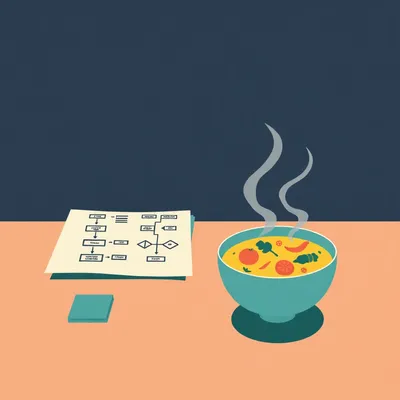
#4277: Flowcharts vs Soup: Two Ways Brains Solve Problems
Why some brains finish A before B while others happily juggle ten things at once.
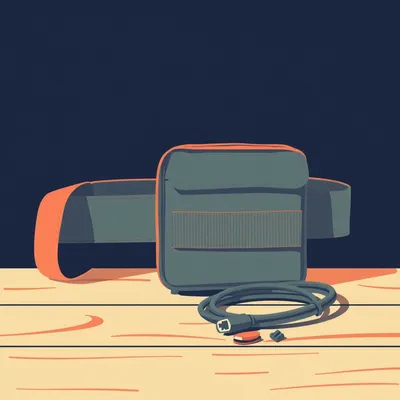
#4262: The Belt Principle: Eliminating Micro-Interruptions for Deep Focus
How a tactical belt with MOLLE pouches reveals the hidden cost of tiny interruptions — and what that means for knowledge work.

#4254: How to Vanish at a Picnic
A playbook for revealing nothing about yourself over four hours of casual conversation — without seeming weird.