The word savant gets tossed around so casually now — someone's good at Excel, they're a spreadsheet savant. Someone remembers baseball stats, they're a stats savant. But the clinical reality is so much stranger than the pop-culture shorthand that it's almost a different species of thing entirely.

Daniel sent us a prompt that picks up right where we left off. Here's what he wrote — and I'm going to read this nearly in full because the layers matter.
In our episode about the link between IQ and sociability, we mentioned that the correlation is surprisingly weak to non-existent. You mentioned that something called savant syndrome has shaped popular perceptions. This is why, when we do encounter people that are very smart but very challenged socially, we tend to remember it because it fits something we've been primed to see in popular culture. Savant is one of those terms that people throw into conversation, probably in an improper way. I did not realize until Herman mentioned it that savant syndrome is even a thing. I thought it was just a term people throw around to describe someone who is very brilliant in a niche area. Searching this, however, throws up a very different picture. It is a syndrome very closely associated with autism, but also with CNS damage. Let's talk about what this syndrome actually is and some of the unusual cases that have been documented developing later in life. I recall reading some really strange cases, maybe glamorized in Netflix documentaries, in which people had some kind of neurological event, maybe a car crash, for example, and then developed unusual high expressions of skill in a very specific domain. So this is something that can be both acquired and hereditary. Let's discuss this fascinating and curious condition.
Daniel's instinct is exactly right — savant syndrome is a real clinical entity, it's rare, and the acquired cases are genuinely as bizarre as the documentaries suggest. In fact some of them are stranger, because the documentaries tend to sand off the uncomfortable parts.
The uncomfortable parts being what, exactly?
That these skills don't come free. You'll see — almost every acquired case comes with something else. Obsessive-compulsive behaviors, memory deficits, personality changes. But let's back into this properly. What is savant syndrome clinically? It's a condition where a person with a significant mental disability or central nervous system abnormality exhibits one or more islands of exceptional skill that stand in stark contrast to their overall functioning. The key word there is contrast. It's not just being good at something. It's being unable to tie your shoes but able to tell you what day of the week March fourteenth falls on in any year you name, instantly.
So the popular image gets it backwards.
Completely backwards. The popular image is the brilliant but socially awkward genius — the Sherlock Holmes type, the Rain Man figure who's quirky but fundamentally high-functioning. The clinical reality is usually the inverse. Profound disability with a single spectacular exception. About ten percent of autistic individuals show savant skills. But savant syndrome also appears in other CNS conditions — brain injury, stroke, certain forms of dementia. And the skills cluster in a remarkably narrow set of domains. Music, art, calendar calculation, lightning calculation, mechanical and spatial skills. You don't get savant poets. You don't get savant philosophers.
Why those domains specifically?
That's where the mechanism gets interesting, and I want to get there. But first let me give you the numbers that frame this. The male to female ratio is roughly four to six to one — heavily skewed toward males. And within the savant population, there's a spectrum. At the bottom you've got what are called splinter skills — rote memorization, obsessive collecting of facts, the ability to recite train schedules. Above that, talented savants — people whose skill exceeds what you'd find in the general population, a impressive musical ability or artistic talent. And at the top, prodigious savants — skills at the level of a world-class expert. These are vanishingly rare. There might be fewer than a hundred known prodigious savants alive at any given time.
And the congenital form — the kind present from birth or early childhood — that's the one most associated with autism.
Right. And the classic case, the one everyone reaches for, is Kim Peek. He was the inspiration for Rain Man, though he wasn't actually autistic — he had agenesis of the corpus callosum, meaning the bundle of fibers connecting his left and right hemispheres never developed. He also had macrocephaly, an unusually large head. And his abilities were... look, they sound made up. He could read two pages simultaneously — left eye on the left page, right eye on the right page — and retain essentially everything. He memorized thousands of books. He could give you driving directions between any two cities. He knew the postal codes, the area codes, the television stations.
Wait. Two pages at once with different eyes? That's not a thing human brains do.
His brain didn't have the usual division of labor. The corpus callosum normally integrates information from both hemispheres. Without it, each hemisphere was processing independently. It's not that he was reading faster — he was reading in parallel. And that detail is important because it points to something fundamental about what savant syndrome actually is neurologically. It's not that savants have supercharged brains. It's that their brains are organized differently — and in some cases, that different organization removes a constraint the rest of us live with.
So that's the congenital form. But Daniel's prompt also flagged the acquired cases — people who were normal, had some kind of neurological event, and then suddenly had skills they never had before. Which sounds like the plot of a bad movie.
It sounds like a bad movie because bad movies stole it from the real cases. And the real cases are where this condition really defies explanation. But before we get to those, I want to sit with the mechanism for a minute — because the congenital and acquired forms point to the same underlying process, and understanding that is what makes the acquired cases make sense.
All right. What's actually happening in the brain?
There's a theory — and it's the dominant framework for understanding this — called the tyranny of the left hemisphere. The idea is that in a typical brain, the left hemisphere, particularly the left fronto-temporal region, acts as a kind of gatekeeper. It's the seat of language, of abstract reasoning, of top-down processing — it takes sensory input and imposes conceptual frameworks on it. You see a face, and your left hemisphere says that's my neighbor Dave, here's what I know about Dave, here's how I should interact with Dave. It's efficient. But in doing that, it suppresses something.
The right hemisphere.
The right hemisphere's more primitive, detail-oriented, pattern-recognition mode. The right hemisphere doesn't care that it's Dave — it's processing every pore on Dave's face, the exact angle of the light, the micro-expressions, the raw sensory data. In most of us, that flood of detail gets filtered out because the left hemisphere's top-down processing says none of this is relevant, here's the summary. But if the left fronto-temporal region is damaged or dysfunctional — whether from a developmental condition like autism, or from a traumatic brain injury, or a stroke — that suppression lifts. The right hemisphere's detail processing runs unchecked. And you get savant skills.
So it's not that savants have something extra. It's that they're missing a filter the rest of us have.
That's the hypothesis. And it explains why the skills cluster in those specific domains. Music, art, calendar calculation, mechanical skills — these are all right-hemisphere-friendly tasks. They rely on local detail processing, pattern recognition, procedural memory. They don't require abstract language-mediated reasoning. You don't get savant novelists because novel-writing is a left-hemisphere, language-sequencing, abstract-planning task. You get savant pianists because music is pattern and procedure and detail.
The calendar calculation thing still baffles me. How does right-hemisphere detail processing let someone instantly know what day of the week August twelfth was in seventeen forty-three?
The leading hypothesis is that calendar calculation is actually a form of pattern recognition — that the Gregorian calendar has a mathematical structure that repeats, and savants are unconsciously extracting that pattern. They're not calculating in the way you or I would — they're seeing the pattern. Some of them describe it as simply knowing, the way you know the color of something you're looking at. It's perceptual, not computational.
Which connects to something you mentioned earlier — that the skills appear to unlock rather than develop.
Yes. And that brings us to the acquired cases, where this becomes impossible to ignore. Let me give you three. Derek Amato. He was thirty-nine years old, no musical training, couldn't play an instrument. He dove into the shallow end of a pool, hit his head, suffered a severe concussion. When he came to, he had lost about thirty-five percent of his hearing and had significant short-term memory loss. He also had an overwhelming compulsion to sit down at a piano. He'd never played piano in his life. He sat down, and his hands just... knew where to go. He could play complex original compositions. He described seeing black and white squares in his vision that would move — and he would just play what he saw. He's since released multiple albums. He's a professional musician. He had no prior musical ability.
He saw musical notation as visual patterns and just played them.
He didn't see notation. He saw the notes themselves — like geometric patterns that corresponded to keys. He'd never learned to read music. He just saw shapes and his fingers followed them. And here's the part the Netflix documentaries tend to gloss over — he also developed obsessive-compulsive behaviors he never had before. He had to organize things in specific ways. His personality changed. The skill came with a cost.
You said three cases.
Tony Cicoria. Orthopedic surgeon, forty-two years old, struck by lightning in nineteen ninety-four. He was using a payphone at a park — the lightning hit the phone line, traveled through the receiver, threw him to the ground. He saw his own body from outside himself, the whole near-death experience thing. He recovered. And then, within weeks, he developed an intense, inexplicable compulsion to listen to piano music. He'd never cared about piano music before. He started buying recordings. Then he started teaching himself to play. Then he started composing. He'd wake up at four in the morning with entire compositions in his head, fully formed, and he'd have to write them down. He's since had his work performed by professional orchestras. Prior to the lightning strike — zero musical interest, zero musical training.
A surgeon gets electrocuted and becomes a composer. That's... that's not a thing that should happen.
And yet. Third case — Jason Padgett. He was a furniture salesman in Washington state, self-described as someone who didn't care about academics, never went to college. He was mugged outside a karaoke bar, beaten severely, suffered a brain hemorrhage. When he recovered, he saw the world differently. Literally. He saw geometric patterns everywhere — the curve of a stream of water from a faucet would appear as a series of intersecting lines and angles. He became obsessed with mathematics. He could visualize complex fractal structures. He could draw intricate geometric patterns by hand. He'd never had any mathematical ability or interest before. He was later diagnosed with acquired savant syndrome with synesthesia — his sensory experiences were cross-wired with mathematical perception.
And like the others — this came with costs.
Obsessive-compulsive disorder, social anxiety, a kind of germophobia he'd never had before. He described it as exhausting — he couldn't turn it off. The patterns were always there. And that's the through-line in all the acquired cases. The skill isn't a gift in the way we normally mean that word. It's a restructuring of the brain that opens one door and closes others.
The tradeoff part is what makes the tyranny of the left hemisphere theory feel so plausible. If the left hemisphere is suppressing raw pattern recognition to give us efficient abstract processing, then damaging that suppression doesn't make you a better version of yourself. It makes you a different version.
And this is where the radical implication lives. If a concussion or a lightning strike or a mugging can suddenly unlock prodigious skills in someone who had zero prior ability, then those skills were latent. They were already there. The brain already had the capacity — it was just being suppressed. Which means, in theory, that capacity exists in all of us.
That's a big leap.
It's a hypothesis, not a settled fact. But the acquired cases make it hard to dismiss. The skills don't develop gradually — they appear suddenly, fully formed or nearly so. Derek Amato didn't spend years learning piano. He sat down and played. That's not learning. That's... removal of an inhibition. The neuroscientist who's done the most work on this — Darold Treffert, who studied savant syndrome for decades — called this the little Rain Man hypothesis. The idea that a little Rain Man exists in all of us, and that the left hemisphere normally keeps it in check.
So the popular image of the socially awkward genius isn't just wrong — it's almost perfectly inverted. The savant isn't a high-functioning person who happens to be socially odd. The savant is someone whose brain has been reorganized, usually through damage or developmental difference, such that one narrow ability is amplified at the expense of broader functioning.
And that's why savant syndrome is a terrible lens for understanding the intelligence-sociability question we discussed before. Daniel's instinct in the prompt is right — we've been primed by popular culture to see brilliant but socially broken as a coherent archetype. Rain Man, A Beautiful Mind, The Good Will Hunting thing. But the clinical reality is that savant syndrome is an extreme outlier. It's not a data point about normal variation in the intelligence-sociability correlation. It's a completely different phenomenon — a neurological reorganization that produces a specific, narrow, spectacular ability alongside significant disability. Using that to draw conclusions about whether smart people tend to be less social is like using lightning strike survivors to draw conclusions about whether electricity improves musical ability.
The weak correlation we talked about stands. Savant syndrome doesn't strengthen it — if anything, it distorts our perception of it by giving us a vivid, memorable archetype that isn't representative.
The availability heuristic in action. When someone says the words socially awkward genius, your brain reaches for the most vivid example, and popular culture has handed you Rain Man on a silver platter. You don't reach for the hundred thousand autistic individuals with savant skills who are profoundly disabled and will never live independently. That doesn't make for a compelling movie.
There's a question I want to sit with, though. If the left hemisphere is suppressing these capacities in all of us, should we be trying to unlock them?
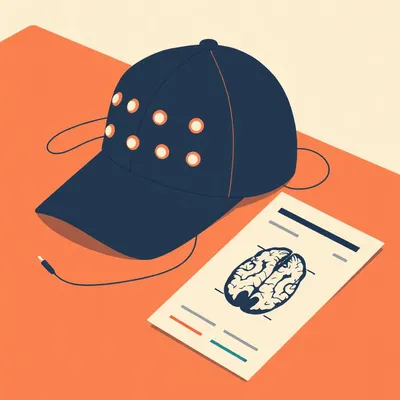
That's the million-dollar question, and it's not hypothetical anymore. Brain-computer interfaces are advancing. Transcranial magnetic stimulation can temporarily inhibit specific brain regions. There have been experiments — small, preliminary — where researchers used TMS to temporarily suppress the left fronto-temporal area in typical subjects, and some of them showed temporary improvements in detail-oriented tasks. Drawing, proofreading, that kind of thing.
Temporary.
Temporary. The effect fades when the stimulation stops. But the direction of travel is clear. We're moving toward a world where we could, in principle, deliberately induce savant-like states. And the question is whether we'd want to. Because the acquired cases all show the same pattern — the skill comes with costs. Memory loss, obsessive-compulsive behaviors, personality changes, social difficulties. There's no free lunch in neuroplasticity. You don't get the right hemisphere's detail processing without losing some of the left hemisphere's integrative function.
It's the neurological version of overclocking a processor. You can push it past its rated speed, but it runs hotter, it's less stable, and eventually something burns out.
It raises the ethical question — if you could take a pill that would make you a musical prodigy but also give you crippling OCD and destroy your short-term memory, would you take it? Most people would say no. But what if you could dial it in? What if you could get ten percent of the skill with five percent of the cost? We don't know if that's possible, but the research is heading in that direction.
The other thing that strikes me about the acquired cases is how specific the skills are. Derek Amato became a pianist, not a guitarist. Jason Padgett became a geometric mathematician, not an algebraist. It's not general intelligence that gets unlocked — it's one narrow channel.
Which tells you something about what's being suppressed. The left hemisphere isn't suppressing general intelligence. It's suppressing a specific kind of processing — detail-oriented, pattern-recognition, procedural. And the form that takes depends on the individual brain. Amato's brain happened to have the latent capacity for piano. Padgett's had the latent capacity for geometric visualization. The damage didn't create the skill — it revealed which latent capacity was there.
So if you zapped my left fronto-temporal region right now, what would come out? Napping at a world-class level?
Given your track record, you might already be a prodigious savant in that domain.
I prefer to think of it as acquired.
Acquired over a lifetime of dedicated practice.
But seriously — the fact that the skill is so specific to the individual suggests that whatever latent capacities we have are not uniform. We're not all carrying around the same suppressed abilities. Some people might have latent musical ability. Some might have latent mathematical ability. Some might have... I don't know, an uncanny ability to identify anteater species at a distance. Which I would not want unlocked under any circumstances.
Your anteater aversion remains one of the great unexplained phenomena of this show.
It's not unexplained. It's ancestral. Sloths and anteaters have a long and complicated history that I don't care to get into.
You've never explained it.
And I'm not going to start now.
Fair enough. But to your point — yes, the latent capacity is probably not uniform across individuals. And that's another reason savant syndrome is a bad lens for understanding intelligence generally. It's not telling us about intelligence. It's telling us about one specific, narrow, detail-processing capacity that most of us keep suppressed because it would interfere with normal functioning.
There's a media literacy point here that's worth making explicit. Daniel mentioned Netflix documentaries glamorizing these cases. And they do — they present them as almost magical transformations, the hidden genius unlocked by tragedy. But they consistently underplay the disability side. Kim Peek couldn't button his own shirt. Derek Amato lost a third of his hearing and can't remember what happened five minutes ago. These are not superhero origin stories. They're stories about brain damage that happened to produce one remarkable side effect.
And the Rain Man effect specifically has been enormous. Before that film, savant syndrome was essentially unknown to the general public. After it, everyone had a mental image. But the mental image was of Dustin Hoffman's character — who was a composite, Hollywoodized version. He was charming, fundamentally sympathetic, his difficulties were played for heartwarming moments. The real Kim Peek was far more disabled and far more extraordinary. The film sanded off the rough edges on both sides.
It also created a template. Every savant story since has been fitted into that template — the hidden genius, the social awkwardness, the heartwarming breakthrough. And that template is what primes us to see the intelligent-but-socially-awkward archetype as a real category when it's mostly a storytelling convenience.
Daniel's original question was about the IQ-sociability link. And what savant syndrome actually demonstrates, when you look at the clinical reality rather than the pop-culture version, is that extreme ability in one narrow domain can coexist with profound disability in almost every other domain. That's not a data point about the normal relationship between intelligence and sociability. It's a data point about how modular the brain is — how specific abilities can be isolated and amplified when the usual integrative functions are disrupted.
The modularity is the thing I keep coming back to. The fact that you can lose the ability to have a normal conversation but gain the ability to instantly calculate the day of the week for any date in history — those two things are handled by different systems, and the systems can be traded off against each other. That's not how we intuitively think about intelligence. We think of it as one thing, a single dimension from low to high. Savant syndrome is one of the strongest pieces of evidence that that model is wrong.
Intelligence is a bundle of capacities, not a single capacity. And the bundle can be rearranged. That's what savant syndrome is — a rearrangement of the bundle. Some capacities are amplified, others are diminished. The net result is not more intelligence or less intelligence. It's a different configuration of intelligence.
So if you take one thing from all of this, it's that savant syndrome is real, it's clinically specific, and it has almost nothing to do with the popular image of the socially awkward genius. The popular image gets the direction of the effect backwards — it imagines a high-functioning person with a social quirk, when the reality is usually a profoundly disabled person with one spectacular island of ability. And that island tells us something fascinating about the latent capacities of the human brain, but almost nothing about the normal relationship between intelligence and sociability.
The one thing I'd add — the acquired cases force us to confront the possibility that these capacities are latent in all of us. The left hemisphere suppresses them for good reason. Removing that suppression comes with costs we're only beginning to understand. The question of whether we should try to unlock these abilities deliberately is going to become more urgent as the technology advances.
If a listener has experienced something like this — a neurological event followed by a sudden unusual skill, or knows someone who has — we'd love to hear about it. Send it to the show at show at my weird prompts dot com.
Thanks as always to our producer Hilbert Flumingtop.
This has been My Weird Prompts. We'll be back soon.
Try not to get struck by lightning in the meantime.
Unless you really want to learn piano. Then maybe weigh the tradeoffs.