Daniel's been engraving four-digit numbers into everything he owns for months now, and the thing he keeps coming back to is that it's the only marking method he actually trusts. Stickers peel, labels fade, but a number carved into the metal frame of a shelving unit is just... there. Permanent. So now he's at the end of the inventory project and he wants to take all that hard-won technique and point it at something he's cared about for years: Paleo-Hebrew. The ancient script, the one the original biblical texts were written in. And his question has two parts. Where does he find an artisan to cut custom metal stencils of Paleo-Hebrew characters, and what files does he need to prepare? And then, what are some tasteful ways to actually use these engravings once he has them?

The stencil instinct is the right one here, and I want to say why before we get to the practical stuff. Paleo-Hebrew was never standardized. Every inscription from the tenth century BCE through the second century has its own letterforms, its own slant, its own hand. If Daniel tried to freehand these characters, he'd be inventing a version. A stencil freezes one specific inscription's shapes and lets him reproduce them faithfully over and over.
So the stencil isn't just a convenience, it's the thing that makes the project honest.
And that's a real craft argument, not just a practical one. Ancient scribes worked from established forms too. They didn't improvise letterforms every morning.
Right. So where does he send the design?
The good news is that single-unit custom metal stencils are completely available now. Stencil Stop out of the States cuts custom work in stainless steel, point six millimeters thick, no minimum order, and they'll take basically any file format you throw at them. Free digital proofs, ships in about two business days. Craftcuts does twenty-gauge galvanized steel. Ponoko does laser-cut brass with tolerances around a tenth of a millimeter, no minimum order. If Daniel wants a true artisan piece rather than a production shop, a local makerspace with a fiber laser is probably the move.
And he's in Jerusalem. There's got to be a job shop or a makerspace within a few kilometers that'll cut brass for a one-off.
Almost certainly. But the file prep is where most people blow it. He needs vector files, not raster. So he takes the Paleo-Hebrew glyphs he wants, converts them to outlines in Inkscape or Illustrator, and exports an SVG. Maybe a DXF copy too, depending on the shop.
Why both?
SVG plays nicely with the desktop laser crowd, Glowforge, xTool, LightBurn. DXF is the safer bet for older industrial controllers and machine shops. Sending both covers the field. And the critical thing, the thing that'll make or break the stencil, is bridges.
The little tabs that keep the inside of a letter attached to the sheet.
Right. Any letter with an enclosed shape needs them. The Paleo-Hebrew ayin is basically a circle. Samekh has an enclosed center. Without bridge tabs, the middle of the letter just falls out when the stencil's cut, and you've got a hole instead of a letter. So Daniel has to add those bridges manually in the vector file. That's not optional.
And that's also where the aesthetic tension shows up. The bridge interrupts the letterform. You're trading a little fidelity for a stencil that actually holds together.
Which is a nice little echo of the whole standardization problem. The script itself was never one thing, and now the stencil forces you to make one more compromise.
I want to talk about the fonts, because that's the starting point. Where does Daniel actually get the letterforms?
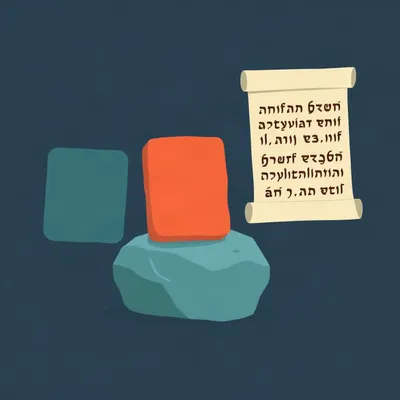
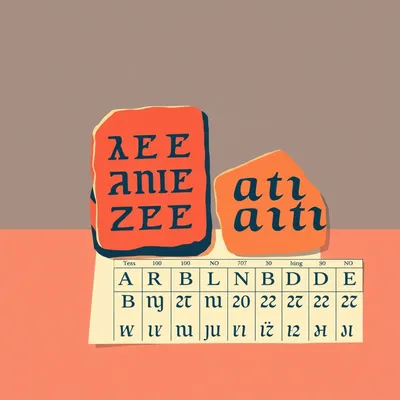
There's a really good free collection by Kris Udd. Twenty-two fonts, each one based on a specific inscription. Tell Zayit from the tenth century BCE, the Gezer calendar, the Siloam inscription, the Lachish letters. They're free through BiblePlaces. The glyphs are mapped to a Hebrew keyboard layout, and the period key gives you the word-divider dot, which is a nice touch.
So he's not just picking Paleo-Hebrew, he's picking which Paleo-Hebrew. The Siloam inscription hand versus the Gezer calendar hand.
And that's a decision with real scholarly weight. The Gezer calendar is one of the earliest examples we have, tenth century BCE. The Siloam inscription is seventh century, and by then the script had developed a cursive tendency. So the letterforms are noticeably different. If Daniel wants the oldest look, he goes Gezer or Tell Zayit. If he wants something a little more fluid, Siloam.
And he should probably name the inscription when he shows people the finished piece. Otherwise it's just an anonymous ancient-looking squiggle.
I think that's right. The provenance is part of the story. "This is the aleph from the Gezer calendar, carved into a chopping board" lands differently than "here's an old Hebrew letter."
There's also the Culmus Project fonts, which are free and open source, but they haven't been maintained since twenty ten. And they map the glyphs to both the Hebrew Unicode range and the Phoenician range.
The Phoenician Unicode block, U plus one zero nine zero zero through one zero nine one F, is explicitly intended to cover Paleo-Hebrew. So if Daniel's building a digital file, that's the proper encoding. But for a stencil, the Unicode mapping matters less than the actual outline shapes. He's going to convert to paths anyway.
Let me ask the practical question. He's been engraving with a rotary tool, freehand, numbers into metal and wood. How does a stencil actually change the workflow?
A metal stencil gives him a physical guide. He tapes or clamps it to the surface, and the bur follows the edges of the cutout. It removes the hesitation problem. When you're freehanding, every stroke is a decision. With a stencil, the shape is already committed, and he's just executing.
So it's the same thing he learned from marking inventory numbers, but with the dexterity applied to a fixed form instead of an improvised one.
And the speeds he learned still apply. Harder surface, higher speed. Glass, thirty to forty thousand RPM. Steel, seventeen to thirty. Plastic around twelve. Paleo-Hebrew on a wooden chopping board is going to be a lower-speed, controlled pass, because wood tears out if you go too fast against the grain.
Wood grain direction. He'd have learned that on the inventory project if he marked any wooden furniture.
Right. Engrave with the grain to prevent splintering. And with a stencil, the grain direction interacts with the letter shapes. Some Paleo-Hebrew letters have long vertical strokes, some have tight curves. He'll want to orient the stencil so the dominant strokes align with the grain where possible.
That's the kind of detail that only comes from having done it. Which he has.
The other thing is bur selection. Diamond-encrusted burs, ball tip, one and a half millimeters or smaller for fine detail. Paleo-Hebrew has some very tight internal angles. A two or three millimeter bur is going to obliterate the nuance.
So he's probably looking at a one millimeter ball tip for the fine work, and maybe stepping up for the broader strokes.
And he should test on scrap first. The stencil itself is a new variable. Metal stencils have thickness, and the bur can ride up the edge if he's not careful. Point six millimeters of stainless is enough to catch a bur if he's angling it wrong.
Let's talk about the second question, the tasteful applications. Because this is where I think Daniel's instinct is interesting. He's not trying to make Paleo-Hebrew merchandise. He wants to raise awareness of a script that most people, including most Hebrew speakers, have never really looked at.
The framing is accurate. Paleo-Hebrew survives in modern Israel on the one-shekel coin, which has the letters yod, heh, dalet, spelling Yehud, Judea. And in the coat of arms of Nahariya, which quotes Deuteronomy. Beyond that, it's basically absent from daily life. The modern Hebrew alphabet is the Aramaic-derived square script, and that's what everyone reads. So Paleo-Hebrew is a ghost script, visible on currency and municipal logos and almost nowhere else.
I've seen the shekel coin a thousand times and never registered that the little marks on it were Paleo-Hebrew. It's hiding in plain sight.
So his idea of engraving it onto everyday objects is a quiet revival. And I think the objects matter. A chopping board is a good one because it's used constantly, it's tactile, and engraving into wood is exactly what the craft is suited for.
What about a bookshelf? He mentioned that in the prompt. A Paleo-Hebrew inscription carved into the edge of a bookshelf.
That's a beautiful choice, especially if the inscription is from a text that would actually live on that shelf. You could engrave the first word of the Shema, or a fragment from the Gezer calendar, which is an agricultural list. On a bookshelf, a short inscription running along the front edge would be visible every time you reach for a book.
The Gezer calendar is actually a lovely choice for an inventory guy, because it's a list. It's an ancient inventory of agricultural work by month. Two months of harvest, two months of sowing, that kind of thing.
That's a really nice connection. Daniel's whole entry into this was inventory marking, and the Gezer calendar is one of the oldest Hebrew inscriptions we have, and it's literally a list. There's something fitting about engraving an ancient inventory list onto the shelf that holds his modern inventory records.
I'd also suggest a doorpost. The mezuzah tradition is about marking the doorposts of the house, and a Paleo-Hebrew inscription carved into the wood of the doorframe, not replacing the mezuzah but alongside it, would be a striking way to connect the script to its original context.
That's a strong one. The mezuzah itself contains text in the square script, but the doorframe around it could carry a Paleo-Hebrew fragment. The juxtaposition would be the point. Two scripts, two eras, same words.
And it's the kind of thing that starts conversations. Someone visits, they see these unfamiliar letters carved into the doorframe, they ask. That's the awareness-raising mechanism.
What about functional objects? A spice box, a challah board, a kiddush cup. Things used in Jewish ritual already. Engraving Paleo-Hebrew onto those connects the ritual object to the script's antiquity.
A challah board with the word lechem, bread, in Paleo-Hebrew, carved along the edge. Understated, but the moment you notice it, it rewires the object.
And the word lechem is short. Three letters. Lamed, chet, mem. That's a very manageable first project with a stencil.
He could also do a set. A series of small objects, each with a single Paleo-Hebrew word. A honey dish with devash, a salt cellar with melach. The collection becomes the statement.
I like that more than one big dramatic piece. The script was used for everyday writing, receipts, lists, letters. Scattering it across everyday objects is truer to its history than putting it on a plaque.
The plaque is the museum approach. The challah board is the living approach.
And if he wants to go slightly more public, a garden marker. Carved into a piece of limestone or a wooden stake, labeling a fig tree or an olive tree with its Paleo-Hebrew name. Te'enah, zayit. That's a lovely outdoor application, and stone takes engraving beautifully.
The speed guidance for stone was around twenty thousand RPM, right? So he's in a comfortable range with his existing setup.
And stone is forgiving in a way that wood isn't. No grain to fight. The stencil will sit flat on a dressed stone surface.
Let me ask about the letter choice. If he's doing a single letter, which one has the most visual impact?
Aleph is the obvious one. It's the first letter, and in Paleo-Hebrew it looks like an ox head, which is literally what the word aleph meant. It's a pictograph. Two horns, a diagonal crossbar. It's instantly recognizable as ancient.
The ox head is a great conversation starter because you can see the picture in it. Modern Hebrew aleph is abstract. Paleo-Hebrew aleph is an animal.
Mem looks like water, wavy lines. Ayin is an eye, hence the name. Shin looks like teeth. These are pictographic letters, and that's part of what makes them so compelling to carve. You're not carving arbitrary symbols, you're carving little drawings that became letters over three thousand years.
That's the thing I think Daniel's responding to, even if he hasn't said it explicitly. The inventory numbers were pure function. Paleo-Hebrew is function that still carries its picture. It's a script that hasn't fully abstracted yet.
And the stencil lets him capture that pictographic quality precisely. Freehanding an ox head is going to look wobbly. A stencil cut from a font based on an actual inscription gives him the real shape.
What about the font licensing? If he's making these as gifts or selling them, does he need to worry?
Udd's fonts are free. The Culmus fonts are GPL with an embedding exception, so they're fine for physical objects, I believe, though I'd want to double-check the exact terms if he's selling finished pieces. Linguist's Software sells commercial Paleo-Hebrew fonts, and those have restrictions. For a personal craft project, Udd's collection is the cleanest path.
So the practical pipeline is: pick an inscription, download the matching font, type the word, convert to outlines, add bridges, export SVG and DXF, send to a laser shop, get a brass or stainless stencil, test on scrap, engrave the challah board.
That's the whole thing. And the bridge step is the one I'd emphasize again, because it's the one that's easiest to miss and the one that ruins the stencil if you skip it.
The ayin as a circle is the trap. He types ayin, gets a perfect circle, sends it off, and the shop cuts a hole in the middle of the sheet. The letter is gone.
A good shop will flag it, but a cheap shop might just cut what you sent. So the responsibility is on him.
You know, there's something about this project that I keep turning over. Daniel spent months marking inventory numbers, four digits, pure identification. Now he wants to engrave the oldest form of the Hebrew alphabet. It's like he's moving from marking things to meaning things.
The inventory numbers say "this is mine, this is number forty-seven." The Paleo-Hebrew says "this is the word bread, written the way it was written three thousand years ago." It's a completely different relationship to the object.
And the permanence matters differently too. An inventory number is permanent so you can find the thing if it's lost. A Paleo-Hebrew inscription is permanent so the script itself doesn't get lost.
There are fewer than two thousand known Paleo-Hebrew inscriptions. Most are a single letter or a single word. It's a script that survives in fragments. Daniel carving it into a chopping board is, in a very small way, adding to the corpus. Not archaeologically, but culturally.
A new inscription in an old script, made with a rotary tool and a custom stencil. That's a strange and wonderful thing to be doing on a Tuesday afternoon.
And it's the kind of project that only exists because the tools got cheap enough. A fiber laser that cuts brass to a tenth of a millimeter tolerance used to be industrial equipment. Now you can order a one-off stencil online for the price of a nice dinner.
Let's talk about the word-divider dot, because that's a detail that'll make the pieces look right. Ancient Hebrew inscriptions used a small dot between words.
Right. No spaces. The dot is the separator. And Udd's fonts map it to the period key, so Daniel can include it easily. When he's laying out a multi-word inscription, he needs those dots between the words, not spaces.
And the direction is right-to-left, which matters for layout. If he's engraving a phrase, the first letter goes on the right.
That's the kind of thing that's obvious to a Hebrew reader but easy to miss if you're working from a font file and a vector program that defaults to left-to-right. He should lay it out right-to-left deliberately.
What about the actual inscription choice? If he wants to do a phrase rather than a single word, what's a good starting text?
The Shema is the obvious one, but it's long. For a first project, I'd suggest something from the Gezer calendar, since it's short and it's one of the oldest inscriptions. Or a single word like shalom, peace. Three letters, shin, lamed, mem. Instantly recognizable even to people who don't read Paleo-Hebrew, once you tell them what it says.
Shalom is a good entry point because the word itself is so familiar. People see the letters, you say "that says shalom," and suddenly the ancient script is doing something they recognize.
And the shin in Paleo-Hebrew looks like a W or a set of teeth, very distinctive. It's a visually striking letter.
I keep coming back to the challah board idea. It's such a natural fit. A wooden board, used weekly, engraved with the word lechem in the script that the word lechem was originally written in. It's the same word, same object, three thousand years apart.
And the engraving will darken over time as the board gets used. Flour, oil, water, they'll all work into the carved recess. The letters will become more visible with use, not less. That's the opposite of a sticker, which is exactly Daniel's point.
The nuclear option, he called it. But it's not destructive. It's additive in the sense that the mark becomes part of the object's life.
I think that's what he learned from the inventory project. Engraving isn't just the most durable option, it's the one that makes the mark belong to the thing. A sticker is always a foreign object. An engraving is the object itself, altered.
And now he wants to alter objects with the oldest Hebrew letters. There's a through-line there that I don't think is accidental.
The inventory numbers were about keeping track of his belongings. The Paleo-Hebrew is about keeping track of something much older. It's still inventory, in a way. He's marking objects with the script so the script doesn't get misplaced.
That's a nice way to put it. He's inventorying the alphabet.
You know, the Gezer calendar connection keeps getting richer. It's an agricultural list, written in Paleo-Hebrew, ten lines, listing the seasons and the work. It's the oldest Hebrew inscription of any length. And it was probably a school exercise, a scribe practicing. So the very first long Hebrew text we have might be a student's practice piece.
Which means Daniel engraving a fragment of it onto a wooden board is continuing a three-thousand-year-old tradition of practice pieces.
The scribe at Gezer was learning the letterforms. Daniel is learning them too, with a rotary tool instead of a stylus.
I want to circle back to the stencil sourcing, because I think there's a distinction worth making. The online vendors are great for convenience, but an artisan stencil is a different thing. If Daniel wants something with weight, something that's itself an object, brass is the move.
Ponoko does brass with no minimum order, and Laserboost does brass with five different finishes. A brass stencil of Paleo-Hebrew letters is going to be beautiful in its own right, before it's ever used. It's a tool that's also a keepsake.
And brass stencils have a history. Sign painters used them for decades. There's a craft lineage there that fits the project.
The weight of the brass also helps with stability during engraving. A thin stainless stencil can shift if it's not clamped well. A heavier brass stencil sits still.
He should probably order two. One to use, one to keep. The brass one is going to be an heirloom.
Or one brass for the fine work and one stainless for the rough work. Different thicknesses, different tolerances.
What about the actual engraving depth? He's used to marking inventory numbers, which are shallow. For a decorative piece, he might want to go deeper.
Deep engraving is defined as one sixteenth to a quarter inch. That's a different workflow. Multiple passes, slower speeds, more heat management. For wood, a deep carve is doable but he has to watch for burning. For brass or stone, it's more about patience than pressure.
I'd argue for shallow on the first pieces. The stencil is new, the letterforms are new. Get the shapes right before going deep.
Agreed. A shallow, clean engraving is better than a deep, wobbly one. The depth can come later once the technique with the stencil is solid.
Let's talk about the awareness-raising angle one more time, because I think there's a risk Daniel should be aware of. Paleo-Hebrew can get caught up in ideological claims. Some groups use it to assert a particular narrative about the land or the people. He's not doing that, but the script carries baggage.
That's a fair point. The script itself is just a script. It was used by Israelites, but it's essentially the same as Phoenician, used by the coastal Canaanite cities. The distinction is political and linguistic, not visual. Solomon Birnbaum coined the term Paleo-Hebrew in nineteen fifty-four precisely because calling it Phoenician was awkward for Hebrew inscriptions.
The script is shared cultural heritage across the region. It's not exclusively Hebrew, and that's actually part of its story. The alphabet spread from the Phoenicians to the Greeks, to the Romans, to us. Paleo-Hebrew is one branch of that tree.
That's a point Daniel can make with the objects themselves. A guest sees the letters, asks what they are, and the answer is a story about how the alphabet traveled. That's awareness-raising that's educational, not polemical.
The one-shekel coin is the perfect conversation starter for this. Most Israelis carry a Paleo-Hebrew inscription in their pocket every day and never notice it. Daniel's engravings are the same thing, made visible and intentional.
The coin says Yehud, Judea. Three letters. It's been on the shekel since nineteen eighty-six, and the design was based on a coin from the Bar Kokhba period. So the modern shekel is quoting an ancient coin that was itself quoting an even older script. Layers of revival.
That's a good detail to have in his pocket when someone asks about the challah board.
Hilbert: The dot. He's going to forget the word-divider dot every single time, and then he'll remember it after the stencil's cut and he'll have to do the whole thing over. I used to run a pantograph at a trophy shop in Scranton, Awards and More, and we did this exact thing with Greek letters for a fraternity order. The guy wanted the names of the twelve apostles in Greek around the edge of a plaque, and he forgot the breathing marks. Not the same as a word-divider dot, but the same category of thing. The little marks that don't look like letters. They're the ones that get left out.
The dot matters for authenticity. Without it, the inscription reads wrong to anyone who knows the script.
The dot is the difference between a real inscription and a string of letters. It's the punctuation that makes it text.
Hilbert: We fixed it with a hand punch. The plaque was brass, and the guy who ran the shop had a set of letter punches from the sixties, and he just tapped a dot in between each word. It wasn't perfect, but it was close enough for a trophy. Daniel's working with a stencil, so he can't punch after. He has to get it in the file before the laser hits the metal.
That's the value of the digital proof. Stencil Stop sends a proof before cutting. He can check the dots, the direction, the bridges, all of it.
The proof is the moment to catch the right-to-left layout. If the proof shows the letters in the wrong order, that's the time to fix it, not after the stencil arrives.
Hilbert: The bridge tabs, too. We never did stencils at the trophy shop, we did direct engraving with the pantograph, so we didn't have to think about bridges. But I saw a guy at a sign shop in Wilkes-Barre try to make a stencil for a house number once, and he cut the zero without bridges. The middle fell out on the floor and he just stared at it. Like the number was fine, it just had a hole where the middle used to be. He used it anyway. The house number looked like a donut.
A Paleo-Hebrew ayin would have the same problem. It's a circle. No bridges, no letter.
Hilbert: The bridges are the thing. Get the bridges right and everything else is just engraving. And he already knows how to engrave. He's been doing inventory numbers for months.
The technique transfers. What he's learning now is the design side. File prep, bridges, layout. That's the new skill.
Hilbert: The Gezer calendar thing, though. I like that. A list. The oldest Hebrew text is a list, and he's an inventory guy. That's not a coincidence. People who make lists find each other across three thousand years.
That's the line I'm going to remember from this episode. People who make lists find each other across three thousand years.
It's true, though. The Gezer calendar is a list of months and tasks. Daniel's inventory is a list of objects and numbers. Same impulse, different tools.
Hilbert: I had a supervisor at the trophy shop who kept a list of every job we did, in a spiral notebook, from nineteen eighty-two until the place closed. Every plaque, every trophy, every engraving. When we shut down, he took the notebook home. I think about that notebook sometimes. It's probably in a box in his garage now, and it's the same thing as the Gezer calendar. A record of work done.
The Gezer calendar is probably in a museum case now, behind glass. The supervisor's notebook is in a garage. Same function, different fates.
That's the thing about inscriptions. Most of them are lost. The Gezer calendar survived because it was carved into limestone. The notebook will be gone in fifty years. Daniel's engravings, if they're done well, could outlast all of us.
Hilbert: That's the point of the nuclear option, isn't it. You engrave because you want it to stay. The sticker guy wants it to stay too, but he's kidding himself.
The sticker guy is hoping. The engraver is deciding.
Daniel's decided, not just for his inventory but for the script itself. He wants Paleo-Hebrew to stay. So he's carving it into things that get used, that get passed down, that get handled.
The challah board with lechem, the bookshelf with a Gezer fragment, the doorpost with a mezuzah-adjacent inscription. These are objects with life in them. The engraving lives with them.
Hilbert: The challah board is the best one. Every Friday night, the letters are there. The kids see them, they ask. You tell them it says bread in the old letters. That's how a script stays alive. Not in a museum. On the board.
The flour works into the grooves over time. The letters get lighter against the darkening wood. They become more visible with use, not less. That's the opposite of a sticker, which is exactly the point.
The nuclear option that gets better with age. That's a rare combination.
Hilbert: I should go. I've got a thing. But the bridges. Don't forget the bridges.
We won't.
The bridges are the whole ballgame. Without them, the ayin is a donut and the stencil is a sieve.
The practical takeaway for Daniel is this. Pick an inscription, Gezer for the oldest look, Siloam for something more fluid. Download Udd's matching font. Type the word or phrase with the word-divider dot. Convert to outlines, add bridges to every enclosed shape, export SVG and DXF. Send to Stencil Stop or Ponoko or a local fiber shop. Get the proof, check the right-to-left order, check the dots. Then test on scrap wood, shallow passes, fine bur, with the grain. And the first piece should be something used weekly. A challah board. A spice box. Something that earns its letters through use.
The awareness-raising happens through conversation, not proclamation. The letters are there, someone asks, and the story comes out. The alphabet traveled from the Phoenicians to the Greeks to the Romans to us, and Paleo-Hebrew is one branch of that tree, still alive on the shekel and now on a cutting board in Jerusalem.
The script was never standardized, and that's the thing a stencil fixes. One inscription, one hand, frozen in brass, reproduced faithfully. It's the most honest way to honor a script that was always many things at once.
It's the natural next step from the inventory project. He learned to make marks that last. Now he's making marks that mean.
We'll see what he carves first. My money's on the challah board.
I think he goes bigger. I think there's a bookshelf in his future.
We'll find out. Thanks to our producer, Hilbert Flumingtop, for keeping the show running and for the donut story.
This has been My Weird Prompts. The human-AI collaboration podcast.
If you've got a prompt that's been nagging at you, email us at show at my weird prompts dot com. We'll be back soon.