
#5535: What's It Like Inside a 15-Month-Old's Head?
Rich sensation, no inner narrator, and memories that form but can't be retrieved — a tour of the fifteen-month-old mind.

#5474: Why Tardive Dyskinesia Becomes Permanent
One in five antipsychotic patients develops TD. Why does it stick around after the drug stops — and how much do newer drugs help?
#5470: What a Hot Bath Actually Does for You
A friend's "you're stewing in your own dirt" comment ruined baths for Daniel for years. Here's what the research actually says.
#5462: Why Dopamine Blockers Stop Nausea (And Cause Fatigue)
Dopamine blockers stop nausea but cause brutal next-day fatigue. Why the same receptor does both — and what makes them risky long-term.
#5452: Why Fasting Makes Bile Reflux Worse
Stomach bug recovery advice is being retired — and if you've had your gallbladder out, fasting hits differently.

#5449: The Neurotic Jew: Where the Stereotype Came From
The anxious, overthinking Jewish personality — where did it actually come from? The answer isn't what you'd expect.
#5418: Why Dehydration, Not Hunger, Is the Real Risk of a 25-Hour Fast
Twenty-five hours without water is a different problem than twenty-five hours without food. Here's the physiology of dehydration — and how to prepare.
#5370: The Spotlight Effect and the Heckler's Playbook
Why a waiting room feels scarier than a stage — and how performers handle hostile crowds without losing the room.

#5369: Pouch Full of Doubt: The Inner Critic at Urgent Care
A tool belt full of emergency supplies, two curious strangers, and the question: is your weird choice yours, or an echo of old ridicule?
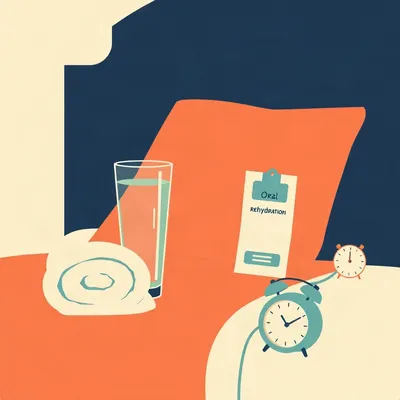
#5363: One Well Adult vs. a Stomach Bug
Solo caregiver, sick kid, sick partner — how to run fluids, spot red flags, and decide on night checks.
#5336: Cholera and the 3.4 Billion Without Safe Sanitation
Cholera is fast, cheap to treat, and entirely preventable — yet 3.4 billion people lack safe sanitation. Here's why the numbers don't add up.

#5304: The Skill of Expecting Less (But Not the Worst)
Realists beat optimists and pessimists on long-term well-being. Here's what the research says about keeping expectations accurate.

#5284: ADHD Meds, Border Rules, and Thank-You Gifts
Why is it so hard for adults with ADHD to fill a stimulant prescription — and is a thank-you gift to the pharmacist ethical?
#5279: Heavy Metals: Real Syndromes vs. Online Noise
Lead, arsenic, mercury, cadmium — each metal has its own syndrome, route, and treatment. The vague online version misses all of it.

#5269: Why 4 A.M. Wake-Ups Hit Different
A listener asks why 4 a.m. wake-ups feel so much worse than 1 a.m. — and what the insomnia science actually says to do about it.
#5258: Vyvanse, Alcohol Withdrawal, and the Titration Problem
A listener's water-titration experiment with Vyvanse leads to a bigger question: can medicine model neurotransmitter systems in real time?
#5246: Why Adult ADHD Support Skips the Physical Layer
ADHD support defaults to therapy and coaching — but what if the real friction is sensory and physical? A look at the occupational therapy gap for a...
#5214: Meningitis: Why It Kills So Fast
Meningitis is an anatomical description, not a prognosis. Same word, wildly different odds — from a bad week to five days from flu symptoms to a fu...

#5212: What Happens in Your Brain During a Migraine Aura?
A shimmering wave rolls across your visual cortex at 3mm per minute—and you can watch it happen. Here's the neuroscience behind migraine aura.
#5210: How the Placebo Trial Became the Gold Standard
Control groups, placebos, blinding, randomization — four inventions across 250 years, assembled into medicine's most trusted method.