
Health and Psychology
Human body and mind: medicine, mental health, neuroscience, ADHD, and everyday psychology.

#5209: Sensitivity, Specificity & the Numbers Doctors Use
A field guide to the numbers in a medical paper — what sensitivity, effect size, and risk ratio actually answer, and when they mislead.

#5201: Can You Gray Rock Without Losing Yourself?
Gray rocking protects you from a toxic person — but does practicing guardedness bleed into the rest of your life?

#5200: Gray Rocking vs. the Info Diet: What to Actually Share
Gray rocking gets the attention, but the info diet — quietly censoring what you disclose — may be the sharper survival tool.
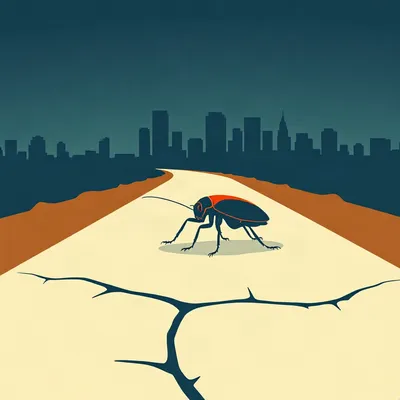
#5195: When Real Danger Silences Phobias
A year of war and housing crisis erased his cockroach phobia. The science says that's not as strange as it sounds.

#5192: Why Flying Fear Starts in Your Late Twenties
Sudden fear of flying in adulthood is common — and it's usually not about the plane at all. What the research says, and what actually helps.
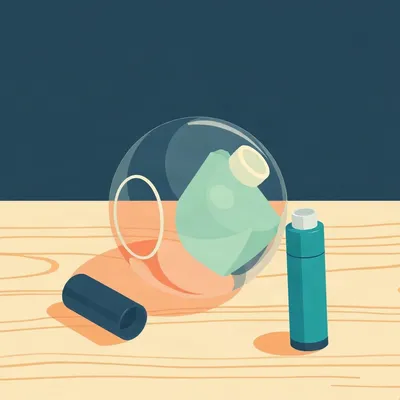
#5189: One Puff, Five Breaths: Spacer Technique That Works
Fire one puff, breathe within five seconds, keep the seal — why loading five puffs at once wastes the drug.
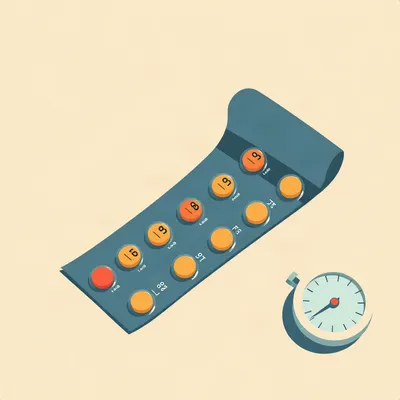
#5186: Why the Last Milligrams Are the Hardest
Most drugs come in doses designed for stable use — not for the tiny steps safe withdrawal requires. Here's what's changing.
#5174: Why Caffeine Can't Push You Through Cognitive Fatigue
What actually happens in your brain when you hit the wall — and why caffeine keeps you awake but can't restore hard thinking.

#5167: The Stethoscope Isn't Dead, It's Getting AI Ears
Two centuries of the stethoscope — and why AI is now making it more useful than ever, not obsolete.

#5166: Why Your Baby Tracker Can't Log Oxygen Saturation
Baby apps have templates for everything — except the metrics you actually need. The custom tracking framework exists. It just never shipped.

#5164: Reading the Child Who Can't Say What Hurts
How pediatric emergency specialists assess and sort children who can't describe their own symptoms — and what their observational discipline teache...

#5161: How Statistics Get Misread: A Field Guide
Averages, rates, correlations — the ten categories of statistics most likely to fool a general audience, and why the number is usually right.

#5159: Why Your Rescue Inhaler Still Shakes (and What Changed)
Albuterol hasn't changed in decades—but rescue itself just did. Here's why the blue canister still shakes, and what Airsupra fixes.
#5158: A Pulse Oximeter Said 97%. That Was the Problem.
A reassuring oxygen reading can hide a child in respiratory distress. Here's what home devices actually tell you — and what they can't.
#5157: When Labored Breathing in a Baby Means Go
A reassuring oximeter reading isn't the whole story. How to read the work of breathing, count infant breaths, and know when to head in.

#5155: Why 3 Days Away Feels Like 3 Weeks
Why a weekend away can restore you more than two weeks with relatives — the psychology of novelty, detachment, and time.
#5150: Gaza's Hunger Numbers: What the Data Actually Shows
Famine classification fights obscure simpler questions: how many children are acutely malnourished, and what does the data actually show?

#5148: How the WHO Essential Medicines List Works
Five days in 1977, eight experts, one list that now shapes what billions of people can get from their pharmacies.
#5146: Who Decides What Food Aid Gets Sent?
There's no master list of survival foods — just a performance standard. And "acceptable" is written into it.

#5145: What Life Expectancy Really Meant in the 1600s
That "people died at 35" statistic? It's mostly measuring dead children, not short adult lives.