
Health and Psychology
Human body and mind: medicine, mental health, neuroscience, ADHD, and everyday psychology.
#5462: Why Dopamine Blockers Stop Nausea (And Cause Fatigue)
Dopamine blockers stop nausea but cause brutal next-day fatigue. Why the same receptor does both — and what makes them risky long-term.
#5452: Why Fasting Makes Bile Reflux Worse
Stomach bug recovery advice is being retired — and if you've had your gallbladder out, fasting hits differently.

#5449: The Neurotic Jew: Where the Stereotype Came From
The anxious, overthinking Jewish personality — where did it actually come from? The answer isn't what you'd expect.

#5448: Toddler Mom-Clings After Daycare: What's Normal?
A 15-month-old suddenly wants only mom. Here's what attachment science says about daycare, clinginess, and whether dad can break in.
#5446: The Potter's Field: Who Buries the Unclaimed Dead?
From Hart Island's million graves to the met mitzvah, how societies bury the unclaimed — and why the shame of a pauper's funeral is surprisingly mo...

#5432: What Hospice Workers See at the Deathbed
A UK survey found 97% of palliative care staff witnessed deathbed phenomena. What they see — and why 92% never makes it into the chart.

#5429: Bathtime Safety: What the Data Actually Says
Two-thirds of child drownings inside the home happen in the bathtub. Here's what the research says about temperature, supervision, and the towel.

#5428: Wills, Superstition, and the One Event With 100% Probability
Daniel is a prepper who's terrified of writing a will. Turns out the law, the psychology, and the Israeli defaults all agree he shouldn't be.
#5427: Why Atheists Still Knock on Wood
Religion and superstition aren't the same thing — and the data says they might even pull in opposite directions.
#5421: Why Secular Israelis Still Fast on Yom Kippur
A majority of secular Israeli Jews fast on Yom Kippur. What the data say about how faith gets handed down — and how observance becomes a weapon.
#5418: Why Dehydration, Not Hunger, Is the Real Risk of a 25-Hour Fast
Twenty-five hours without water is a different problem than twenty-five hours without food. Here's the physiology of dehydration — and how to prepare.

#5395: Six Colors, One Hospital Corridor
A pediatric ward's six-color corridor system reveals what good interface design looks like when people are scared and lost.

#5391: The Software Behind Urgent Care Triage
Big buttons, emoji vitals, and a system that says "order IV" — what's actually running behind the triage screen?

#5375: Do Laptop Screen Protectors Actually Stop a Drop?
Tempered glass for laptops exists — but it's sold for scratches, not drops. Here's what actually survives a fall.
#5373: Why the Same Face Cream Costs 2.5x More in Israel
Same La Roche-Posay cream: $17 on Amazon, 160 shekels in Jerusalem. Here's where the markup actually happens.
#5370: The Spotlight Effect and the Heckler's Playbook
Why a waiting room feels scarier than a stage — and how performers handle hostile crowds without losing the room.

#5369: Pouch Full of Doubt: The Inner Critic at Urgent Care
A tool belt full of emergency supplies, two curious strangers, and the question: is your weird choice yours, or an echo of old ridicule?

#5368: When Both Parents Get Sick and No One Can Help
Two caregivers, no family nearby, and a stomach bug. What actually happens when the backup plan doesn't exist.
#5367: Circling the ER: Driving When You Can't Stop
What do you do when the destination has no parking and a sick passenger in the seat? A holding pattern for city streets.
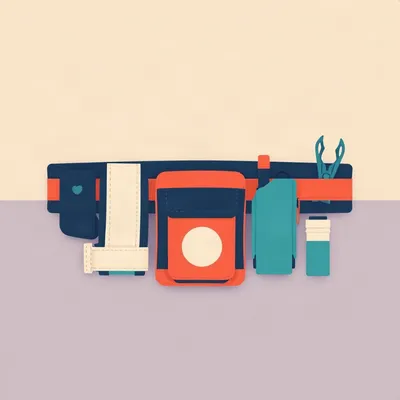
#5366: Packing a Medic Belt: TQ First, Then Everything Else
Tourniquet at ten o'clock, radio at four. How medics build a belt kit that works in seconds — and what goes in a reduced version for non-medics.