
#2088: Quantum's First Real Benchmarks Are Here
From drug discovery to logistics, quantum computing is finally delivering measurable speedups over classical systems.

#2080: The Silent Failure of Emergency Alerts
Why your phone might sleep through a siren, and how traffic lights could save your life.

#2079: The Geopolitics of Grey Boxes
Why factories still run on ladder logic, VxWorks, and rugged grey boxes instead of cloud servers.

#2070: SemVer, Changelogs, and the Social Contract of Code
Stop breaking the internet. Learn the exact system developers use to release software without causing chaos.
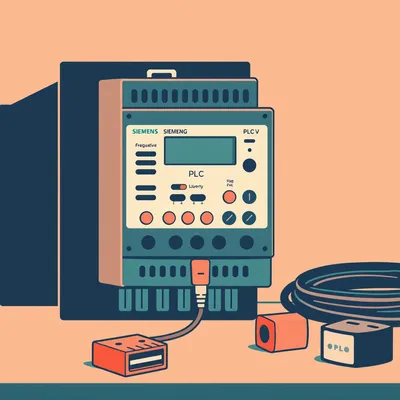
#2058: How Stuxnet's Code Physically Broke Iran's Centrifuges
Stuxnet didn't just infect computers—it rewrote PLC logic to spin uranium centrifuges into self-destruction while faking normal readings.
#2045: Anonymity Isn't the Problem, The Architecture Is
Why does Reddit amplify toxicity while other anonymous spaces stay healthy? It's not the mask—it's the room's shape.

#2018: When Micro Frontends Actually Make Sense
The frontend monolith is a nightmare of coordination. Micro frontends promise autonomy, but is the operational complexity worth the cost?
#2002: Brainstorming a Stable-by-Design Smart Home
We explore why Home Assistant is so fragile and brainstorm a stable-by-design future for the platform.

#2001: Stop Writing "It Feels Slow" Tickets
The "Golden Trio" of bug reports, why Jira is a tax, and how AI capture tools are changing the game.
#1991: Why 20 Clean Qubits Beat 1000 Noisy Ones
Israel just unveiled its first 20-qubit superconducting quantum computer, and it's not about size—it's about precision and control.
#1989: Your Cloud Photos Vanish If You Miss a $5 Bill
Is your data safe in the cloud, or is it one missed payment away from oblivion?

#1988: The Eternal Storage That Can't Escape the Lab
Quartz glass promises 10,000-year data storage, but can it scale before 180 zettabytes make it obsolete?
#1983: Why Your Digital Photos Are Slowly Disappearing
Physical paper from the 1700s is more durable than a Word doc from 1994. Here's why digital data is fragile and how archivists fight bit rot.

#1960: The Microscopic Venetian Blinds in Your Screen
A coffee shop glance reveals a black slab, not your data. Discover the microscopic Venetian blinds making it possible.
#1952: Why We Built a 24/7 AI Radio Station
We turned our 1800-episode archive into a continuous AI-powered radio stream. Here’s the tech stack and the philosophy behind it.

#1944: PostgreSQL: The Thirty-Year Miracle
How does a volunteer-run database power the New York Stock Exchange and survive every tech trend without burning out?
#1943: The Invisible Math Shrinking AI Models
LZMA, Zstandard, and Brotli are shrinking massive AI models, but how do they actually work?

#1941: Why You Can't Zigbee-Wi-Fi Your House
The "mesh" promise fails when you hit the coordinator bottleneck. Here's why multiple hubs don't work like Wi-Fi.

#1938: JSON-to-SQL Type Mapping: A Practical Guide
Mapping JSON to SQL isn't as simple as it looks. Discover the hidden traps in data types that can cause performance hits and data corruption.

#1937: Debunking Battery Myths: Memory Effect and the 80% Rule
The "memory effect" is dead. Here's why charging to 80% is the new rule for phone and EV battery longevity.