Here's a man who has never owned a laminator, accusing the three of us of being fervent proponents of lamination. Which is a fair reading of this household.

Daniel's words, more or less. He says he sees the appeal, he prints SOPs, and during the war with Iran he wrote up his shelter-entry procedures, took them to a shop to be laminated, and the bill was large enough that he suspects buying a machine would have been cheaper. So he wants the actual numbers. What does a laminator cost, what should a beginner know, and when does owning beat paying per sheet.
I'll cop to the accusation. I once proposed having Herman's endpoint checklist laminated before lunch, and I meant it.
And I said you'd have it done by Thursday, and you would have. So the man knows our character. And the interesting thing about his question is that it's not really a product review. It's a calculation he accidentally ran in wartime and never finished. He's got a shop receipt in his memory, sitting there un-reconciled against a machine price he never looked up.
The cheapest audit in history, still open.
Let's close it. The headline answer, before we go deep: a working home machine runs about fifteen to eighty dollars. Pouches cost roughly fifteen to twenty-five cents a letter sheet in bulk. A shop charges somewhere between one and four dollars a sheet for the same thing. Which means the break-even is a couple dozen pages, not a couple hundred. That's the number that should reorganize how you think about this.
I assumed it was hundreds. That's the assumption worth burying first.
Mine too, honestly, the first time I priced it out. And there are two things that make the real calculation stranger than the sticker suggests. One, the same machine can cost nearly three times more depending on where you click buy. And two, the cheap machine might be the rational purchase, or it might be a fifteen dollar mistake, and which one it is depends entirely on a spec nobody advertises prominently.
And Daniel's case is the easy one. His SOPs were letter-size, or A4 here. Replaceable. Revised after the fact, because shelter procedures change. Multiple copies, because you want one in the bag, one on the door. That's the textbook own-the-machine use case. Which is why the shop bill stung.
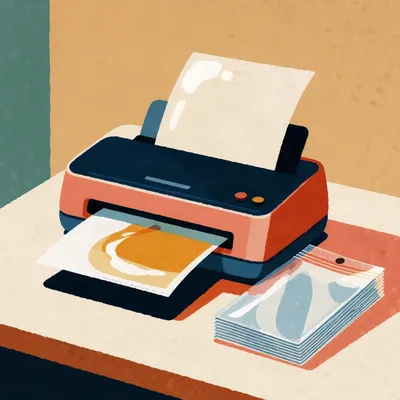
Start at the bottom of the market, because the bottom of the market is astonishing. There's a SINCHI nine-inch thermal laminator on Amazon at fifteen dollars and twenty-six cents. Hot lamination, three to five mil pouches, jam release lever, auto shut-off, and it ships with ten pouches in the box.
Fifteen dollars. Less than the pouches Daniel probably bought for the shop to seal.
In some configurations, yes. And it's not a toy pretending to be a tool, it's a real heated-roller machine, it just warms up slowly and feeds slowly. Then the mainstream consumer tier. Basic letter-size, hot-only machines sit around thirty to sixty dollars. Mid-range with a cold setting and auto-shutoff, sixty to one-twenty. Wide-format home machines, twelve to thirteen inches, eighty to one-fifty. Past that you're into fast warm-up, auto thickness detection, reverse functions, and those run a hundred to three hundred plus.
Name some actual machines, because tiers blur without names.
The Scotch TL901X is fifty-one dollars and fifteen cents on Amazon. Two rollers, nine-inch throat. There's a bundle with a hundred letter-size five-mil pouches at seventy-nine ninety-seven, which is a decent deal because it's the machine plus essentially a lifetime of SOPs. Then the good-machine tier, and this is where prices stop behaving. RealBuyerexperiences names the Fellowes Venus 2 125 as its top pick. Twelve and a half inch throat, up to ten-mil pouches, warm-up in thirty to sixty seconds, auto-reverse for misfeeds. On Amazon it's two hundred fifty-six dollars and one cent.
And elsewhere?
Office Depot has it at four hundred seventy-four ninety-nine, in a combo kit. CDW lists it at six hundred eighty-eight ninety-nine, or four hundred twenty-seven ninety-nine if you're signed in.
Same machine.
Same machine, same box, three retailers, a two point seven times spread. The GBC Fusion 3000L, which is that site's value pick, does the same dance. Three hundred forty-two fifty-two at CDW, two hundred seven ninety-nine signed in, three hundred twenty-one ninety-two at a place called San-A-Care.
The sign-in discount alone is a hundred and thirty-five dollars. Logging in as a form of negotiation.
It's channel pricing. CDW sells to procurement departments, and procurement departments historically don't compare against Amazon. The whole tier runs on customers who buy through a purchasing process rather than a search bar.
How does that even survive? Anyone with a phone can check Amazon in the parking lot.
Because the person clicking buy at CDW usually isn't the person paying. It's an office manager with an approved vendor list and a budget that resets annually, and the reset punishes underspending. If you have four hundred dollars allocated and you spend two hundred fifty-six, next year you get two hundred. The incentive runs the wrong direction. It's not ignorance, it's bureaucracy with a memory.
So the spread is a tax on organizations and a discount for anyone who shops like a person.
Now the local angle, because Daniel laminated those SOPs about two kilometers from here.
Right. In Israel, an A4 home laminator is roughly a hundred fifty to a hundred fifty-five shekels. The Semicom CL801 is a hundred fifty-five. The Lamtech A4 is a hundred fifty, and that one has a reverse function and a cold option. Step up to A3 and the Ofitech L-32 runs around two hundred forty-nine to two hundred sixty-five, and a Pastel A3 is four hundred fifty. So Daniel's neighborhood price for a machine that would have handled every SOP he wrote is about the cost of a decent dinner.
Which raises the question of what the shop actually charged him per sheet. He didn't say, and I notice nobody publishes an Israeli per-sheet rate anywhere.
I looked at that and it's murky. Even in the US, Staples doesn't publish a per-sheet rate on its own lamination page, you configure online or get a local quote. Everything quoted as a Staples price is a third-party estimate, and the 2026 estimates disagree by up to a dollar a page.
So the one number Daniel actually has, his receipt, is the one number nobody else can reproduce. Typical.
There's a reason for that too, and it's not just secrecy. Shop lamination is priced partly by what the document is worth to you, not what the service costs them. A person laminating a marriage certificate will pay four dollars a sheet without blinking. The shop knows this, so the rate flexes. It's the same logic as framing, nobody prices a frame by the square centimeter of wood.
Now the consumables, because that's the recurring cost and where the shops quietly make their margin. Letter-size pouches in packs of a hundred run fifteen to fifty cents each. Staples' house brand is about fifteen cents. Fellowes runs twenty to thirty-five. The Scotch hundred-pack on Amazon is fourteen fifty-six, which is fifteen cents a sheet. All fine.
The self-adhesive sheets, though.
Yes, this is my favorite rip-off in the whole category. Self-adhesive laminating sheets, the ones that need no machine, you just peel and press. Fellowes sells a ten-pack of nine by twelve, three-mil sheets for eleven dollars and sixty-nine cents. That's a dollar seventeen per sheet.
Priced exactly like the shop, for the privilege of doing it yourself with your hands.
Machine-free convenience priced at retail-lamination rates. The pouches are cheap precisely because the machine is the gate. Buy the gate once and the sheets cost fifteen cents forever.
Which flips the usual razor-and-blades logic on its head. Here the blades are nearly free and everyone's trying to sell you the handle.
That's the price map, and the lesson buried in it is that price dispersion, not capability, is the actual buying problem. A fifteen dollar SINCHI and a two hundred fifty-six dollar Venus both seal a letter-size SOP identically from two meters away. The expensive machine buys speed, ten-mil rigidity, jam recovery. Real, but only if you laminate in batches. If you laminate six documents a year, the Venus is paying two hundred forty dollars for a jam lever you'll never pull.
Or in my case, for features I'd use once and then nap through the warm-up.
You'd never even finish the first sheet.
I'd laminate the nap schedule. The nap schedule would survive.

A public service announcement. Every year, thousands of documents are lost to moisture, to coffee, to the simple chaos of being alive, and every one of those documents was somebody's procedure. Do not let this happen to yours. Seal it. Seal it now, before the shelter door closes, before the pouch cools, before it is too late. Ask yourself: when the emergency comes, will your SOP be readable, or will it be pulp? The answer is the SealRite Forever Pouch, the only pouch with a built in irreversible commitment layer, guaranteed to keep your procedures safe for one hundred years or until you laminate another one. SealRite Forever Pouch. Because a document you can still change is a document you have not finished thinking about.
The forever pouch says one hundred years or until you laminate another one, which is... hold on, that's two different guarantees. And the commitment layer can't be built into the pouch if the irreversibility comes from the adhesive, the adhesive is the...
Herman. It's an ad. The commitment layer is fine.
So you've bought the machine. Fifteen dollars, fifty, a hundred fifty shekels, whatever the receipt says. What does a beginner need to know before the first sheet goes through?
Width is the first spec, not the last. Most home machines are eight and a half to nine inch, which handles letter-size because the pouch is slightly wider than the document. Anything wider, eleven by seventeen, A3, posters, needs a twelve or thirteen inch model. And here's the trap: even a twelve and a half inch machine like the Venus still stops short of a full thirteen-inch tabloid sheet. People buy the wide machine and discover wide has a ceiling.
So the spec to check is the throat, not the label on the box.
The throat, always the throat. The marketing says wide-format and the throat says twelve and a half, and those are different claims.
Daniel's SOPs were A4, so he's inside every machine sold in this country.
Comfortably. Width only becomes a fight if he gets ambitions toward posters.
Thickness next. The mil ladder.
Three mil per side is economical and still foldable, rollable. Five mil is sturdy, won't dog-ear, but still rolls. Seven mil is rigid, won't roll or fold. Ten mil is completely rigid, it's a menu at a restaurant that never closes. Most standard pouch machines top out at ten mil per side, twenty mil total pouch. For a shelter SOP, five mil is the sweet spot. Wipe-clean, stiff enough to grab in the dark, still fits in a bag.
Grab in the dark is doing real work in that sentence. You're not reading the SOP at a desk with a lamp. You're grabbing it off a hook at three in the morning with the lights off because you have forty seconds.
And that's actually an argument people miss. The mil rating isn't durability for its own sake, it's how the document behaves under panic. Three mil flops when you grab it. Five mil snaps to attention. In a shelter scenario, the sheet that snaps is the sheet you can hand to a kid and trust them to hold it right-side up.
Hot versus cold. I know there's a distinction and I know I don't know where it matters.
Hot is the standard. Heat melts the adhesive inside the pouch and the rollers press the seal. Cold uses pressure-sensitive adhesive, no heat, and it matters for inkjet photo prints, older documents, anything heat-sensitive that would warp or smear. Some mid-range machines do both. But there's a gotcha I like, from Fellowes' own manual for the Venus: after hot lamination you may have to wait thirty to sixty minutes for the machine to cool before the cold setting works.
So the dual-function machine can only do one function per sitting.
Per half-hour of sitting. Also worth naming: the Scotch TL906 has no cold setting at all, just three-mil and five-mil heat buttons. Fine for documents, useless for the inkjet case.
The spec sheet says two functions and the fine print says take turns.
Now the spec that decides whether the machine gets used at all. Warm-up time. RealBuyerexperiences puts it better than I can: warm-up time decides whether you laminate the thing you meant to laminate or give up and walk away. That's the whole user experience in one sentence. Basic home models take three to five minutes. The Scotch TL906, five to six. The GBC Fusion, one minute. The Venus, thirty to sixty seconds. And the cheap Israeli Semicom, four to eight minutes.
Four to eight minutes is a range, not a spec. That's the machine deciding how it feels.
That's the fifteen-dollar tier. And this is where the cheap-machine question resolves, Corn, and I want your read on it. If the machine warms up slowly, you stop using it, and a fifteen dollar purchase becomes a fifteen dollar mistake plus you're back at the shop anyway. If you're the kind of person who decides to laminate something and wants it done inside the decision, the fast warm-up is worth real money. If you're the kind who decides tonight and laminates tomorrow morning...
I'm the second kind. I decide tonight, laminate tomorrow, and possibly nap between. Eight minutes of warm-up costs me nothing. Daniel, though, Daniel automates things for a living. The man has a workflow for closing workflows. If the machine takes eight minutes he'll build something to run it while he's asleep.
Then the beginner's real question is which person am I, and the honest answer is you find out within a month of owning it. Which is itself an argument for the fifteen-dollar machine as a probe. Buy the cheap one, learn your own behavior, upgrade if the behavior shows up.
The disposable trial machine. There's a sentence Herman Poppleberry never thought he'd say.
I stand by it. Safety side, two features matter. Auto-shutoff is the important one, fire risk and motor burnout from a machine left on, and the cheap SINCHI has it, to its credit. The jam-release lever matters more than it sounds, because the one hard rule of jams is never pull the material. Pulling tears the laminate and can damage the rollers. You release the pressure and walk it back.
I would pull it. Every person alone with a jammed laminator pulls it.
Everyone's first instinct is to pull it. It's the same instinct as pulling a stuck zipper, and it ends the same way.
Technique. The rules that keep you from ruining sheets.
The most common mistake is temperature mismatch. Too low and you get clear, unbonded patches where the adhesive never flowed. Too high and you get bubbles or warping. Cloudy means too cold, wavy means too hot. Beyond that: preheat fully, even past the ready light, a few minutes. Feed the sealed, folded end of the pouch first, or the rollers force the pouch open mid-document. Don't pull the sheet as it exits. Leave at least an eighth of an inch, three millimeters, of pouch border around the document on all sides. Use a carrier sheet for small or odd-shaped items. Let inkjet prints dry fifteen to thirty minutes before sealing, or the ink smears inside the plastic forever.
The ready light lies?
The ready light means warm enough to start, not fully even across the rollers. The first sheet through a marginally-warm machine is the sheet that comes out cloudy at one edge, and you spend ten minutes wondering if it's your pouch or your technique. It's neither, it's impatience. Give it two extra minutes and the problem never exists.
And when it's done.
Cool it flat under a weight, thirty seconds to two minutes, or it curls.
None of that is hard. All of it is the difference between a sealed document and a bubbled one.
It's a craft with about six rules, which is the best kind of craft. Now the prohibition list, because this is where lamination stops being harmless. You don't laminate Social Security cards, archival papers, thermal receipts, anything signed or embossed, collectibles, irreplaceable originals. It's permanent, and it can interfere with authentication or damage the document. Thermal receipts especially, the heat blackens them. And you never laminate something twice, adhesion to existing plastic is poor.
That prohibition list is interesting given what we do here. We'd laminate a checklist in a heartbeat. Nobody's authenticating Herman's endpoint checklist.
The test is whether the document is the record or a copy of the record. My checklist, the master lives on the laptop, the laminated one is a working copy at the door. That's fine. The mistake is laminating the thing itself. And that connects to Daniel's SOPs, actually, because a shelter procedure is a living document. During the war he revised it. The laminated version is always the previous version the moment you improve it.
Which is fine as long as the master stays digital and the laminated sheet is treated as expendable. Print, seal, post, revise, re-seal. We did a whole read-through of the wartime readiness field guide once, and the guidance in it had been revised within the same month. Anything that moves that fast should never exist in only one sealed copy.
One laminated working copy plus a digital master. That's the workflow, and you're right that the buying guides don't say it. They're all machine-versus-shop and none of them touch versioning.
The mathematics, then. Shop versus machine.
Shop prices first. Letter-size lamination generally runs a dollar fifty to four dollars a sheet. Staples-specific estimates cluster lower, around eighty-nine cents to three fifty, with an average near two twenty-five. Legal and eleven by seventeen run two fifty to eight. Posters, ten to thirty-five for small, twenty to seventy-five plus for the big ones.
And the worked example.
The one I trust most is straightforward arithmetic. A forty-five dollar machine, pouches at twenty-two cents, a shop at a dollar seventy-five a sheet. Your per-page saving is a dollar fifty-three, so the machine pays for itself in about thirty sheets. At a hundred sheets you've spent sixty-seven dollars total at home against a hundred seventy-five at the shop.
Thirty sheets. What do the other estimates say?
They disagree, usefully. One puts break-even at fifteen to twenty pages for a twenty-five to fifty dollar machine. The same source that gave me thirty sheets in its worked example says thirty to sixty in its summary paragraph. A more conservative estimate says fifty to a hundred pages.
A six-times spread on the same question.
But the disagreement isn't about arithmetic. Every one of them does the same division. The disagreement is about assumptions, whether you count your labor, whether you already own a trimmer, which shop price you benchmark against, whether the machine is fifteen dollars or a hundred fifty shekels. And every estimate lands in the same order of magnitude. A couple dozen pages. Nobody says hundreds.
Daniel probably crossed thirty sheets during the war and didn't notice, because he wasn't counting sheets, he was counting sirens.
At Israeli prices the case is even sharper. A hundred fifty shekels for the A4 machine against even the low end of shop pricing, and the machine pays for itself within a handful of pages. And the marginal cost of a revised SOP is one pouch. Fifteen cents, or the shekel equivalent. When the procedure changes, you re-print and re-seal without even thinking about the cost, which is exactly the property you want in a document you expect to keep changing under stress.
When does the shop still win?
One-time jobs,. Large posters, expensive artwork, unusual sizes, originals. A shop does eleven by seventeen and poster roll lamination, edge trimming, mounting on foam board, things a fifteen-dollar machine can't touch. There's a business-card rule I like: for a one-time run of thirty cards, outsourcing is defensible. For regular batches of a hundred plus, own the machine. It's the same rule Daniel's case sits on, just at document scale, frequency, and the likelihood of revision. Regular, replaceable, revised, letter-size: buy. Once, precious, big: shop.
The shop isn't the ripoff, the shop is the rental. You're renting their industrial machine by the sheet, and like all rentals it's cheap once and expensive monthly.
Daniel was a monthly renter who never ran the annualized number.

That's about right, yes.
The thirty sheets, the warm-up, all of it. But the border is wrong. An eighth of an inch is the minimum before the seal fails at all, not the number you use. I use four. I got to four the hard way, in a copy shop on Agripas Street, arguing with a man named Ronen about whether you trim before or after. Before, he said. After, I said. I had a sheet come out of his machine with the border trimmed so close that the seal let go in the middle of the document and the thing delaminated in my bag on the way home. Half the procedure came out in my hand and half stayed in the pouch.
You trimmed before sealing?
He trimmed before sealing. I told him the border was the seal and he said the border was decoration. I measure the border now with a bottle cap from a specific orange soda. It is four millimeters across, it is on my desk, and I have never needed anything else. Corn will tell you I keep the rules on a laminated card in my wallet, the rules for laminating. Laminated, yes. It has held up. I also keep a file of every sheet I have ruined, going back years, each one labelled with the date and what went wrong. The delaminated one from Ronen is in there, the first page in the file.
What does the file run to?
Fourteen entries. It is the most useful thing I own, because every entry in it is a mistake I have not made twice.
The file is a good idea. That's essentially what the buying guides compress into the word learning, five ruined pouches at eleven cents each, except yours has dates and Ronen.
Ronen is still there. I go past the shop. We do not speak.
The border point is fair, actually. The three-millimeter figure is the floor before failure, not the working margin. Four gives you seal you can trim into.
And it's one bottle cap. That's cheaper than a ruler.
The bottle cap came with soda.
Fourteen ruined sheets, each one dated. There's a man who took the break-even seriously.
He found the floor of the learning curve and filed it. Corn, where this leaves me is the margin. Fifteen to a hundred pages is the published spread on break-even, and I'd tell Daniel the honest version is somewhere between a dozen sheets and a hundred, and you find out which within a month of owning the machine, because either you're the person who laminates or you're the person with a warm brick in a drawer.
He's the person who laminates. He was the person who laminates before he owned the machine. That's what the receipt proves.
The one thing I'd add, thinking about his SOPs specifically: lamination is irreversible, and that's a strange property for a document tool. The same act that makes the procedure waterproof makes it un-amendable. The workflow that fits him is seal the working copy, keep the master digital, and when the procedure changes, the old sealed sheet becomes what Hilbert would call an entry in the file. The dated record of a version that was wrong.
The laminated document as its own history. Seal the version you trust, archive the version you didn't, and the file tells the story.
That's the discipline, and it's cheaper than the shop. My thanks as always to Hilbert Flumingtop, producing this show from a desk with a bottle cap on it. If you want more of this, try episode fourteen oh eight, Israel Wartime Readiness Field Guide. This has been My Weird Prompts, the human-AI collaboration podcast. If you got anything out of this one, a review on Spotify helps other people find the show, and the episode notes live at my weird prompts dot com.
We'll be back soon. Keep the master digital.
And the border at four millimeters.