
Internet Infrastructure
167 episodes · Page 5 of 7

#2831: What VPNs Still Protect After HTTPS
HTTPS encrypts your content but leaves your metadata exposed. Here's what a VPN still protects.

#2817: How to Add Marketing Email Without Breaking Gmail
Keep your Gmail working while adding SendGrid or Resend. The subdomain trick saves your inbox.

#2815: Free Cloudflare WAF: Is It Enough for Self-Hosting?
Skip Cloudflare Access and lock down Home Assistant with just the free WAF rules. Here's how.

#2814: HTTP Redirects: 301, 308, and When to Use Each
301 isn't always the right choice. Learn the real differences between redirect codes and where to put them.
#2811: Cloudflare's Endgame: From CDN to Cloud Platform
How a spam-tracking side project became the CDN that's quietly building a new kind of cloud.
#2806: The CNAME Trap: How a DNS Rule Shaped the Web
Why CNAMEs can't live at the apex, how flattening works, and modern DNS best practices.

#2768: How Eurovision Built Europe's Broadcast Backbone
Eurovision wasn't born as a song contest. It was a television network first—and that infrastructure shaped everything.
#2695: Self-Hosting Tailscale Exit Nodes Safely
How to safely route traffic through your home from anywhere using Tailscale exit nodes — without exposing your network.
#2656: Marconi vs. the Cable Builders: Who Really Built the Internet?
Was the internet born from Marconi's wireless towers or the first transatlantic telegraph cables? We argue both sides.
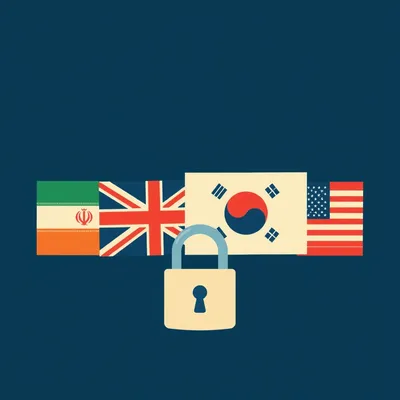
#2532: When the Internet Goes Dark: Censorship's Unseen Consequences
From Iran’s historic blackout to UK age verification laws — the global picture on pornography regulation is more complex than you think.

#2514: WebSockets vs SSE: Choosing the Right Real-Time Connection
WebSockets vs Server-Sent Events: when to use full-duplex vs one-way streaming, and why most developers pick wrong.

#2505: How Self-Hosted Search Actually Works for AI Agents
SearXNG isn't a crawler — it's a metasearch router. Here's how it works and why AI agents change everything.
#2503: The Gap Between Your Mental Model and the Wire
What really happens when you press Enter on a URL? From DNS to TLS to headers, we break down the full lifecycle.

#2448: Who Gets the Bandwidth at Sea
How packet-level bonding and QoS keep thousands of passengers streaming while navigation systems stay safe.

#2433: What Actually Makes a Hyperscaler?
It's not just about size. The architecture, automation, and breadth of services define what makes a hyperscaler.
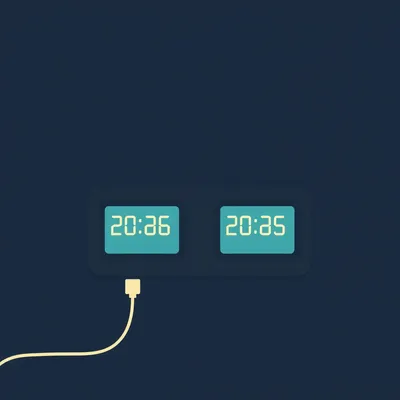
#2364: The $1000 Military Clock You Can Build for $30
Learn how to build a precise dual-timezone clock using an ESP32 microcontroller, LCD displays, and USB-C power.
#2319: The Rise of the Dodgy Box: Streaming Piracy’s New Era
How the dodgy box became the go-to device for streaming piracy, and why authorities are cracking down now.
#2292: Inside the Walled Garden: China's Parallel Internet
Explore China’s parallel internet ecosystem—how the Great Firewall works, the apps that dominate it, and the surprising innovations it fosters.

#2104: The Envelope Problem: Why Your VPN Isn't Enough
A VPN isn't magic. Learn how DNS and SNI leaks expose your browsing, and what encrypted DNS and ECH actually do to fix it.

#1925: The Plumbing That Keeps Science From Collapsing
Half of all links in academic papers are dead. Here’s the plumbing that keeps knowledge from vanishing.
#1878: The Packet-Level Magic of Unbreakable Connections
Combine Starlink, 5G, and LTE into one unbreakable stream, even from a mountain peak.
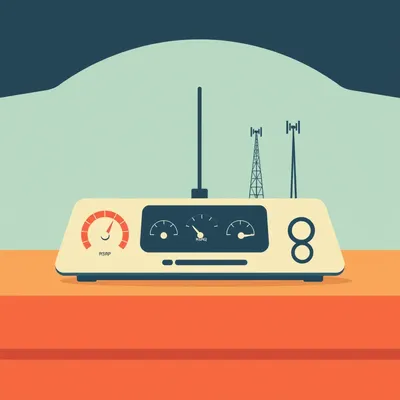
#1876: Signal Bars Are a Lie: How to Read Your Real Connection
Those signal bars are a lie. Learn the real numbers—RSRP, RSRQ, SINR—that tell you if your connection is actually good.
#1758: The Internet's Physical Bread Delivery System
Netflix doesn't stream from California to Jerusalem. It uses local boxes in your city. Here's how the internet physically moves data to you.
#1656: The VPS Relay: Secure Home Server Access Without Port Forwarding
Learn how to securely expose home servers to the internet using a VPS relay, avoiding risky port forwarding.