
Cognitive Biases
195 episodes · Page 7 of 9

#2310: The Cognitive Cost of Punctuation
Explore the unseen architecture of written language — from punctuation to vowel systems — and why these conventions matter.
#2275: From Catalogs to TikTok: The Psychology of Remote Shopping
Explore how remote shopping, from mail-order catalogs to TikTok Shop, taps into the same psychological impulses across eras.
#2234: Memory Isn't One Thing: What Science Actually Knows
Why your memory feels worse than it is, what genes actually control, and whether photographic memory is real—or just a persistent myth.
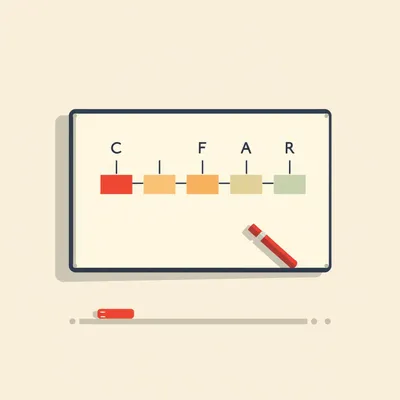
#2150: Debugging Your Brain’s Source Code
Learn the five-step CTFAR sequence that turns emotional chaos into a logical, debuggable system for a managed mind.
#2123: Human Reaction Time vs. AI Latency
We obsess over shaving milliseconds off AI response times, but human biology has a hard limit. Here’s why your brain can’t keep up.
#2049: Why Your Brain Prefers Listening Over Reading
Audio learning taps into ancient brain wiring, offering relaxed alertness and better big-picture retention than reading.
#2048: How Many Friends Do You Actually Need?
New data shows the average adult has just 3.6 close friends, and 15% of men have zero.

#2042: Gifted, Stigmatized, and Seeking Real Community
Why do online communities for the gifted become toxic, and how can you find real-world connections?

#1998: Why Your Brain Lies About Where the Bomb Is
Why your eyes and ears lie to you during missile strikes—and how to count seconds to find the real danger.
#1803: Why Hostages Defend Their Captors
A tech exec was brainwashed in 2025. The neurochemistry is the same as Stockholm Syndrome.
#1769: Affirmations & Visualization: Science vs. Wishful Thinking
We unpack the $43B personal development industry: why "I am lovable" can make you feel worse and how mental rehearsal actually rewires your brain.
#1707: Driving in the Future: Predictive Modeling Under Extreme Cognitive Load
Officers use predictive modeling and cognitive tricks to handle high-speed chases without crashing.
#1704: Why Do Sloths Hate Anteaters?
A sloth's visceral fear of its own cousin reveals how animal brains detect "wrongness" without recognizing species.

#1526: The Disgust That Feels Like a Spiritual Stain
Why does a tiny insect trigger such a primal fear? Discover the evolutionary roots and psychological triggers of katsaridaphobia.

#1484: The Illusion of Learning: From AI Brain Fry to Mastery
Why do podcasts make us feel smart but leave us with zero retention? Discover the science of AI Brain Fry and the power of active debate.

#1412: The Checklist Cure: Why Even Experts Need SOPs
Learn why even the world’s top experts rely on checklists to prevent catastrophe and how to design procedures that actually work.
#1315: The Sloth Strategy: Why Slow Living is a Survival Skill
In a world obsessed with optimization, slowing down isn't just a luxury—it’s a biological necessity for our mental and physical survival.

#1309: The Death of Fiction: Why We Can’t Just Enjoy a Story
Is your brain too logical for movies? Explore why "non-fiction bias" makes it harder to enjoy stories and why fiction still matters.
#1300: Why Your Best Work Happens When You Stop Trying
Forget the "always-on" grind. From Einstein’s sailing to Feynman’s bongos, discover why doing "nothing" is the secret to brilliance.
#1274: The Weight of "Mild": Understanding Chronic Depression
"Mild" depression isn't a light burden—it's a slow rot. Discover why clinical labels often fail to capture the reality of chronic low mood.

#1249: The Curse of Competence: Why Your Best Skills Are Invisible
We often ignore our greatest strengths because they feel too easy. Explore the science of expert blindness and the AI tools uncovering hidden talent.
#1248: The Statesman’s Brain: The Biological Cost of Power
Explore the neurobiology of power, from the rare "short sleep" gene to the psychological endurance required to manage the weight of the world.

#1206: The Hidden Math of Readability
Explore the algorithms and mathematical frameworks that determine how we calibrate stories and educational content for young minds.
#1204: Rethinking Mastery: Beyond the 10,000 Hour Rule
Is the 10,000-hour rule dead? Explore why raw time no longer equals expertise in the fast-paced age of AI and open systems.