
AI Inference
549 episodes · Page 14 of 23
#2227: Why Groq's Chip Flips the AI Hardware Script

#2204: Memory Without RAG: The Real Architecture
mem0, Letta, Zep, and LangMem solve agent memory differently than RAG. Here's what's actually happening under the hood.
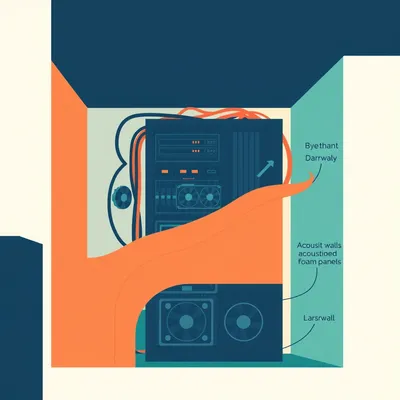
#2193: Running Claude in Your Apartment (The Physics Says No)
Building a local AI inference server to rival Claude Code sounds great until you do the math on heat, noise, and neighbor relations.
#2192: How We Built a Podcast Pipeline
Hilbert reveals the complete technical architecture behind 2,000+ episodes—from voice memos to GPU-powered TTS, with Claude models, LangGraph workf...

#2189: Scaling Multi-Agent Systems: The 45% Threshold
A landmark Google DeepMind study reveals that adding more AI agents often degrades performance, wastes tokens, and amplifies errors—unless your sin...
#2188: Is Emergence Real or Just Bad Metrics?
The debate over whether AI models exhibit genuine emergent abilities or just appear to because of how we measure them—and why it matters for safety...
#2185: Taking AI Agents From Demo to Production
Sixty-two percent of companies are experimenting with AI agents, but only 23% are scaling them—and 40% of projects will be canceled by 2027. The ga...

#2184: The Economics of Running AI Agents
Production AI agents can cost $500K/month before optimization. Learn model routing, prompt caching, and token budgeting to cut costs 40-85% without...
#2183: Making Voice Agents Feel Natural
Turn-taking, interruptions, and latency are destroying voice AI UX—and the fixes are deeply technical. Here's what's actually happening underneath.
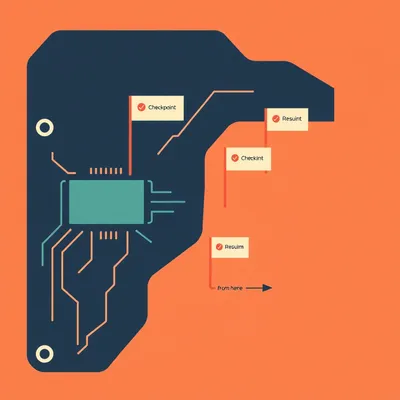
#2179: Building Cost-Resilient AI Agents
Failed API calls in agent loops aren't just technical problems—they're direct budget drains. Here's how checkpointing, retry strategies, and cachin...
#2177: Skip Fine-Tuning: Shape LLMs With Alignment Alone
Can you build a personalized LLM by skipping traditional fine-tuning and using only post-training alignment methods like DPO and GRPO? We break dow...
#2167: Sync vs. Async: Architecting Agents for Scale
Why most enterprise AI agents fail in production has less to do with models and more to do with whether they're built synchronously or asynchronously.

#2163: Designing Autonomy Boundaries for AI Agents
Production data reveals a surprising truth: fully autonomous AI agents waste 98% of their context window on tool descriptions. Here's why the indus...

#2160: Claude's Latency Profile and SLA Guarantees
Claude is measurably slower than competitors—and Anthropic's SLA promises are even thinner than the latency numbers suggest. What enterprises actua...

#2135: Is Your AI Wargame Signal or Noise?
Monte Carlo methods promise statistical rigor for AI wargaming, but the line between genuine insight and sampling noise is thinner than you think.

#2123: Human Reaction Time vs. AI Latency
We obsess over shaving milliseconds off AI response times, but human biology has a hard limit. Here’s why your brain can’t keep up.
#2115: Why AI Answers Differ Even When You Ask Twice
You ask an AI the same question twice and get two different answers. It’s not a bug—it’s physics.
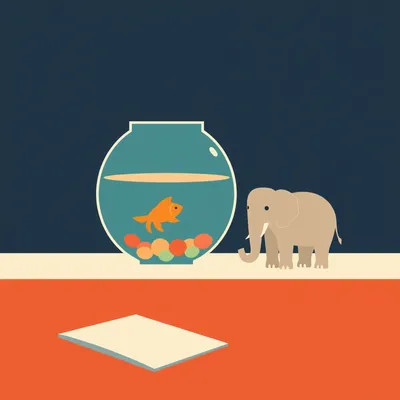
#2113: Goldfish vs Elephant: The Stateful Agent Dilemma
Stateless agents are cheap and fast, but stateful ones remember your window seat. Which architecture wins?

#2102: Why Don't You Notice AI Security Delays?
Multi-layer security checks add latency, but modern CLIs hide it under 100ms using parallelization and speculation.
#2088: Quantum's First Real Benchmarks Are Here
From drug discovery to logistics, quantum computing is finally delivering measurable speedups over classical systems.

#2067: MoE vs. Dense: The VRAM Nightmare
MoE models promise giant brains on a budget, but why are engineers fleeing back to dense transformers? The answer is memory.
#2066: The Transformer Trinity: Why Three Architectures Rule AI
Why did decoder-only models like GPT dominate AI, while encoders and encoder-decoders still hold critical niches?

#2065: Why Run One AI When You Can Run Two?
Speculative decoding makes LLMs 2-3x faster with zero quality loss by using a small draft model to guess tokens that a large model verifies in para...

#2064: Why GPT-5 Is Stuck: The Data Wall Explained
The "bigger is better" era of AI is over. Here's why the industry hit a data wall and shifted to a new scaling law.