
Friday, 13 November 2026
39 episodes · 6596 in all

#6579: Adversaries vs. Auditors in Hardened Linux
Half of what gets sold as hardened Linux isn't built to stop attackers—it's built to pass compliance checklists for auditors.

#6578: How Air-Gapped Linux Systems Actually Get Updated
Keeping an offline Ubuntu machine updated means carrying hundreds of gigabytes of repository data by hand every single time.

#6577: How SecureDrop and GlobaLeaks Run in Practice
Whistleblowing systems rarely fail on cryptography; they fail operationally when an inbox is checked quarterly or an admin leaves with the keys.

#6576: What It Actually Costs to Run an Anonymous Tip Line
SecureDrop requires $2,200 to $3,000 in dedicated hardware and backup Linux admins, while GlobaLeaks runs on a 1GB-RAM computer you already own.

#6575: How Survivor Charities Build Tech for Hostile Homes
Women's Aid's live chat had a 99% recommendation rate before closing when emergency funding ran out, showing how budgets shape survivor tech.

#6574: Testing Whether AI Rewrites Can Hide Your Identity
A whistleblower sanitization tool cut author identification from 98.8% to 31.2%, but still left a one-in-three chance of exposure.

#6573: When Changing Passwords Signals an Abuser
A New South Wales Crime Commission review found one in four buyers of tracking devices had a domestic violence history.

#6572: When Encryption Friction Nearly Stopped the Snowden Leak
Glenn Greenwald ignored a 12-minute PGP tutorial from Edward Snowden, and a 1999 study found only two of twelve users could encrypt email.

#6571: AI for Mental Health and Our Encrypted Tip Line
Our new Hush Line tip line uses browser-based PGP encryption and Tor so listeners can share sensitive family stories without revealing who they are.

#6570: Grieving a Living Parent Without a Diagnosis
Receiving a clinical diagnosis for an estranged parent wouldn't bring closure—it would only trade one form of ambiguous loss for another.

#6569: Why Warm In-Laws Trigger Grief for Estranged Parents
A 2025 YouGov poll found 16% of American adults are estranged from a parent, yet the grief has no social script.

#6568: How Parental Scorekeeping Turns Gifts Into Unpayable Debt
Studies using the Revised Indebtedness Scale show that the more you feel you owe someone, the less grateful you actually feel.

#6567: Protecting a Child From a Toxic Grandparent
A Cornell survey found 27% of American adults—roughly 67 million people—are estranged from a family member, most often a parent.

#6566: Why Your Body Blames You Before You Think
The physical punch in the gut from a parent's text fires in your brain's pain system before your mind invents the self-blame.

#6565: Why Guilt Lingers After Going No Contact
Longitudinal data shows 81 percent of adult children estranged from their mothers eventually reconnect, making it a process, not a single event.

#6564: The Predictable Structure of Estranged-Parent Emails
Research shows that communicating expectations alongside a gift reliably drives indebtedness up and gratitude down.

#6563: Why Siblings Experience Different Childhoods
A 30-study meta-analysis found parents favor conscientious kids simply because they are easier to manage.

#6562: When Distance Is How You Honour a Parent
Rabbi Dov Linzer ruled in 2018 that protecting your mental health from an abusive parent isn't just permitted—it's halakhically obligated.
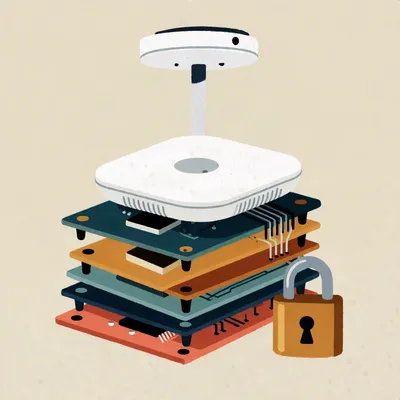
#6561: What Access Point Firmware Updates Actually Change
Ubiquiti's 8.8.14 access point firmware ships 18 bugfixes, 2 features, 8 countries' radio laws, and zero CVEs.

#6560: Chrome, Firefox, and Verifiable Privacy Claims
Proton VPN's no-logs claim is independently audited each year, while Google's Chrome data retention schedule is self-reported.

#6559: Who Trains on Your AI Chats and What Happens Next
Leaving Anthropic's training toggle on extends your chat retention from thirty days to five years, sixty times longer.

#6558: How Self-Consuming AI Models Decay Generation by Generation
After nine generations of training on its own outputs, an AI model asked about church towers started listing colorful jackrabbits.

#6557: Software Flaws That Became Permanent Infrastructure
In 2020, geneticists renamed human genes like SEPT2 because Excel kept turning them into dates.

#6556: How AI Agents Spot Bugs Where Systems Meet
A Home Assistant watchdog's 10-restart limit left a Zigbee network dead for hours until Claude traced the hidden seam across two codebases.
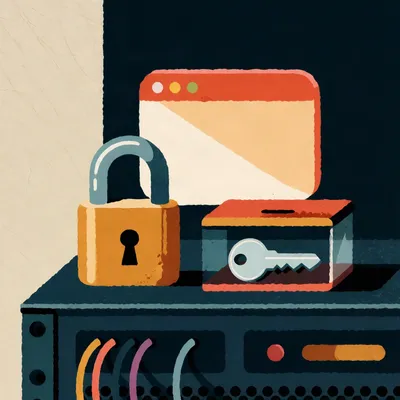
#6555: Self-Hosted AI Browsers Still Lack Vault-Brokered Logins
No single product publicly documents self-deployment, live human takeover, and 1Password credential injection together.

#6554: The Search for a Supervised AI Agent Browser
ego lite has nearly 23,000 stars for giving AI agents isolated browser spaces, but Linux users and passkey logins are still left out.

#6553: How a GeForce 8800 Side Note Became the Floor Under AI
In 2006, NVIDIA launched the GeForce 8800 with a throwaway mention of CUDA, a toolkit that put a parallel supercomputer in every gamer's bedroom.
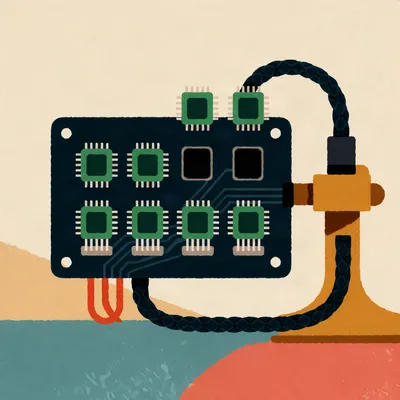
#6552: How Slurm and Kubernetes Split GPU Workloads
Request eight GPUs when six are free, and Kubernetes's default scheduler starts six pods that sit idle while waiting for the last two.

#6551: CUDA's Small Start and Its Open Ecosystem
CUDA started in 2004 with roughly two to six engineers and two libraries, yet NVIDIA's own reports can't agree on how many exist today.

#6550: How Streetcar Suburbs Hit the Transit Sweet Spot
Built at 7 to 15 homes per acre, classic streetcar suburbs naturally hit modern frequent-bus thresholds while still giving residents a private yard.
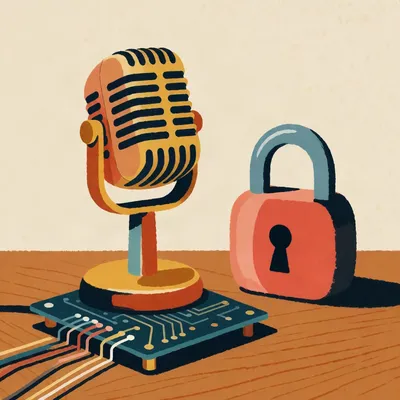
#6549: Plugging a Custom Voice Model into Wayland
Nobody has built an end-to-end voice agent for Wayland, because its security model blocks fake keyboard input.
#6548: Why Home Voice Agents Still Need Home Assistant
Server-side MCP voice frameworks exist today, but ESPHome satellite hardware still locks the voice loop to Home Assistant.
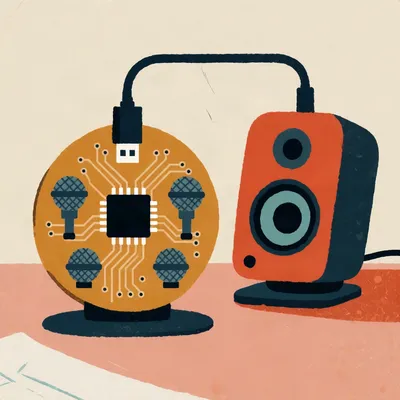
#6547: USB Far-Field Mics and the Echo Cancellation Catch
Seeed's ReSpeaker XVF3800 packs 60 dB of automatic gain and neural noise suppression onto a chip, but loses echo cancellation on external speakers.
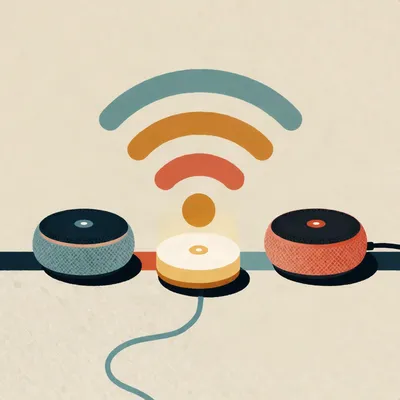
#6546: The Wake-Word Race Inside Home Assistant Satellites
When two Home Assistant voice satellites hear a wake word, the winner is whichever packet arrives first—not the closest room.

#6545: Why Kitchen Smells Hijack ADHD Focus Like Noise
Brain imaging shows adults with ADHD have normal noses, but their brains allocate attention to odors differently during effortful work.

#6544: Inside Laptop Microphones and Why They Hurt Dictation
Most laptops ship just two microphones, and their built-in noise suppression can triple speech-to-text errors.
#6543: When Fine-Tuning Over-Generalizes Instead of Forgetting
Teaching a speech model IP addresses can make 'ten one' transcribe as '10.1', revealing how fine-tuning over-generalizes.

#6542: Five Projects to Build a Language Model From Scratch
Reproducing GPT-2 capability now costs $48 in two hours, a thousand-fold drop from the $43,000 training run of 2019.

#6541: Donating Bandwidth Without Becoming an Exit Node
Censorship-circumvention tools like Snowflake, Conduit, and Unbounded make your machine an entry relay, never an exit node.