
Monday, 12 October 2026
42 episodes · 6596 in all
#5921: Israel's Urgent Care Safety Net: What Broke
A Jerusalem family's two terrifying nights expose the layer beneath the ER — and the doctor shortage behind it.

#5920: The Psychiatrist in Those 1950s Patient Films
A drug salesman's papers, a bathtub, and the 1950s interviews with Dr. Heinz Edgar Lehmann that still pull millions of views.

#5919: Why Your Toddler Dunks Crackers in Water
Ezra is 15 months old and making cracker soup. Is that teething, sensory play, or a tiny scientist running experiments?

#5918: Splitting One Camera's Audio for a Baby Monitor
One IP camera, two jobs: an open audio line for the nursery and Frigate's cry detection. Here's how go2rtc and Icecast fit together.

#5917: The Women Who Were Computers Before Computers Existed
Before machines did the math, people did — and most of them were women. Reconstructing the desk of the human computer.

#5916: Grey Rocking Meets OPSEC: A Family Firewall
Grey rocking has no clinical trials—just a 2012 blog post. What happens when you rebuild it on need-to-know and OPSEC?

#5915: How Multi-Agent AI Simulations Keep a Shared World State
Concordia keeps the world in a dictionary an LLM writes to. Generative Agents keeps it in a spreadsheet. CAMEL keeps it in the chat log.

#5914: Fire Alarms in 40-Story Towers: What Goes Wrong
How high-rise fire systems work — detection, smoke control, phased evacuation — and why burnt toast sends residents down 28 flights.

#5913: Why the Sterile Cockpit Rule Took 7 Years
One crash, one morning, one city — and seven years before the FAA wrote the rule down. What Eastern 212 still teaches us about attention.
#5912: Building Your Own CRM with AI: Where to Start
AI can't write your CRM for you — but it can remove the friction. Start with the schema, not the code.

#5911: What Revit 2027 Actually Costs to Run
Michael wants Revit live for AI agents 24/7. The GPU isn't the real bill — the licensing is.

#5910: Revit MCP in a VM: What Actually Works
Autodesk's official Revit MCP server is locked down and reliable-ish. The community ones execute arbitrary code on an open port. Neither runs unatt...
#5909: Connecting Postgres to Google Workspace
How a Postgres-backed app on Cloud Run talks to Gmail, Drive, Calendar, Docs, Sheets and Slides — without duplicating data.

#5908: One Database Won't Fix Your Fragmented Stack
Rita has two employees, four apps, and one fear: which database wins when they disagree? Here's the field-by-field answer.
#5907: Rackmounting a Desktop: Size, Cases, and the Swap
How to move a working desktop into a 19-inch rack — sizing by rack unit, picking a chassis that fits your parts, and what the transplant costs.
#5906: Running a Company Like a Spy Agency
What if an ordinary company ran on intelligence-style need-to-know? Oak Ridge and a 1977 CIA self-audit already ran the experiment.

#5905: Bare Linux Routing vs OPNsense: What Actually Wins?
You can build a router on plain Debian or Ubuntu. The question is whether you should — and what it costs you over ten years.

#5904: Multi-WAN Beyond Failover: OPNsense vs OpenWrt
You stacked your links, failover works — so why does a dropped WAN still kill every session? Load balancing, mwan3, and what bonding actually solves.

#5903: Video Tokens, Omni, and the Local VRAM Math
Video costs ~100 tokens per second. That single number explains why ChatGPT hides video upload and why local inference hits a KV cache wall.

#5902: Four Tribes, One Ballot: Israel's Coalition Maze
Thirty-eight parties, a 3.25% threshold, and four groups that don't agree on what the country is even for.

#5901: Haredi: How a Word Became a Tribe
The Hebrew means "trembling in awe." The English translation means "beyond the pale." How did one word become a whole society?

#5900: Serving DeepSeek-V4.1-Flash on Your Own GPU
Five inference engines, one frontier MoE, and a shortlist that collapses depending on which GPU you already bought.

#5899: Same GPU, Same Weights, Different Answers
Identical hardware, identical weights, different engine — and answers that shift by up to 16.6 points.

#5898: ROCm 10.1: AMD's Software Stack Finally Grows Up
Three ROCm releases in six months — build system, agentic tooling, data movement. What actually changed for AMD GPU owners.

#5897: Why You Can't Buy an IEC 60309 Power Strip
Daniel wired his first blue 16A commando plug. The cable math is easy — the missing product category is the interesting part.
#5896: Modiin, Safdie, and the Suburb That Was Meant to Be a City
Moshe Safdie designed Modiin to be a real city. Thirty-seven years later, residents say there's nowhere to go at night.

#5895: Can Cities Be Quiet? Designing Density for Families
Families leave cities for space, quiet, and schools. What if cities could deliver all of that without losing walkability?

#5894: Printing Money Isn't What You Think It Is
Central banks order billions of banknotes a year — but that's replacement, not stimulus. Here's how cash actually gets made and destroyed.

#5893: Command Centers That Drive: From Transit Vans to 32-Ton Trucks
How do you fit a headquarters into a truck? We trace mobile command centers from a 23-foot Transit van to FEMA's HEMP-hardened fleet.
#5892: How Cities Borrow Money: US Bonds vs Denmark vs Israel
From 50,000 US issuers to Denmark's single lender to Israel's two-ministry approval — how cities actually get credit.
#5891: Four Ways Humanity Kept Records for 1,200 Years
The Shōsōin never burned. The Vatican lost a third of its archive. The Geniza kept 400,000 fragments by accident. Four preservation strategies.
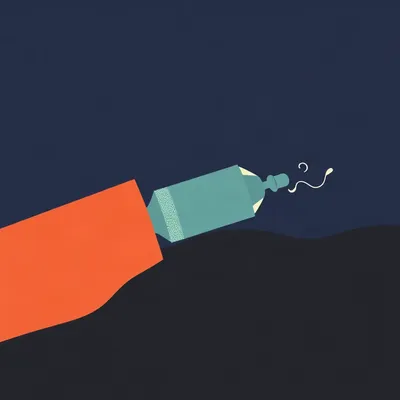
#5890: Fifteen Miles an Hour Through a Metal Pipe
Paris ran 427 km of pneumatic tube under its streets and moved 30 million messages a year. Then the fax machine replaced it.

#5889: How Pipeline Pigs Actually Work
A bundle of straw that squealed through the pipe gave the industry its weirdest word. Now pigs weigh tons and hunt cracks underground.

#5888: Where Does the Rain Actually Go?
An inch of rain on one acre of pavement is 27,000 gallons. Cities have three ways to get rid of it — and all of them fail on purpose.
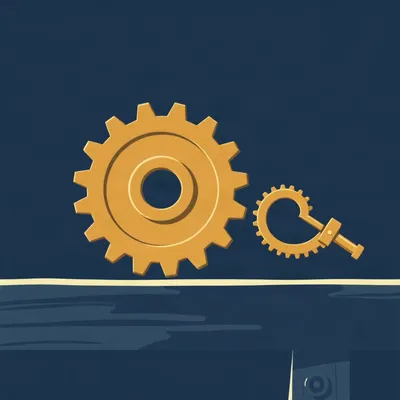
#5887: Gears That Did Calculus: Mechanical Computers
From the Antikythera mechanism to battleship fire control, how gears and cams did real math — and why the approach never fully died.
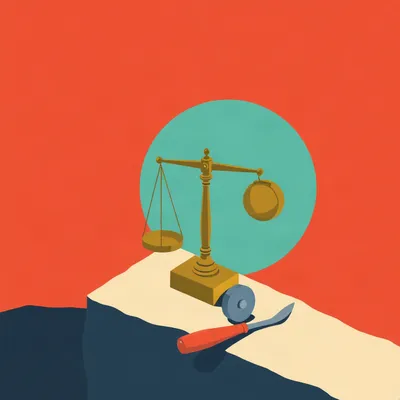
#5886: From Leviticus to the Kilogram: Honest Scales
Ancient Athens had ten inspectors and a rock. The kilogram had one cylinder in a vault. Both were asking the same question.

#5885: The World's Oldest Software Still Running
From a 1958 Pentagon contract system to Voyager's 68KB computer, some software refuses to die. What's the oldest code still in production?
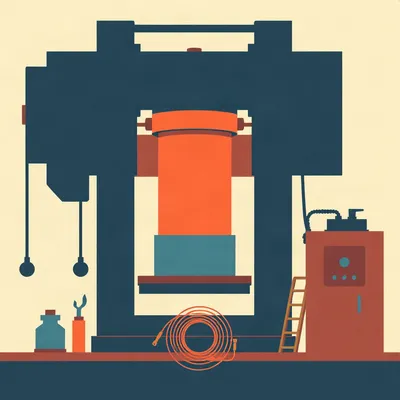
#5884: The Machines That Take 5 Years to Replace
Large power transformers, HVDC converters, nuclear forgings — why some essential machines have no quick reorder.
#5883: What Happens to Water Between the Plant and Your Tap
Utilities push 100 litres of treated water into the pipes. How much actually arrives? The answer is messier — and more interesting — than one number.
#5882: Half of All Energy Becomes Heat. Now What?
Half the world's energy ends up as waste heat — but only 6% is worth recovering. Inside the cities that built the pipes anyway.

#5881: How the Grid Loses Half Its Power — and How Delhi Fixed It
Losses range from 0.23% in Singapore to 59% in Iraq. Delhi went from 52% to 5.5% — mostly without new power plants.
Also available in:हिन्दी
#5880: Why Suburbs May Be a Bad Deal
Suburbs promise the best place to raise kids — but the research on childhood independence, municipal finance, and carbon says otherwise.