So Daniel's in the US right now, mid-DIY project, tool belt and all, and it's kicked off a whole reckoning with what he wears and why. His mom dressed him in Banana Republic and Ralph Lauren well into adulthood — labels that announce themselves. Now he's in his mid-thirties and just figuring out his own style, and it turns out he's an anti-label utilitarian who felt an almost instinctive connection to Dickies T-shirts the moment he put them on. He wants to know: for someone who loves durable workwear but also needs pieces for business occasions, what other brands would you recommend?

This is such a good prompt because Daniel's basically describing a clean break from an inherited identity. The mom's choices were all about status signaling — Banana Republic says "I'm a professional," Ralph Lauren says "I belong to a certain class." And Daniel's reaction isn't just "I don't like those brands." It's "I don't want brands to speak for me at all." He peels labels off laptops. He's drawn to Carhartt and Dickies, which were built for people who need pants that survive a welding spark, not for people who need a chest logo to feel complete.
The laptop sticker thing is the tell. That's not a fashion preference. That's a philosophy. The object should just be the object.
Right. And it puts him in this interesting counter-movement. The nineties and two-thousands were peak logo-mania — Tommy Hilfiger, Polo, Supreme later on. Clothing as billboard. What Daniel's describing is the opposite: clothing as tool. The garment's job is to cover you, last a long time, and not announce itself. The quality IS the signal.
So we've got three threads to pull here. One, the psychology of inherited fashion and why it takes until your thirties to even notice you're wearing someone else's taste. Two, the actual material engineering that separates a Carhartt jacket from a fast-fashion shirt — Daniel mentioned the manufacturing difference becomes obvious when you're carrying a loaded tool belt, and he's right. Three, what brands serve someone who wants durability plus discretion plus the ability to walk into a meeting without looking like he just came from a construction site.
Let's start with the psychology, because Daniel's story is way more common than people admit. Parents — and mothers in particular, in a lot of households — are the first fashion gatekeepers. They choose clothes based on their own values. For Daniel's mom, those values were aspirational. Banana Republic and Ralph Lauren are brands that say something about the wearer: taste, success, belonging. She wasn't being controlling in a malicious way. She was projecting an identity she wanted for her son.
And it worked until it didn't. The thing about inherited fashion is it's invisible while you're inside it. You don't question the clothes your mom bought you any more than you question the accent you grew up speaking. It's just... the way things are. Then something breaks the spell. For Daniel, it sounds like the DIY phase was the trigger — suddenly he's in a tool belt, actually using his clothes as equipment, and the Ralph Lauren chinos aren't holding up. The material reality of the garment forces the question: what am I actually wearing, and why?
There's a developmental timeline here that's worth naming. Teenagers and young adults are still forming their sense of self. Borrowing a parent's fashion identity is easier than building your own — it's a ready-made performance. By your thirties, you've accumulated enough life experience, and honestly enough failed purchases, to start asking the question Daniel's asking: do I actually like this, or did I just inherit it? The anti-label stance is a direct reaction to the label-heavy wardrobe his mom curated. He's not just choosing different brands. He's choosing a different relationship to brands entirely.
It's the fashion equivalent of moving out of your parents' house and realizing you get to decide where the furniture goes. Except the furniture is your entire public-facing identity.
And the brands he's gravitating toward — Carhartt and Dickies — are almost the perfect antidote to Banana Republic and Ralph Lauren. They weren't built for aspiration. They were built for railroad workers and auto mechanics.
So let's get into what that actually means at the material level, because Daniel's right that the difference becomes obvious fast when you're actually working in the clothes. What makes a Carhartt jacket different from a fast-fashion jacket?
The short answer is: everything. Fast fashion — think H&M, Zara, Shein — is engineered for one thing: low cost per unit. The average T-shirt today is about forty percent thinner than it was in nineteen ninety. Lower thread count, looser weave, fewer stitches per inch. The fabric is designed to look good on a hanger and survive maybe twenty washes before it starts to pill, fade, or lose its shape. That's not a bug in the system. That's the business model.
Planned obsolescence, but for your torso.
Workwear is engineered for a completely different use case. Carhartt's signature material is duck canvas — a heavyweight cotton fabric with a tight plain weave. The yarns are thicker, the weave is denser, and the result is a fabric that resists abrasion and tearing. If you drag a fast-fashion cotton shirt across concrete, it'll shred. Duck canvas will scuff and keep going. That's not marketing. That's thread count and weave geometry.
And the stitching?
This is where it gets really concrete. Fast fashion garments typically have four to six stitches per inch. Workwear brands like Carhartt and Dickies run eight to ten stitches per inch. That might not sound like much, but over a seam that's thirty inches long, you're talking about a hundred and twenty extra stitches holding the garment together. And the seams themselves are reinforced — bar tacks at stress points like pocket corners and belt loops. A bar tack is a dense zigzag stitch that distributes force across a wider area. It's the difference between a seam that holds and a seam that blows out the first time you squat down with a tool belt on.
Daniel mentioned he felt an instinctive connection to the Dickies T-shirts. I wonder how much of that is the fabric consistency. Your body knows when something's well-made, even if your brain hasn't caught up.
That's a real thing. Dickies' cotton blend for their T-shirts — it's a fifty-fifty poly-cotton jersey knit that they've been using since the nineteen sixties. Most apparel brands change suppliers every season to shave a fraction of a cent off the unit cost. The fabric you get this year might be completely different from the fabric you got last year, even if the label says the same thing. Dickies doesn't do that. The consistency is almost unheard of in the industry, and your body registers it — the weight, the drape, the way it holds its shape after washing.
Let's talk about the history, because both these brands have stories that explain why they're built this way. Carhartt was founded in eighteen eighty-nine by Hamilton Carhartt in Detroit. He started out making overalls for railroad workers — guys who were laying track, maintaining locomotives, working in conditions that destroyed regular clothes in weeks. The company motto was "Honest value for an honest dollar." That's not a slogan some marketing team cooked up. That was the actual operating principle.
And they stuck to it. Carhartt became a fashion item in the nineties when hip-hop artists and skaters adopted the brand — the Detroit connection was part of it, but mostly it was the authenticity. Here was a jacket that looked like it had already survived something. Carhartt never chased that market. They just kept making the same duck canvas jackets for the same workers. The fashion adoption happened around them, not because of them.
Dickies has a similar arc. Founded in nineteen twenty-two in Fort Worth, Texas, by C.N. Williamson and E.E. Dickie. They started as a bib overall company and became the standard for automotive and industrial workers. The eight seventy-four work pant — that's their signature piece — has been in continuous production since nineteen thirty-eight. Same pattern, same poly-cotton twill blend, same wrinkle-resistant finish. They've sold something like a hundred million pairs.
The eight seventy-four is a fascinating case study in "don't change the formula." It's a sixty-five percent polyester, thirty-five percent cotton twill. The polyester gives it wrinkle resistance and durability. The cotton gives it breathability and comfort. The cut is straight-leg, sits at the waist, roomy in the thigh. It's not fashionable in the trendy sense. It's fashionable in the "this is what a pant should look like if the pant's job is to be a pant" sense.
Which brings us to the anti-label philosophy Daniel's describing. He's not just buying workwear because it's durable. He's buying it because the brand isn't shouting at you. The Carhartt logo is a small square patch on the pocket. The Dickies label is a tiny woven tag. These brands don't need a chest logo because the garment's quality is the signal. If you know, you know — and if you don't, the clothes still work.
And that's the irony. Workwear brands have become fashion items precisely because of their anti-fashion stance. The authenticity is the point. When you see someone wearing a Carhartt jacket with the little gold C patch, you're not seeing a brand advertisement. You're seeing a signal that says: this person values durability over decoration. That signal is itself a kind of status marker now, but it's a status marker that was earned through a hundred and thirty years of making clothes for people who actually work in them.
The Dickies website shows workers, not models. Daniel mentioned the unpretentious model photographs, and that's exactly it. Compare that to a Ralph Lauren ad, which is selling you a whole lifestyle — the horse, the estate, the implied generational wealth. Dickies is selling you pants. The guy in the photo is holding a wrench. There's no fantasy here, and for someone like Daniel who's trying to escape the fantasy his mom's wardrobe represented, that's probably deeply satisfying.
It's worth distinguishing anti-label from minimalist, because they're not the same thing. Minimalist fashion — think The Row, or certain Japanese brands — can be extremely expensive and status-signaling in its own way. A five-hundred-dollar plain white T-shirt is minimal, but it's not anti-label. It's signaling taste and wealth through absence, which is still signaling. Anti-label is different. It's about discretion as a value. The wearer is choosing not to participate in the signaling economy at all. The laptop sticker removal is the perfect metaphor — I'm not going to be a walking advertisement for Apple just because I bought their computer.
So now the practical question. Daniel wants brand recommendations. He needs durable workwear that can also work for business occasions — something he can wear with a tool belt on Saturday and to a meeting on Tuesday. What's the shortlist?
I've got five, and they all share the same DNA: built for function first, minimal branding, pieces that can be dressed up. First one is Filson. Founded in eighteen ninety-seven in Seattle, originally made for loggers and miners during the Klondike Gold Rush. Their Mackinaw wool cruiser jacket is a classic — it's a heavy wool jacket that was designed to keep you warm in the Pacific Northwest rain, but it's tailored enough to wear over a button-down shirt. The branding is almost invisible — a small tag, no chest logo. The fabric is built to last decades. Price point is higher, but the cost-per-wear math works out.
Filson's interesting because they've managed to stay true to their roots even as they've become a heritage brand. The Mackinaw wool is still sourced from the same mill they've used for decades. They're not cutting corners to hit a price point.
Second is Patagonia. Founded in nineteen seventy-three by Yvon Chouinard in Ventura, California. They're known for outdoor gear, but their workwear line is solid. The Iron Forge pants are made from a heavy-duty organic cotton canvas that's comparable to Carhartt's duck canvas. The Better Sweater fleece is warm enough for a worksite but clean-looking enough for an office. And Patagonia's whole ethos aligns with Daniel's anti-label values — they literally ran an ad in twenty eleven that said "Don't Buy This Jacket." The logo is small, usually on the chest, but it's unobtrusive.
The "Don't Buy This Jacket" campaign is the ultimate anti-label move. A clothing company telling you not to buy their clothes unless you actually need them. That's either the most sincere thing a brand has ever done or the most brilliant reverse psychology in marketing history.
Probably both. Third is LL Bean. Founded in nineteen twelve in Freeport, Maine. Leon Leonwood Bean was a hunter who got tired of wet feet, so he sewed leather uppers to rubber boots and invented the Bean Boot. The boots are iconic, but for Daniel's purposes, their flannel shirts and chinos are the real workhorses. The flannel is a heavyweight cotton that holds up to repeated washing. The chinos are a classic cut — not skinny, not baggy, just right. Branding is a small embroidered logo, barely visible.
LL Bean also has that lifetime satisfaction guarantee, or at least they did until people started abusing it by returning twenty-year-old boots. The fact that the guarantee existed at all tells you something about how the clothes are built.
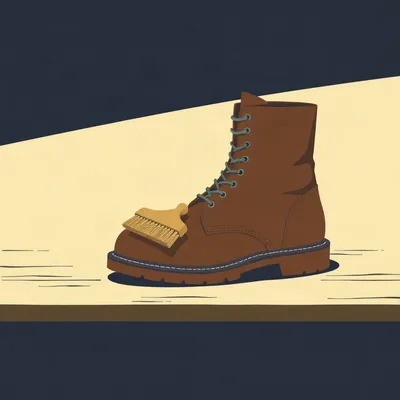
Fourth is Red Wing Shoes, founded in nineteen-oh-five in Red Wing, Minnesota. This is for footwear. Their Iron Ranger boot was originally built for iron miners in the Mesabi Range — hence the name. It's a six-inch boot with a cap toe, Goodyear welt construction, and a Vibram sole. No visible branding except a small logo on the side. The key thing here is that the Iron Ranger is resolable. When the sole wears out, you don't throw the boot away. You take it to a cobbler, they stitch on a new sole, and you keep wearing them. That's the anti-fast-fashion philosophy applied to footwear.
Resolable boots are one of those things where the upfront cost is higher but the lifetime cost is lower. A pair of Iron Rangers is what, three hundred dollars? But if you resole them every few years, they'll last twenty years. A pair of sixty-dollar fast-fashion boots that fall apart in eighteen months costs you more over the same period.
Fifth is Uniqlo, which is the odd one out on this list because it's not a workwear brand. Founded in nineteen forty-nine in Japan, originally as a textiles company. But Uniqlo's whole philosophy is no-logo basics with a focus on fabric technology. Their HeatTech and Airism lines are innovative — HeatTech uses hollow fibers to trap warm air, Airism uses a micro-fiber that wicks moisture. For Daniel's purposes, their chinos and oxford shirts are office-appropriate, nearly brandless, and surprisingly durable for the price point. Uniqlo is what happens when you apply the anti-label approach to everyday office wear.
Uniqlo is also interesting because they've managed to be affordable without being disposable. Their supima cotton T-shirts are, what, fifteen dollars? But they hold their shape better than T-shirts that cost twice as much from fashion brands. The fabric is the brand.
The common thread across all five — Filson, Patagonia, LL Bean, Red Wing, Uniqlo — is that the construction does the talking. None of them need a chest logo because the garment's quality is the signal. For Daniel, this is the sweet spot: durable, discreet, and versatile enough for both a tool belt and a business meeting.
I want to pull on something you mentioned earlier about the eight seventy-four pants being in continuous production since nineteen thirty-eight. That's eighty-eight years of the same pant. In an industry where trends change every six months, that's almost perverse. What does it say about a company that they've been making the exact same product for nearly nine decades and people keep buying it?
It says they solved the problem. The eight seventy-four was designed for industrial workers who needed pants that wouldn't rip, wouldn't wrinkle, and wouldn't cost a fortune. Those requirements haven't changed. The guy working in an auto shop in nineteen thirty-eight needed the same thing as the guy working in a warehouse today. Dickies figured out the formula — sixty-five thirty-five poly-cotton twill, straight cut, bar-tacked stress points — and there was no reason to change it. Most fashion brands change their designs every season not because the clothes got better, but because they need to create a reason for you to buy again. Dickies doesn't need to do that because their customer buys another pair when the first pair finally wears out, which takes years.
That's the anti-label business model in a nutshell. The product is the product. You don't need a new version.
I've been waiting for someone to ask about Dickies.
Hilbert.
Hilbert: The reason Daniel felt that instinctive connection to the T-shirts — it's not just the photos or the sizing. Dickies hasn't changed their cotton blend since nineteen sixty-two. The T-shirt fabric is a fifty-fifty poly-cotton jersey knit. Same yarn supplier, same knitting specs, same finishing process. Sixty-four years. Most apparel brands change suppliers every season to shave off a penny per unit. Dickies doesn't. Your body recognizes the consistency. The weight, the hand feel, the way it drapes. That's not marketing. That's a supply chain decision made in nineteen sixty-two and never reversed.
Sixty-four years of the same fabric. That's extraordinary.
Hilbert: I worked a summer at the Fort Worth plant in nineteen ninety-four. Waistband loops on the eight seventy-four line. I was nineteen. It was a hundred and ten degrees in there. I lasted six weeks. The machine I ran was a Singer from nineteen fifty-three — cast iron, weighed about four hundred pounds, never broke down. You'd feed the pant through, it'd punch eight bar tacks per loop, and the loop would hold for thirty years. I still have a pair from that summer. The loops I sewed are still intact. Faded, but intact.
You're still wearing pants you made yourself in nineteen ninety-four.
Hilbert: They're pants. They still work.
The Singer from nineteen fifty-three — that's the kind of detail that explains the whole philosophy. They didn't replace the machine because the machine still did the job. Same logic as the pants themselves.
Hilbert: The plant foreman was a man named Roy Taggart. He'd been there since nineteen sixty-one. He told me the eight seventy-four pattern had been cut from the same paper template since nineteen thirty-eight. The template was stored in a flat file in the pattern room. It had "DO NOT ALTER" written on it in pencil. Roy said that pencil mark was older than I was. He was right.
"Do not alter" as a design philosophy.
Hilbert: Worked for fifty-six years by the time I got there. The only thing they changed was the automation. When I was on the line, the waistband station was manual — you positioned the pant by hand. Now it's a laser-guided feeder. Same stitch, same thread, same loop. Just faster.
The consistency point Hilbert's making ties back to something we said earlier about fast fashion changing suppliers every season. Dickies made a decision in nineteen sixty-two — or nineteen thirty-eight for the pants — and they've just... kept making it. That kind of institutional commitment to a single spec is almost impossible to find in any consumer product category anymore.
It makes me wonder about the anti-label movement more broadly. Is this a genuine shift in consumer values, or is it just another fashion cycle? Daniel's story feels personal — a reaction to an inherited identity, not a trend he read about. But as workwear brands become fashion staples, do they eventually become the new status symbols?
That's the tension. Carhartt is already there — the little gold C patch is a style signifier now, whether the brand wanted it or not. Dickies has a whole "Dickies Life" line that's explicitly fashion-forward. Filson got bought by a private equity firm and started making slim-fit versions of their classic cuts. The authenticity that made these brands appealing is fragile. Once a brand becomes trendy, it risks losing the very quality that made it appealing in the first place.
So Daniel's challenge isn't just finding the right brands. It's finding the right brands at the right moment — before they've been fully absorbed into the fashion cycle, while they're still making clothes for the people they were originally built for.
The good news is that all five brands we recommended still have one foot in their original mission. Filson still sells to foresters. Patagonia still runs environmental campaigns. Red Wing still makes boots for iron workers. The heritage isn't just a marketing story — it's still visible in the product. For someone like Daniel who's building a wardrobe from scratch, the move is to buy the pieces that have been in the catalog for decades, not the seasonal fashion collaborations. The eight seventy-four, not the limited-edition streetwear drop.
The misconception here — and we should name it directly — is that workwear brands are just fashion trends, or that anti-label means boring. Neither is true. These brands were built for industrial use, and their durability is a result of engineering choices made decades ago. And anti-label isn't about absence of style. It's about discretion. The garment's quality is the signal, not the logo. You can walk into a meeting in a Filson wool cruiser and a pair of Red Wing Iron Rangers and look completely put-together — not because you're wearing a brand, but because the clothes fit, they're well-made, and they don't need to announce themselves.
Daniel, you're not just building a wardrobe. You're building an identity that's yours — not your mom's, not a brand's. And that's the hardest thing to manufacture.
The open question we're left with is whether the anti-label movement can survive its own success. As more people discover these brands, the brands face pressure to scale, to cut costs, to chase the fashion customer. Some will resist. Some won't. The ones that stay true to their utilitarian roots will be the ones worth buying from in ten years.
Thanks to our producer Hilbert Flumingtop for keeping this show running, and for apparently still wearing pants he manufactured during the Clinton administration.
This has been My Weird Prompts. If you've got a question about workwear, or inherited fashion, or anything else you're trying to figure out in your thirties, email the show at show at my weird prompts dot com.
We'll be back soon.