
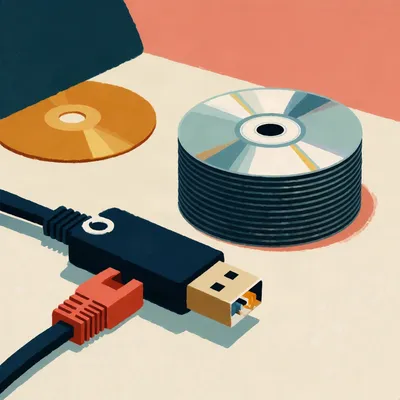
#6578: How Air-Gapped Linux Systems Actually Get Updated
Keeping an offline Ubuntu machine updated means carrying hundreds of gigabytes of repository data by hand every single time.

#6577: How SecureDrop and GlobaLeaks Run in Practice
Whistleblowing systems rarely fail on cryptography; they fail operationally when an inbox is checked quarterly or an admin leaves with the keys.

#6576: What It Actually Costs to Run an Anonymous Tip Line
SecureDrop requires $2,200 to $3,000 in dedicated hardware and backup Linux admins, while GlobaLeaks runs on a 1GB-RAM computer you already own.

#6575: How Survivor Charities Build Tech for Hostile Homes
Women's Aid's live chat had a 99% recommendation rate before closing when emergency funding ran out, showing how budgets shape survivor tech.

#6573: When Changing Passwords Signals an Abuser
A New South Wales Crime Commission review found one in four buyers of tracking devices had a domestic violence history.

#6572: When Encryption Friction Nearly Stopped the Snowden Leak
Glenn Greenwald ignored a 12-minute PGP tutorial from Edward Snowden, and a 1999 study found only two of twelve users could encrypt email.
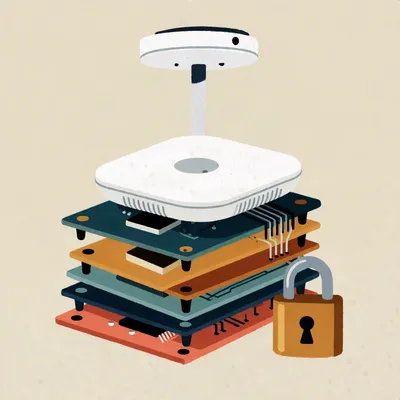
#6561: What Access Point Firmware Updates Actually Change
Ubiquiti's 8.8.14 access point firmware ships 18 bugfixes, 2 features, 8 countries' radio laws, and zero CVEs.
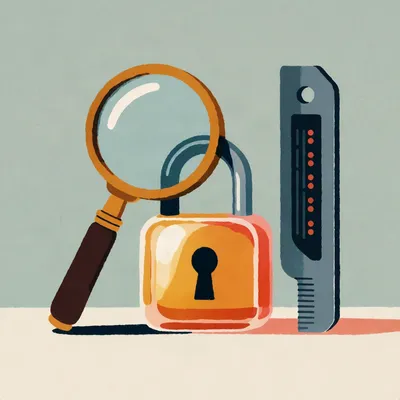
#6560: Chrome, Firefox, and Verifiable Privacy Claims
Proton VPN's no-logs claim is independently audited each year, while Google's Chrome data retention schedule is self-reported.
#6557: Software Flaws That Became Permanent Infrastructure
In 2020, geneticists renamed human genes like SEPT2 because Excel kept turning them into dates.
#6556: How AI Agents Spot Bugs Where Systems Meet
A Home Assistant watchdog's 10-restart limit left a Zigbee network dead for hours until Claude traced the hidden seam across two codebases.
#6555: Self-Hosted AI Browsers Still Lack Vault-Brokered Logins
No single product publicly documents self-deployment, live human takeover, and 1Password credential injection together.
#6553: How a GeForce 8800 Side Note Became the Floor Under AI
In 2006, NVIDIA launched the GeForce 8800 with a throwaway mention of CUDA, a toolkit that put a parallel supercomputer in every gamer's bedroom.
#6552: How Slurm and Kubernetes Split GPU Workloads
Request eight GPUs when six are free, and Kubernetes's default scheduler starts six pods that sit idle while waiting for the last two.

#6551: CUDA's Small Start and Its Open Ecosystem
CUDA started in 2004 with roughly two to six engineers and two libraries, yet NVIDIA's own reports can't agree on how many exist today.
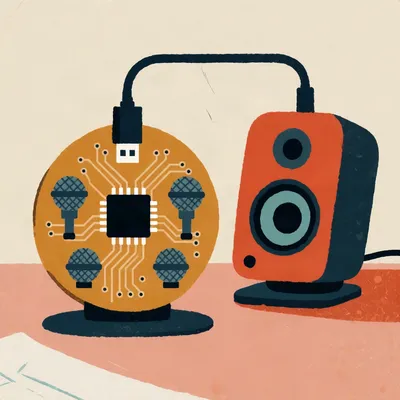
#6547: USB Far-Field Mics and the Echo Cancellation Catch
Seeed's ReSpeaker XVF3800 packs 60 dB of automatic gain and neural noise suppression onto a chip, but loses echo cancellation on external speakers.
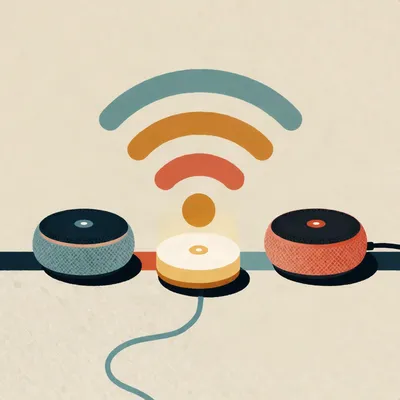
#6546: The Wake-Word Race Inside Home Assistant Satellites
When two Home Assistant voice satellites hear a wake word, the winner is whichever packet arrives first—not the closest room.

#6544: Inside Laptop Microphones and Why They Hurt Dictation
Most laptops ship just two microphones, and their built-in noise suppression can triple speech-to-text errors.

#6541: Donating Bandwidth Without Becoming an Exit Node
Censorship-circumvention tools like Snowflake, Conduit, and Unbounded make your machine an entry relay, never an exit node.

#6521: Multitenancy in Qdrant Vector Databases
Migrating a hundred small tenants into a pooled Qdrant collection reduced resident memory by roughly eighty percent.

#6520: Mapping Multi-Tenancy Across Vector Databases
Isolating tenants physically into namespaces can cut vector query costs a hundredfold compared to using metadata filters on shared indexes.