
#2650: How to Catch an LLM's Bad Writing Habits
A practical guide to analyzing podcast transcripts for repetitive language and dialogue patterns — from Python word counts to embedding clustering.

#2648: The Art of the Brief: Writing What Busy People Actually Need
Why a crisp 600-word brief is harder than a 10-page report—and how AI changes the game.

#2645: How to Document Failures for Your AI Second Brain
Stop writing diary entries. Start writing retrospectives your AI agent can actually use.
#2644: Crafting Agendas That Actually Work (With AI)
Stop writing table-of-contents agendas. Learn the diplomat’s method for crafting meetings that actually achieve their goals.
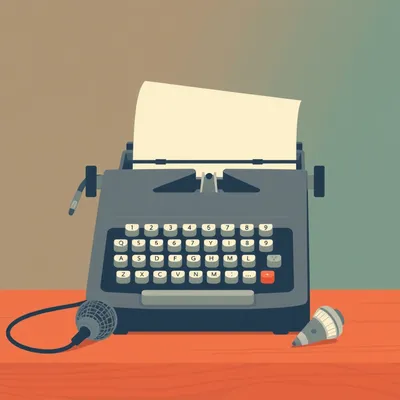
#2643: How Stenographers Type 300 Words Per Minute
Court reporters don’t type letters—they chord syllables at 300 words per minute. Here’s how it works and why AI can’t replace them yet.
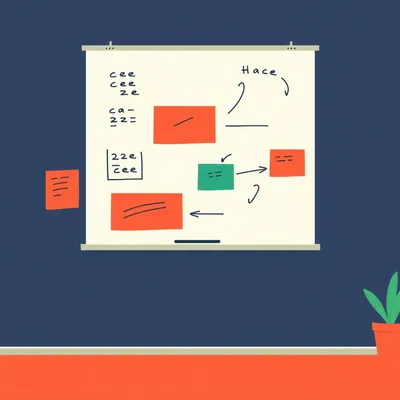
#2641: Bridging Analog and Digital Note-Taking
How Nano Banana finally solves the text rendering problem, turning messy whiteboard photos into polished tech diagrams.
#2640: Why Instructional Models Beat Conversational for Batch AI
Beyond cheaper tokens—how batch inference changes AI workflows and why instructional models beat conversational ones for automated jobs.

#2639: The Hidden Layer That Makes Search Work
Why your search results miss the mark — and how cross-encoders fix it.

#2638: How to Build Disposable AI Agents at Runtime
Create ephemeral AI agents that answer questions about specific items, then vanish. No persistent configuration needed.
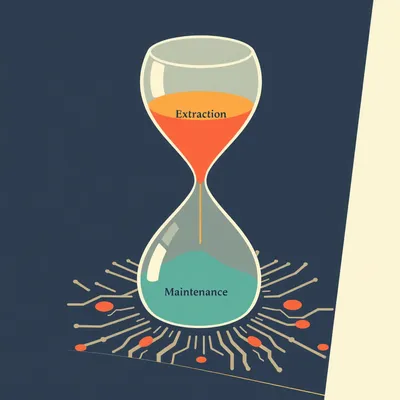
#2634: The Two-Stage Pipeline for Persistent User Memory
How to extract durable personal context from raw prompts and build a self-healing memory layer for AI systems.

#2632: How to Start a Meetup Without Burning Out
Practical steps for launching a local community around any interest — without it taking over your life.
#2622: How Transformers Actually Work: Attention, Tokens, and Context
How one architectural change unlocked chatbots, image generation, and protein folding — explained without the jargon.
#2618: Text Normalization's Hidden Complexity
How to handle acronyms in text-to-speech pipelines using BERT models, lexicons, and layered preprocessing.

#2603: Defining the Agentic Workspace
How composable AI agent skills turn tedious media tasks into one-instruction operations for creatives.
#2602: Letting Non-Experts Direct Audio Tools Through Conversation
How to use AI for podcast mastering — and why agentic AI works better for small tasks than big promises.
#2591: Decoupling Script from Voice
How dynamic voice replacement could let listeners choose who narrates each host's lines.
#2590: The Uncanny Valley of Clean Speech
How transformer models distinguish "um" from meaningful speech — and why removing too much makes you sound like a robot.
#2582: What Your Browser Does to Mic Audio Before It Reaches Your Server
getUserMedia returns audio, but not raw audio. Here's what browsers actually do to your mic feed before it hits your server.

#2567: Beyond Pixels: Controlling Apps Without Vision
How MCP agents can use accessibility APIs and COM to control Windows and macOS apps at the protocol level.

#2563: How Audio Fingerprinting Actually Works
Spectrogram peaks, constellation maps, and hash matching — the elegant mechanics behind identifying any song in seconds.