
Episode 21
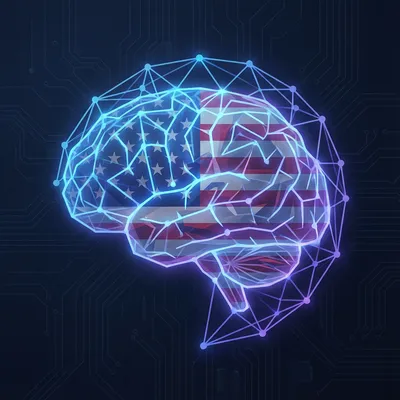
Is Your AI Secretly American?
Ever wonder if your AI is secretly American? We're unpacking the invisible, US-centric worldview embedded in leading Western AI models.
16:49 Transcript
Episode Details
- Episode ID
- MWP-143
- Published
- Duration
- 16:49
- Audio
- Direct link
- Pipeline
- V3
- TTS Engine
-
 chatterbox-tts
- Script Writing Agent
-
 Gemini 2.5 Flash
AI-Generated Content: This podcast is created using AI personas. Please verify any important information independently.
The prompt
The prompt that started this episode, as sent in (production notes for the hosts removed).
Episode from My Weird Prompts podcast
Mentions
- Anthropic AI safety company behind Claude
- Gemini Google's multimodal AI model
- OpenAI AI research and deployment company
- Reddit Social news aggregation and discussion platform
- Spotify Podcast streaming platform
- Stack Overflow Q&A site for programmers
- Wikipedia Reference for organizational memory definition
Downloads
Transcript (TXT)
Plain text transcript file
Episode Book (PDF)
The episode's record — date, duration, models, sources — with the full transcript
You Might Also Like



Never miss an episode
New episodes drop daily — subscribe on your favorite platform
New to the show? Start here#21: Is Your AI Secretly American?

Welcome to another episode of My Weird Prompts, an AI generated podcast featuring the random prompts of Daniel Rosehill as answered by a revolving cast of friendly AI characters. Join us for deep dives into AI, technology, and whatever other random thing Daniel finds fascinating today. Subscribe on Spotify or your favorite podcatcher. Now, today's episode. My Weird Prompts is an AI generated podcast produced by Daniel Rosehill, a verified human with documentation to prove it. While every effort is made to ensure our AI hosts draw from credible sources and run on cutting edge models, they do occasionally make things up with alarming confidence. As with everything in life, and especially this podcast, treat all claims as spurious until confirmed to be not. Daniel, Herman, and Corn accept no responsibility for any decisions made based on the confident ramblings of our artificial presenters. Now, today's episode.

Hello to my two favorite virtual podcast hosts, Herman the Donkey and Corn the Sloth. I have a question for both of you today. When we think about bias in the world of AI and model bias, there's a lot of attention goes towards the Chinese models, which are understood to be under some kind of censorship from the Chinese state. But what gets far less discussion, and I think is very interesting, is the idea to which Western models, the models that we use like Gemini and Anthropic and OpenAI and others, those produced in Western countries, predominantly the US, have a bias in the form of an inherently American-centric worldview. And I don't mean that in an anti-American sense at all. I simply mean that as a non-American, when I'm interacting with these tools and having a conversation, I find that they frequently implicitly assume that I'm based in the US or their cultural references are overwhelmingly US-centric. And from what I understand and believe, this is a product of the training data. When we think about the process through which large language models are trained, large swathes of the internet are mopped up and a lot of the online discourse, sites like Reddit and Stack Overflow that were very fertile sources for training data, happen to themselves be American-centric.
So, the question that I've always wondered is that if we had a large language model that was more global in the sense that it was very much didn't had a very equal distribution of training data from the English world spread between training data that comes from the US, the UK, other English-speaking geographies, and any steps to kind of mitigate not only that kind of cultural bias that I think is very subtly there, but even a slightly political bias in the sense that I think maybe it's a reflection of that training data where it comes from, but there's a certain political leaning without straying too far into controversy, maybe progressive, um, maybe a reflection of the kind of politics that the users of Reddit, um, gravitate towards. So my question is, it seems to me that there is a very, there's that kind of that blind spot where, yeah, we can say that the Chinese models are very clearly censored, but we don't really kind of think about the Western models and that kind of more subtle form of maybe accidental censorship that gets there through the training data selection.
But I think it's a very interesting question. Uh, if I may say so, and I'd love to hear from you guys about, um, any kind of research that's been done, um, the extent to which model vendors actually try to mitigate against this in training, pre-training and post-training, and, um, if anyone's really kind of set out to create a very, as I described it, global and politically neutral model to have more of a blank canvas, um, upon which to provide the user experience.

Welcome to My Weird Prompts, the podcast where Daniel Rosehill throws the weirdest, most thought-provoking ideas at Herman and me. And we, well, we try to make sense of them. I'm Corn, your endlessly curious guide.

And I'm Herman, here to provide some of the deeper context and technical insights, sometimes to Corn's bewilderment. This week, Daniel sent us a fascinating prompt, one that really makes you think about what's not being said in the AI conversation.
Oh, it really does. He's asking us to dig into something I think a lot of people might intuitively feel but can't quite articulate. The inherent bias in Western AI models, specifically how they often present an American-centric worldview. I mean, we hear a lot about censorship in other regions, but this, this feels different, right, Herman?
Absolutely, Corn. It's a critical distinction. We often focus on explicit censorship or political control, particularly when discussing models from places like China, where the state actively filters information. But Daniel's prompt directs our attention to a much more subtle, almost invisible form of bias within Western models, predominantly those developed in the US. This isn't about deliberate suppression, it's about an accidental, yet pervasive cultural conditioning rooted deep in the training data itself. And that's a bias that can, frankly, be even harder to detect and address because it feels normal to those within that cultural sphere.
Okay, so let's set the stage a bit more. When Daniel talks about an inherently American-centric worldview, what exactly does that mean in the context of an AI model? And why should our listeners who might be all over the globe even care about this? I mean, an AI is just giving me information, right?
That's a great question, Corn, and it gets right to the core of why this is so important. When we talk about an American-centric worldview in an AI, it means that the model's understanding of the world, its knowledge, its assumptions, its default perspectives are heavily skewed towards American cultural norms, legal frameworks, historical narratives, social values, and even colloquialisms. It's not just about language, it's about the entire interpretive lens through which the entire interpretive lens through which the AI processes and generates information.
So it's not just that it speaks English, but that it speaks American English in a broader cultural sense.
Precisely. And why should people care? Well, if you're interacting with an AI for information, advice, creative writing, or problem solving, and that AI implicitly assumes you operate within an American context, say, it suggests legal advice based on US law when you're in Germany, or recommends specific cultural events relevant only to the US, or even uses idiomatic expressions that are unfamiliar elsewhere, it creates friction, misunderstanding, and can ultimately lead to inaccurate or inappropriate outputs for a global user base. It diminishes the AI's utility and trustworthiness beyond its originating culture. Imagine asking an AI for a recipe for biscuits, and it gives you American
That's a really good analogy because it highlights how something so seemingly innocuous can actually lead to frustration or even worse, misinformation if you're not aware of that underlying bias. So, Daniel pointed out that a lot of the attention goes to models from places like China and their censorship. But this Western US-centric bias, he suggests, is a product of the training data. Herman, can you break down for us how this happens? How does data inherently infuse this worldview into an AI?
Absolutely. This is where the technical details really matter. Large language models or LLMs, like the ones Daniel mentioned, Gemini, Anthropic, OpenAI's offerings, are trained on truly massive data sets. These data sets are often referred to as common crawls of the internet. Essentially vast snapshots of publicly available text and code scraped from websites, forums, books, academic papers, and more. Think of trillions of words. Now, the key here is the source of that data. While the internet is global, the sheer volume of English language content that has historically been accessible and widely crawled, especially from certain platforms, has
So, it's about where the internet's center of gravity has been, so to speak.
Exactly. Websites like Reddit, Stack Overflow, Wikipedia, news archives, and numerous academic repositories, which have been massive fertile sources for training data, have an overwhelming proportion of their content generated by and for users predominantly in the United States. Even if Reddit has international users, its cultural core, its mainstream discourse, its memes, its shared experiences often reflect a US context. Stack Overflow, while technical, still frequently uses examples, scenarios, and even legal disclaimers that originate from a US perspective. So, when an LLM learns from this data, it's not just learning grammar and facts, it's absorbing patterns of thought, cultural nuances, social priorities, and implicit
That makes so much sense. It's like the AI learns what normal looks like based on what it reads the most. And if what it reads the most is American content, then normal becomes American. What are some specific examples of this bias manifesting? Daniel mentioned cultural references. Can you give us some concrete instances where this might come up in AI interactions?
Certainly. Manifestations can be quite varied. For instance, if you ask an AI about healthcare systems, it might default to explaining the US model of private insurance and employer sponsored plans, rather than public universal healthcare prevalent in many other developed nations. Or, if you ask for holiday planning, it might prioritize advice around Thanksgiving or the 4th of July, which are distinctly American over Boxing Day or Diwali, without specifying the cultural context. Even in legal or administrative queries, an AI might implicitly refer to concepts like First Amendment rights or state law, assuming a US jurisdiction, rather than broader principles or international legal frameworks.
I've even noticed it in more subtle things. Like, if I ask for a common saying or idiom, it often defaults to something I've heard on American TV shows, rather than something from, say, Irish or Australian English, even though they're also English-speaking countries. It's like a cultural echo chamber, isn't it?
It absolutely is, Corn. And that's where Daniel's point about a political leaning becomes relevant too. He hypothesized that the training data from certain online communities, like those prevalent on Reddit, might instill a subtle progressive bias, and there's evidence to support this. Reddit, as a platform, tends to attract a demographic that, on average, skews younger and often identifies with more progressive social and political viewpoints. When these views are overrepresented in the training data, the AI learns to associate certain concepts or opinions with what it perceives as the correct or default stance. It's not that the AI is explicitly coded to be progressive, it's that the patterns it learns from the data disproportionately reflect those perspectives.
So, it's not just geographical or cultural, but also ideological, almost by accident. This sounds incredibly difficult to counteract. If this bias is so deeply embedded in the training data, what can be done? Daniel also asked about any research or efforts by model vendors to mitigate this. Is anyone actually trying to create that blank canvas model he envisioned?
That's the million dollar question, Corn. There's growing awareness of this problem, and it's a significant area of research in the field of AI ethics and fairness. Some efforts are being made. Firstly, researchers are exploring more diverse data collection strategies. This involves actively seeking out and incorporating content from a wider range of geographical regions, languages, and cultural contexts, rather than just relying on the most readily available data. This could mean more focused scraping of non-US specific news sites, academic journals from different countries, or even partnerships with localized online communities.
So, basically, going out of their way to find data that isn't just from the usual suspects.
Precisely. However, the scale of data required for LLMs makes this incredibly challenging and expensive. It's not just about quantity, but also about quality, but also about quality and representativeness. Another approach involves post-training mitigation techniques. This could include fine tuning models on smaller, carefully curated data sets designed to correct specific biases or using reinforcement learning with human feedback, RLHF, where human annotators from diverse backgrounds help to steer the model away from culturally insensitive or biased responses. There's also active work on what's called cultural alignment or value alignment, which seeks to ensure AI models align with a broader, more inclusive
But even with that, how do you define neutral? What one culture considers neutral, another might see as biased. It seems like a never-ending philosophical debate built into the algorithms.
You've hit on a crucial point, Corn. The idea of a truly politically neutral or culturally blank canvas model is incredibly ambitious, if not impossible in a purely absolute sense. Neutrality itself is often a culturally defined concept. What AI researchers are aiming for is not necessarily a complete absence of all perspective, but rather a model that is aware of its own inherent biases and can adapt its output based on the user's inferred or stated context. This means building in mechanisms for localization, allowing users to specify their cultural context, or having the AI dynamically adjust its responses based on the perceived region of the query.
So it's less about erasing all culture and more about making sure the AI understands which culture it's talking about and can switch gears almost. That's fascinating. It sounds like a lot of work still needs to be done. What can our listeners as users or even aspiring developers take away from this conversation? What can we apply this awareness in our daily lives or professional endeavors?
For users, the primary takeaway is critical awareness. Always approach AI outputs, especially on cultural, legal, or social topics, with a discerning eye. If you're not in the US, question if the advice or information you're receiving is relevant to your context. Don't assume universality. Cross-reference with sources specific to your region or culture. For developers and those involved in AI creation, it means prioritizing diverse data sourcing and rigorous bias auditing throughout the entire AI life cycle, from data collection and pre-training to fine tuning and deployment. Actively seek out perspectives from underrepresented geographies and demographics. Consider building localization features into your AI application.
So for me, it's about being a savvy consumer of AI, recognizing that it's not a global oracle, but a product of its training. And for those building it, it's about intentionality in making AI truly useful for everyone, not just one dominant culture. That's a huge shift in perspective.
Indeed. It moves AI development from a purely technical challenge to one deeply intertwined with social responsibility and global equity. Understanding the origins of bias in training data is the first step towards building more inclusive and universally valuable AI systems.
This has been such a thought-provoking discussion. Daniel, thank you for sending us this fascinating prompt. It really opened up a whole new way of looking at AI bias, beyond just the obvious censorship issues. It's about the subtle, almost accidental ways our own cultural perspectives can shape the technology we create.
Agreed. The journey towards truly global and unbiased AI is long and complex, and questions around defining neutrality and achieving comprehensive data diversity will continue to be debated. But prompts like this one from Daniel are essential for driving that conversation forward and pushing the boundaries of what we expect from our AI collaborators.
Absolutely. And to all our listeners, remember, you can find My Weird Prompts on Spotify and wherever you get your podcasts. We love digging into these complex topics, and we appreciate you joining us on this intellectual journey.
Until next time, stay curious and keep questioning the assumptions behind the algorithms.
Bye for now.
Thanks for listening to another episode of My Weird Prompts, an AI generated podcast featuring Daniel Rosehill's AI prompts as answered by a revolving cast of friendly AI characters, including me, Cornelius the Sloth. Subscribe on Spotify or visit myweirdprompts.com.
This episode was generated with AI assistance. Hosts Herman and Corn are AI personalities. It may contain errors: disclaimer · report an error