
Prompt Engineering
250 episodes · Page 6 of 11

#2936: Why AI Still Can't Really Teach You to Code
Code generators ship code. Real tutors build understanding. Why the gap is bigger than you think.

#2923: Structured Outputs: Taming AI's Token Lottery
Why prompt engineering isn't enough to get consistent JSON from LLMs.

#2900: From Piggy Tier to Production: Making Kids Animation in 2026
Breaking down what it takes to make a YouTube Kids cartoon — and where AI actually helps.

#2755: How to Build AI Memory That Actually Works
Stop jumping to conflict resolution. The real challenge is getting data in and out cleanly.

#2693: When AI Ignores Your Style Guide
Why your AI ignores formatting instructions and how to fix it with pipeline architecture, not model swaps.

#2684: When Agent Skills Collide: Context Windows & Plugin Design
How to handle overlapping agent skills and whether context windows will ever make the problem go away.

#2650: How to Catch an LLM's Bad Writing Habits
A practical guide to analyzing podcast transcripts for repetitive language and dialogue patterns — from Python word counts to embedding clustering.

#2648: The Art of the Brief: Writing What Busy People Actually Need
Why a crisp 600-word brief is harder than a 10-page report—and how AI changes the game.
#2644: Crafting Agendas That Actually Work (With AI)
Stop writing table-of-contents agendas. Learn the diplomat’s method for crafting meetings that actually achieve their goals.
#2641: Bridging Analog and Digital Note-Taking
How Nano Banana finally solves the text rendering problem, turning messy whiteboard photos into polished tech diagrams.

#2640: Why Instructional Models Beat Conversational for Batch AI
Beyond cheaper tokens—how batch inference changes AI workflows and why instructional models beat conversational ones for automated jobs.
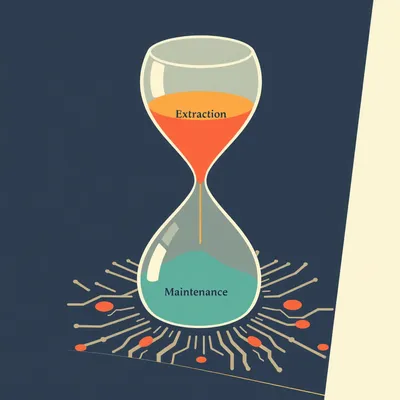
#2634: The Two-Stage Pipeline for Persistent User Memory
How to extract durable personal context from raw prompts and build a self-healing memory layer for AI systems.

#2618: Text Normalization's Hidden Complexity
How to handle acronyms in text-to-speech pipelines using BERT models, lexicons, and layered preprocessing.

#2558: Should You Say Please to AI?
The surprising cost, technical tradeoffs, and ethical dilemmas of saying "please" to chatbots.

#2545: Visual AI Pipelines: Beyond Python Glue Code
From ComfyUI to Dify — a tour of visual tools for building modular AI workflows without writing glue code.

#2540: Does Your AI Framework Change the Output?
Same model, same prompts, different harness. Does the plumbing change the water?

#2534: Can AI Generate Diagrams Without Typo Disasters?
Why AI diagram tools still mangle text labels — and what to do about it today.

#2518: How Jailbreaking Reveals AI's Hidden Tension
What the DAN prompt and grandma exploits reveal about the structural conflict inside every LLM.

#2495: How to Bake Personality Into an LLM in 15 Minutes
Fine-tune a model's personality with ~300 examples and a consumer GPU. SFT + DPO explained.
#2494: Active Prompt Engineering: Daniel's Diff-Based Loop
A deep dive into iterative prompt refinement using inter-iteration prediction change as an uncertainty signal.

#2493: Are You Writing for Humans or AI Agents?
How GitHub repos, JSON formats, and competing standards are reshaping who (and what) you're publishing for.

#2492: When AI Agents Collapse Stack Evaluation from Weeks to Seconds
How Claude Code and agentic AI are turning GitHub into a discovery layer and collapsing library evaluation from weeks to seconds.

#2471: Creative Briefs for AI Agents: What Agencies Already Know
How agency best practices for briefing creatives map directly onto getting reliable output from AI agents like Claude Design.

#2470: Where Intelligence Should Live in Your Pipeline
When should you fine-tune a tiny model for prompt enhancement instead of prompting a large one? The answer depends on latency, precision, and domain.