
#open-source
102 episodes · Page 3 of 5

#2774: Open Data That Actually Works
The gap between open data promises and reality, and the rare cases where it actually changes policy.
#2690: Where Agent Builders Actually Gather
The MCP community, A2A protocol, and Linux Foundation are building the professional identity of agentic AI right now.

#2604: Self-Hosted Screen Recording: Tools Beyond Loom
Practical tools and trade-offs for async video documentation with real data control across platforms including Linux.

#2599: The $200 Printer That Changed Everything
What $200 buys you for printing keycaps, cable housings, and small parts at home — with real material and environmental math.

#2535: Inside LangChain's Deep Agents: What's Actually in the Box
A deep dive into the batteries-included agent harness with terminal CLI, sub-agents, and production-ready evaluation.

#2526: How Peer Review Actually Works (and Fails)
The history of peer review, the Lancet's biggest scandals, and why arXiv is changing everything.

#2517: How Unsloth Makes LLM Fine-Tuning 2x Faster
Unsloth cuts memory usage by 50-70% and speeds up training 2.2x for models like Llama 3 and Mistral.

#2511: Measuring AI API Latency Through the Black Box
How to benchmark token throughput and debug slowdowns in closed CLI tools like Claude Code using OpenTelemetry and mitmproxy.

#2505: How Self-Hosted Search Actually Works for AI Agents
SearXNG isn't a crawler — it's a metasearch router. Here's how it works and why AI agents change everything.

#2476: Database Backups Without the Bloat
pg_dump, WAL archiving, and the free tools that beat expensive commercial backup software.

#2468: When Tokens Meet GPU Seconds
How to track AI spend across Open Router, Replicate, and more — without a unified dashboard.

#2466: The Hidden Trap of Embedding Model Lock-In
What happens when your vector database works great — until your embedding model gets deprecated and your vectors become useless.
#2459: Drizzle vs Prisma: Which ORM Wins for AI-Native Backends?
Comparing Drizzle and Prisma for AI-native backends, MCP servers, and the future of agent-centric development.

#2435: The Hidden Difficulty of Data Modeling
Stop designing database schemas from scratch. Here's where to find ready-made templates for common business apps.
#2355: Why Open-Weight Models Are Winning
Discover how Cogito v2.1 leverages process supervision and MoE architecture to redefine reasoning efficiency in open-weight AI models.

#2338: Who Keeps Matplotlib Running?
How does a team of just 15 people maintain Matplotlib, the backbone of global scientific visualization?

#2327: Why AI Developers Chose Discord Over Slack
Discover why Discord became the go-to platform for AI developers, outpacing Slack with its community-first design and informal vibe.

#2299: The Open-Source vs. Commercial Tension in Self-Hosted Media
Dive into the world of self-hosted media managers: Plex, Jellyfin, and Emby. Why do millions choose to run their own servers?

#2131: The CIA Is on GitHub
In-Q-Tel is on GitHub. Explore the IC's strategic investment arm and its use of open-source AI for wargaming.

#2109: AI Is Forcing You to Use React
AI tools are reshaping developer stacks, favoring React and Postgres over niche frameworks.
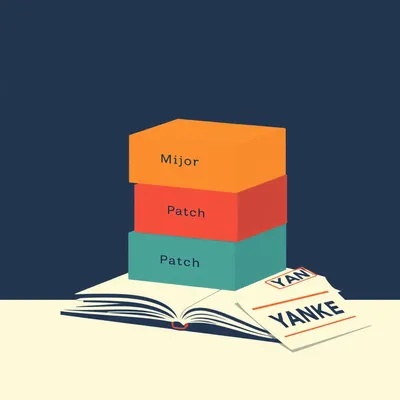
#2070: SemVer, Changelogs, and the Social Contract of Code
Stop breaking the internet. Learn the exact system developers use to release software without causing chaos.

#2044: Adversarial Thinking as a National Curriculum
Why the next generation of engineers must learn to "break" simulations and design for failure.

#2040: The Rebellion Against Big Tech's AI Lock-In
Why run LLMs locally? We break down Ollama, llama.cpp, vLLM, and llamafile—and when to use each.

#2008: Needle-in-a-Haystack Testing for LLMs
New AI models claim to be genius-level, but can they actually find a specific fact in a massive document?