
Multi Agent Systems
267 episodes · Page 6 of 12
#2179: Building Cost-Resilient AI Agents
Failed API calls in agent loops aren't just technical problems—they're direct budget drains. Here's how checkpointing, retry strategies, and cachin...

#2178: How to Actually Evaluate AI Agents
Frontier models score 80% on one agent benchmark and 45% on another. The difference isn't the model—it's contamination, scaffolding, and how the te...

#2175: Let Your AI Argue With Itself
What happens when you let multiple AI personas debate each other instead of asking one model one question? A deep dive into synthetic perspective e...

#2174: Role-Playing as Orchestration
How a role-playing protocol from NeurIPS 2023 became one of AI's most underrated agent frameworks—and what happens when you scale it to a million a...
#2173: Inside MiroFish's Agent Simulation Architecture
MiroFish generates thousands of AI agents with distinct personalities to predict social dynamics. But research reveals a critical flaw: LLM agents ...
#2172: Council of Models: How Karpathy Built AI Peer Review
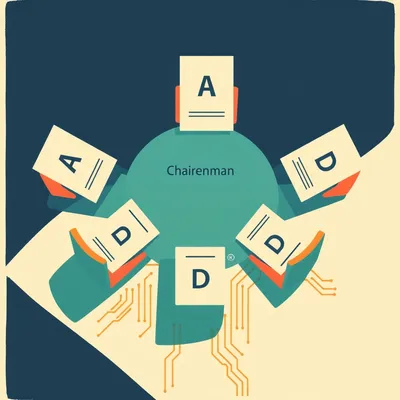
Andrej Karpathy's llm-council uses anonymized peer review to make language models evaluate each other fairly—but can it really suppress model bias?

#2171: How IQT Labs Built a Wargaming LLM (Then Archived It)
A deep code review of Snowglobe, IQT Labs' open-source LLM wargaming system that ran real national security simulations before being archived. What...

#2170: Pricing Agentic AI When Nothing's Predictable
How do you charge fixed prices for systems that operate in fundamental uncertainty? Consultants are discovering frameworks that work—but they requi...
#2169: How Enterprises Are Rethinking Agent Frameworks
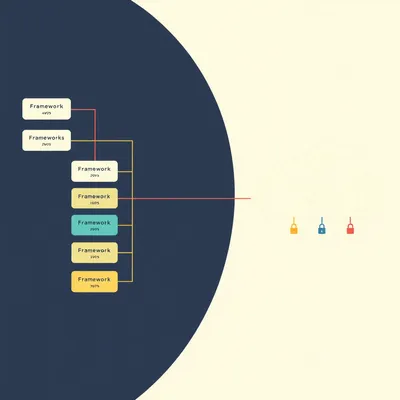
Twelve major agentic AI frameworks exist—yet many serious developers avoid them entirely. What patterns emerge in real enterprise adoption?

#2168: What Serious Agentic AI Developers Actually Need to Know
Python, TypeScript, LangGraph, and the frameworks reshaping how agents work. A technical map of the skills and concepts that separate prototypes fr...
#2167: Sync vs. Async: Architecting Agents for Scale
Why most enterprise AI agents fail in production has less to do with models and more to do with whether they're built synchronously or asynchronously.
#2166: Code vs. Canvas: How Developers Pick Their Tools
LangGraph or Flowise? The honest answer isn't obvious. Developers gain speed and integrations with visual builders—but lose version control, testin...

#2165: Strip Your Agent to Bash
The frameworks matter less than you think. What separates a working agent from a failing one is the harness—the orchestration, memory, and tool des...

#2163: Designing Autonomy Boundaries for AI Agents
Production data reveals a surprising truth: fully autonomous AI agents waste 98% of their context window on tool descriptions. Here's why the indus...
#2158: Claude Managed Agents: Brain Versus Hands
Anthropic's new Managed Agents service runs your agent loop on their infrastructure. Here's what you gain, what you lose, and who it's actually for.

#2146: The AI Wargame's Flat Hierarchy Problem
AI wargames treat NGOs and nuclear powers as equals. That's a dangerous flaw for real-world policy planning.

#2144: AI Wargaming: One Model or Many?
Should geopolitical AI simulations use one model or many? We debate the pros and cons of a single-model approach.

#2142: The Nervous System of Multi-Agent Systems
We break down the plumbing that lets a parent agent know exactly when a subagent finishes, from message passing to lifecycle events.
#2139: AI Wargame Memory: Beyond the Context Window
Why simply extending context windows fails in multi-agent simulations, and how layered memory architectures preserve strategic fidelity.
#2134: The Fog-of-War Problem in AI Wargaming
Why shared AI brains make secret-keeping a nightmare, and the four architectural patterns researchers use to fix it.

#2132: The Referee's Dilemma: Epistemic Containment in LLM Simulations
Why do AI war games need a news blackout? We dissect the firewall that keeps LLM actors from cheating with real-world data.

#2131: The CIA Is on GitHub
In-Q-Tel is on GitHub. Explore the IC's strategic investment arm and its use of open-source AI for wargaming.

#2125: Why Agentic Chunking Beats One-Shot Generation
A single prompt can't write a 30-minute script. Here’s the agentic chunking method that fixes coherence.
#2114: 2026 ERP: From Filing Cabinet to Autonomous Core
In 2026, ERP systems have evolved from digital filing cabinets into autonomous, AI-driven cores that predict and execute business decisions in real...