
Cyberattacks
325 episodes · Page 8 of 14
#2383: The Blame Gap: Public Anger vs. Breach Reality
How much blame do companies deserve for data breaches? The answer isn't as simple as you think.

#2382: How Five Eyes Intel Sharing Really Works
Behind the headlines of global cyber takedowns—how Five Eyes allies share signals intelligence in practice, from WWII roots to modern ops.
#2372: Choosing the Right Sandbox for Your Threat Model
Explore the tools and methods for creating secure, isolated environments to test malware, browse privately, and protect sensitive systems.
#2371: The Graph That Thinks: From Data Dots to Human Judgment
Discover how tools like Maltego and Spiderfoot transform single data points into intricate webs of connections, bridging digital and physical inves...

#2362: Iran's ICBM Claim vs Anti-Tamper Tech Reality
Iran claims to have reverse-engineered US ICBMs—but the Jericho missile is Israeli. How do militaries safeguard downed drones and hardware from exp...
#2319: The Rise of the Dodgy Box: Streaming Piracy’s New Era
How the dodgy box became the go-to device for streaming piracy, and why authorities are cracking down now.
#2297: How to Scrape Geo-Restricted Israeli Sites with MCP Tools
Learn how to bypass advanced bot-protection on Israeli websites using MCP tools, residential IPs, and tunneling techniques.

#2292: Inside the Walled Garden: China's Parallel Internet
Explore China’s parallel internet ecosystem—how the Great Firewall works, the apps that dominate it, and the surprising innovations it fosters.
#2286: Why Israel and Japan Still Love Fax Machines
How do tech giants like Israel and Japan still rely on fax machines and hanko stamps? Dive into the surprising reasons behind this paradox.
#2226: When Quantum Breaks Everything
Quantum computers will shatter RSA and elliptic-curve encryption—but the real danger is data being stolen and stored right now, waiting to be decry...

#2225: The Physics of Eavesdropping: Nation-State Listening in 2026
From laser microphones to keystroke acoustics to the Great Seal Bug, what remote listening actually looks like when physics becomes the bottleneck—...
#2180: The Sandboxing Tradeoff in Agent Design
AI agents need broad permissions to be useful—but every permission expands the attack surface. We map the real threat landscape and the isolation t...
#2104: The Envelope Problem: Why Your VPN Isn't Enough
A VPN isn't magic. Learn how DNS and SNI leaks expose your browsing, and what encrypted DNS and ECH actually do to fix it.
#2103: AI Firewalls: Spotting Bombs on an Encrypted Conveyor Belt
With 95% of web traffic encrypted, firewalls can't read packets. Here's how AI analyzes metadata to detect threats without decryption.

#2102: Why Don't You Notice AI Security Delays?
Multi-layer security checks add latency, but modern CLIs hide it under 100ms using parallelization and speculation.
#2098: The Invisible War for the Radio Spectrum
Modern wars are won by controlling invisible waves, not just physical ground. Discover how electronic and cyber warfare merge to rewrite reality.
#2080: The Silent Failure of Emergency Alerts
Why your phone might sleep through a siren, and how traffic lights could save your life.
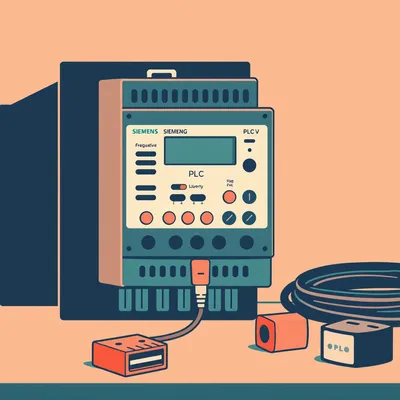
#2058: How Stuxnet's Code Physically Broke Iran's Centrifuges
Stuxnet didn't just infect computers—it rewrote PLC logic to spin uranium centrifuges into self-destruction while faking normal readings.
#2045: Anonymity Isn't the Problem, The Architecture Is
Why does Reddit amplify toxicity while other anonymous spaces stay healthy? It's not the mask—it's the room's shape.
#1991: Why 20 Clean Qubits Beat 1000 Noisy Ones
Israel just unveiled its first 20-qubit superconducting quantum computer, and it's not about size—it's about precision and control.
#1986: Desk Robots: Privacy, Power, or Annoyance?
These AI companions sit on your desk, watching your posture and listening in—so how do they protect your privacy while actually being useful?

#1928: Why Webhook Gateways Beat Direct Wiring
Unscale your chaos: Why Kong beats manual webhook sprawl for auth, routing, and latency.
#1908: The Web's New Bouncer: When to Block AI Bots
AI bots are crawling the web like a bank heist. Are Cloudflare's new controls protecting your content, or just helping Google?
#1892: Trust vs. Math: The Hybrid Finance of Hawala and Crypto
How hawala networks and crypto merge to fund covert operations, and why intelligence agencies are struggling to track the money.