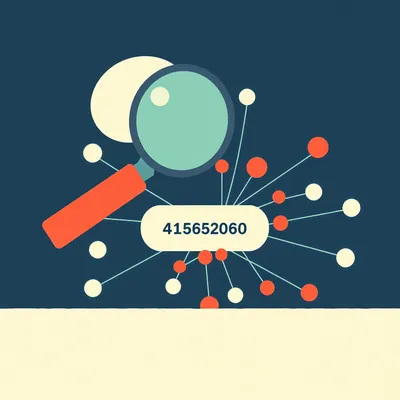
Daniel sent us this one. He’s asking us to dive into the world of open-source intelligence frameworks and tools, particularly ones used in penetration testing. He points to major tools like Maltego and Spiderfoot, which work on this graph-based, transformation methodology. They start with what seems like a trivial piece of information—a phone number, an email, a website—and they excel at mapping out a whole hidden network of connections. He wants us to explore how these tools actually function, because there’s a big misconception: people think they’re just for digital snooping, like DNS lookups. In reality, their real power is in weaving together digital breadcrumbs with real-world, physical information for actual investigations.

That’s such a good prompt. The phone number example is perfect. You plug a single number into one of these tools, and it’s not just a reverse lookup for a name. It can start pulling in associated email addresses, social media profiles, past data breaches where that number appears, even physical addresses from property records or business filings. You’re not just looking at a dot; you’re watching the tool draw lines to dozens of other dots you never knew were connected.
Which is exactly why this matters more now than ever. Open-source intelligence isn’t just a niche for cybersecurity nerds or investigative journalists anymore. It’s become a foundational layer for corporate due diligence, fraud detection, law enforcement, and of course, modern penetration testing. The reliance on connecting these dots is skyrocketing.
And by the way, today’s episode script is coming to us courtesy of deepseek-v-three point two.
Oh, the friendly AI down the road is branching out. I hope it’s done its homework on graph theory.
I’m sure it’s fine. But this is exactly the kind of topic where human context is irreplaceable. You can have a tool map a thousand connections between entities, but understanding which of those lines actually means something—that’s where the investigator’s brain comes in. The tool reveals the network; the human interprets the threat.
Or the opportunity. Or the mistake. So, where do you want to start unpacking this? The sheer mechanics of how a tool like Maltego takes a phone number and decides what to do with it?
I think we have to start there, because the “transformation” methodology is the core innovation. It’s what separates these from just being fancy search engines—at its simplest, a transformation is just an automated query to a specific data source.
You give Maltego an entity—like that phone number—and you run a transformation on it. That could be "to email addresses from phone number" or "to social media profiles from phone number." Each transformation calls an API or scrapes a public source, fetches the related data, and creates new entities on your graph.
It’s a chain reaction. You start with one node, run a transformation, get five new nodes. Click on one of those, run another transformation, get ten more. The graph just grows organically based on the links the tool discovers.
And that’s the graph-based part. Every piece of information becomes a node, and every relationship becomes a line, or an edge, connecting them. What you’re building is a visual map of how all these disparate pieces of data interconnect. A person node connected to an email node, connected to a domain registration node, connected to a physical address node.
Which immediately shows what distinguishes this from traditional OSINT. The old method was manual, siloed searches. You’d look up a phone number in one directory, an email in a breach database, a name in a corporate registry. You, the investigator, had to hold all the potential links in your head. These tools automate the collection and, more importantly, automate the visualization of how it all might fit together.
They turn a sequential, linear process into a parallel, networked one. And the two big names here, as Daniel noted, are Maltego and Spiderfoot. Maltego, first released back in two thousand eight, is really the premium, graphical workhorse. It’s built around that interactive graph you can manipulate. Spiderfoot is more of an open-source reconnaissance platform; it integrates over two hundred different data sources and can be run from a command line or a web interface. They have different philosophies but the same core graph-based DNA.
The misconception is thinking these are just "digital" tools. But if one of your data sources is a property tax database, the node it creates isn't a digital artifact—it's a physical building. The graph doesn't care. It will just as happily link a Twitter handle to a parcel of land if the data says they're connected.
That’s the key insight. The tool’s methodology is data-agnostic—it’s all just entities and links. Whether the source is a digital certificate transparency log or a county clerk's spreadsheet, the graph doesn’t care. The power is in that combination.
And that data-agnostic nature is why they're so effective at finding hidden relationships. It’s not just following a single trail; it’s seeing the entire web at once. A person might be careful to keep their business dealings separate from their personal social media, but if both are tied to the same physical address or phone number, the graph will surface that link instantly.
Which is why they're indispensable for fraud investigations. I read a case study recently where analysts used Maltego to unravel a complex procurement fraud scheme. They started with a single suspicious email address from an invoice. A transformation pulled the domain, which led to other email addresses at that domain. One of those emails appeared in a corporate registry for a shell company. That company was registered at a virtual office address. Another transformation on that address pulled up every other company registered there.
Let me guess—a dozen different shell companies, all linked back to a handful of individuals via director records or shared phone numbers.
And one of those individuals had a social media profile that linked him to a mid-level manager at the victim company. The graph visually laid out the entire kickback scheme in a way a spreadsheet of data never could. You could see the cluster of shell companies around the virtual address, and the single line connecting it all to the insider.
The "aha" moment is literally visual. The limitation, though, has to be noise, right? Not every connection the tool draws is meaningful. Just because two people share a phone number, it could be a family plan, not collusion.
That’s the primary limitation, yes. Graph-based tools are phenomenal at revealing potential connections, but they don't assess intent or context. You get false positives and coincidental links. That’s where the human has to step in to prune the graph, to ask which edges represent a significant relationship. The other limitation is data source quality. If you’re pulling from outdated or inaccurate public records, you get bad nodes, which pollutes the whole map.
Let’s get into the weeds on the transformation process itself. You mentioned APIs and scraping. How does a tool like Spiderfoot actually trace, say, a phishing campaign? Walk me through that.
Okay, so imagine you have the domain used in a phishing email. You feed that into Spiderfoot. One of its modules—it has over two hundred integrated sources—will query the DNS records. That might give you the IP address hosting the site. Another module runs a passive DNS lookup on that IP, revealing every other domain name that has ever pointed to that same server.
You go from one bad domain to a whole fleet of likely phishing sites on the same infrastructure.
Then another module might check that IP against known threat intelligence feeds for previous malicious activity. Another could perform a reverse WHOIS lookup on the domain registration email, trying to find other domains registered by the same actor. Spiderfoot automates all these discrete queries and assembles the results into a single report, showing the links. You can see the nexus: one actor, one hosting provider, multiple domains, all part of the same operation.
It’s automating the legwork of cross-referencing a dozen different databases. The investigator’s job shifts from gathering the data to interpreting the pattern.
And the graph model shines because it can represent that pattern so clearly. The central actor node, connected to ten domain nodes, all connected to one IP node, which is flagged as malicious. It’s a force multiplier for a human analyst—but only if that analyst can actually use it to drive action.
So how does that force multiplication translate? We've got these graphs linking digital bits, but how does that become actionable? Like walking into a boardroom with evidence, or a law enforcement officer getting a warrant? The leap from a graph on a screen to action in the real world.
That’s where the combination of digital and physical data becomes critical. A graph that only shows domains and IPs is useful for taking down a phishing server. A graph that links a Twitter account to a business license, a vehicle registration, and a utility bill at a specific apartment is what builds a real-world case. Tools like Epieos specialize in this reverse-lookup approach across more than a hundred forty services, turning an email or phone number into a comprehensive footprint. You’re not just proving a digital attack happened; you’re identifying a probable person in a probable location.
The practical applications split. In cybersecurity, it’s about mapping attack surfaces and threat actor infrastructure. In law enforcement and corporate investigations, it’s about attributing actions to individuals or organizations. The same graph methodology serves both.
And the tools are adapting. There's a fascinating parallel in automated penetration testing platforms like NodeZero or Pentera. They build an internal "asset graph" of a company's network—servers, user accounts, permissions. They use that graph to plan and simulate attack paths, automatically weighing factors like exploit probability and potential blast radius. It's the same graph-based logic, but turned inward for defense.
It’s attack simulation as a graph traversal problem. Find the most efficient path from a low-level entry point to the crown jewels. That’s a long way from just port scanning.
And on the more targeted investigation side, there are tools built for specific systems. I was reading about ForceHound, which builds graphs specifically from Salesforce metadata. It maps relationships between user profiles, connected apps, and permissions. An investigator can run a query like, "find all paths where a low-privilege user can access a sensitive financial app," and the graph visually shows the chain of permissions and sharing rules that makes it possible. It turns abstract configuration into a navigable map of risk.
Which brings us to a natural comparison. Daniel’s prompt mentioned both Maltego and Spiderfoot. In a real corporate investigation—say, a potential insider threat or due diligence on a new partner—how would you choose? Is it just a matter of budget, or do they pull in different directions?
It's partly budget—Maltego is commercial, Spiderfoot is open-source—but their strengths lend themselves to different phases. Maltego, with its interactive, drag-and-drop graph, is phenomenal for exploration and hypothesis testing. You're following hunches, right-clicking on nodes, trying different transformations to see what sticks. It's a detective's canvas.
Spiderfoot is more of a reconnaissance bombardier. You give it a target—a domain, an IP, an email—and it fires off queries to all two hundred-plus of its integrated data sources in a systematic sweep. It's less about interactive exploration and more about comprehensive data collection. You'd use Spiderfoot early on to gather everything you possibly can, then maybe feed those findings into Maltego to visualize and explore the connections. In a corporate investigation, you might use Spiderfoot to vacuum up all public data on a subject company and its executives, then use Maltego to map the relationships between those executives and other entities in your industry.
One’s for deep, interactive linking; the other’s for broad, automated collection. The combo is probably devastating.
It can be. But this is where we have to pivot to the ethical considerations, because that power is significant. The privacy concerns are enormous. We've been talking about this from the investigator's perspective, but imagine being on the other side—a person who finds their entire digital and physical footprint, including past addresses, relatives, and old accounts, mapped out in a graph because someone typed your phone number into one of these tools.
It’s the ultimate democratization of intelligence gathering. It’s not just state actors anymore. A private investigator, a journalist, a suspicious spouse, a stalker, a competitor—they all potentially have access to the same toolset. The barrier is no longer technical skill; it's just the cost of a license or the ability to run an open-source tool.
And the legal frameworks are lagging years behind. In many jurisdictions, accessing publicly available information isn't illegal. But assembling it into a targeted dossier for harassment or intimidation might cross a line. The tools themselves are neutral, but intent isn't. There's also the issue of data source ethics. Some of the "public" data these tools scrape comes from aggregators who buy and sell personal information from app data brokers, loyalty cards, public records—creating a portrait of a person they never consented to.
The ethical use comes down to purpose and proportionality. Using Maltego to trace a threat actor targeting your company is one thing. Using it to dig up dirt on a political opponent or a personal enemy is another. The tool doesn't know the difference.
It doesn't. And that places a huge ethical burden on the user. Professional investigators have codes of conduct, but there's no license required to download Spiderfoot. This gets into the broader societal implication: we've built systems that leak personal data everywhere, and then we've built brilliant tools to connect all those leaks. We're creating a world where true anonymity, or even simple privacy, is becoming a function of obscurity, not right. If you're involved in anything that draws attention—activism, politics, a lawsuit, a competitive business—expect someone to be graphing your connections.
It makes due process feel like a quaint concept. The graph implies guilt by association before you even know you're being investigated. A line on a screen between you and a questionable character can become a fact in someone's mind, even if the link is a shared office park from a decade ago.
That's the core tension. These tools are incredibly powerful for uncovering real malfeasance and hidden risks. They make investigations more efficient and can expose complex frauds or threats. Simultaneously, they empower a level of quiet, pervasive scrutiny that our social and legal norms haven't caught up to. The genie isn't going back in the bottle. The data is out there. The tools to connect it are here. The question is how we, as a society, choose to govern their use without stifling the real security benefits they provide.
Right, and that question leads to another: if someone hears all this and thinks, "I need to understand these tools, maybe even use them responsibly," where do they actually start? What's the on-ramp?
The absolute best starting point is the open-source option: Spiderfoot. You can download it, run it locally, and start with their free public API keys for basic lookups. It's a command-line tool, but there's a web interface that makes it manageable. Go through their documentation, pick a single target like your own website or a public domain, and run a scan. Just see what comes back. That demystifies the data collection process without any cost.
For the graph visualization piece, the Maltego side of things?
Paterva, the company behind Maltego, offers a free community version. It's limited in the number of transforms per day and the data sources, but it's perfect for learning the interface and the graph mentality. They have excellent introductory walkthroughs on their site that show you how to go from an email address to a basic map. The key is to start small. Don't try to investigate a multinational on day one. Practice on a known entity, like a public company's press contact email.
Best practices, then. Beyond "don't be a creep." What does ethical, professional use look like?
First, have a legitimate purpose and legal authority. If you're doing this for work, ensure your activity is covered by company policy or a client agreement. Second, document your process. Keep a log of your queries, your sources, and your rationale. If your graph ever needs to be presented as evidence, you need to show it wasn't tampered with. Third, respect rate limits and terms of service of the data sources. Hammering a public API isn't just rude; it can get your access revoked.
When you hit those inevitable coincidental links or noisy data?
That's where the professional practice comes in. A link in a graph is a hypothesis, not a conclusion. You need a second, independent source to confirm a connection before you treat it as factual. And you must apply context. A shared phone number between two executives might be a red flag, or it might just mean they share a company-sanctioned mobile plan. The tool shows the connection; the investigator must explain it.
What about resources to go deeper? I'm assuming the manuals are just the beginning.
For OSINT generally, the OSINT Framework website is an incredible, curated list of tools and resources. For graph-specific training, Paterva runs official Maltego training, but there are also great independent courses on platforms like Cybrary and Udemy. I'd also recommend looking into the methodologies of professional investigators. Books on financial fraud examination or corporate due diligence often have chapters on using these tools, because they focus on the real-world application, not just the technical click-through.
The learning path is: tool mechanics first, then data interpretation, then integration into a full investigative workflow.
And remember, the goal isn't to become a tool operator. It's to become an investigator who can leverage these tools. The real skill is knowing what question to ask, what seed to plant in the graph, and then how to interpret the forest it grows. Start small, stay ethical, and always, always corroborate. Which, honestly, brings us to the bigger question: where does graph-based OSINT go from here?
Right, that’s where the conversation shifts. The tools exist. The methodology is proven. So what’s next? More AI integration? Or something entirely different? That’s the open question we’re left with.
The frontier is absolutely in automation and predictive analysis. Right now, these tools help you map what is. The next generation will suggest what might be or what you should look for next. Imagine a system that, as you're building a graph in Maltego, analyzes the patterns of connections and says, "Based on similar fraud networks, there's an eighty-seven percent probability a shell company is registered in Delaware—run that transform." Or a tool that continuously monitors a graph of your company's digital footprint and alerts when a new, unexpected node appears that matches a threat actor's pattern.
It shifts from being an investigative tool to an intelligence platform. A living map that updates itself and highlights anomalies. That's powerful for security, but it also magnifies the privacy implications tenfold. Automated, persistent surveillance graphs.
And it pushes the ethical and legal questions into even sharper relief. If a system autonomously builds and monitors a relationship graph about individuals, where does the liability lie? Who interprets the "anomalies"? The core challenge won't be technical; it will be governance. We'll need clear norms—maybe even new laws—about what constitutes a legitimate interest to graph someone, what data can be included, and how long those graphs can be retained.
It makes the current debates about data privacy look simplistic. It's not about a single data point leaking; it's about the inferred network, the map of your life, being a commodity that can be algorithmically generated and continuously refined. The implication for personal security is that obscurity is dead. For societal security, it means we have an unprecedented ability to expose complex threats. Navigating that tension is the real work ahead.
That's going to have to be the final thought for today. A huge thank you to our producer, Hilbert Flumingtop, for keeping the graph of this conversation from turning into a hairball. And thanks to Modal, our sponsor, whose serverless GPUs let us run the pipelines that make this show possible. If you found this useful, the single best thing you can do is leave a review wherever you listen. It helps others find the show.
This has been My Weird Prompts. I'm Corn.
I'm Herman Poppleberry. Until next time.