
Courts and Judiciary
49 episodes · Page 2 of 3

#3704: Can Pornography Ever Be Regulated Fairly?
The labor conditions behind adult films and whether real regulation is possible — or just a fantasy.

#3644: What Criminologists Actually Do (It's Not CSI)
Criminology isn't detective training. It's a social science that studies why crime happens—and whether the system works.
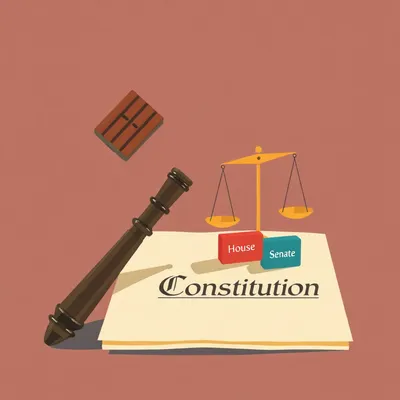
#3395: How US Federalism Creates Dual Sovereignty
How Congress, the Senate, and states split power — and why one act can produce both federal and state charges.

#3340: Why a Dead Attacker Still Gets Evidence Markers
Why investigators treat a dead attacker's scene like an active crime scene — and what those yellow numbered placards actually mean.
#3210: How Montesquieu Got Britain Wrong
From Montesquieu’s mistake to Hungary’s crackdown—how checks and balances actually work.
#3207: Death by a Thousand Procedural Motions
How elected leaders dismantle democracy from within—and why it's so hard to stop once it starts.
#3159: How Bankruptcy Works Differently in the US vs. Israel
Two countries, two radically different philosophies on debt, failure, and second chances.

#3156: The 2,000-Year Campaign to Ban Brit Milah
Belgium may ban non-medical circumcision for minors. This isn't new — states have tried for two millennia.
#3151: When Courts Need a Conscience: Equity vs Law Explained
Why England built a second court system—and what Israel does instead.
#3149: Who Actually Decides to Prosecute?
The King’s name is on every indictment, but he’s never asked. So who really decides who gets charged?

#3134: 9,200 Palestinian Detainees: Inside Israel’s Dual Legal System
Over half of Israel’s prison population are Palestinian security detainees—many held without charge.

#3051: Witness Protection vs. Hollywood: Inside WITSEC and Global Programs
How witness protection actually works across the US, UK, and Germany — and why 17% of participants get expelled.
#2969: Who Controls Israel's Courts? The Judicial Reform Fight Explained
Why 600,000 Israelis protested a legal doctrine you've never heard of — and why the fight isn't over.
#2833: What Police Actually Do All Day
Most officers make one arrest every two weeks. Here's what fills the other 90% of their time.

#2611: Saturday Drums vs Quiet Homes: Protest Rights in Residential Areas
When weekly protests become a permanent neighborhood soundscape, how do democracies balance assembly rights with residents' quiet enjoyment?

#2502: Who Enforces the Law, Who Defies It
From immigration politics to ICE raids, Jan 6 prosecutions, and the legal line on private militias in the US.
#1889: When Spies and Cops Share a Target
How the FBI and CIA share secrets without burning sources, and why "parallel construction" keeps classified intel out of court.

#1885: How Spies Hand Off Intel to Cops
Mossad intercepts a terror plot in Berlin. They can't act. Here's how they pass the lead to German police without burning their sources.

#1785: The FBI's Dual Identity: Cop and Spy
The FBI is unique among global intelligence agencies, blending high-stakes spy work with federal law enforcement in a single hybrid model.

#1460: The Cracks in the Machine: The Collapse of Legal Bureaucracy
A 14% staff cut and sloppy AI use are pushing the DOJ to a breaking point. Is the American legal machine finally running out of fuel?
#1185: When Positive Media Coverage Becomes a Bribe
Can a leader face existential threats while on trial for bribery? We explore the intersection of law and politics in Israel's longest trial.

#710: Defining the "Crime of Crimes": The Gaza Genocide Case
We examine the history of the term "genocide" and the high-stakes legal battle at the ICJ regarding the conflict in Gaza.
#319: Small Claims: The Express Lane of Justice
Discover how small claims court levels the playing field against corporate giants and why it’s the ultimate power move for the everyday consumer.

#315: The $5,000 "Yuck": Navigating Israel’s Defamation Laws
In Israel, a one-word review can cost thousands. Herman and Corn explore why reputation often outweighs truth in the Israeli legal system.