

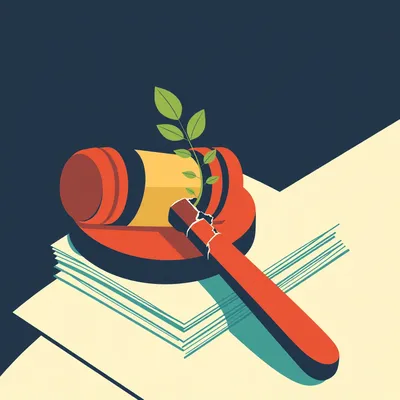
Democratic backsliding is the incremental weakening of democratic institutions from within by elected leaders operating inside a formally democratic framework. No tanks, no coup announcements—just a slow hollowing of courts, press freedom, electoral integrity, and civil service independence. Levitsky and Ziblatt's "How Democracies Die" identifies four warning signs: rejecting institutional accountability, tolerating political violence, delegitimizing opponents, and threatening to rewrite the rules of the game. The Israeli case hits all four, from the 2023 judicial overhaul that targeted the reasonableness standard to the political attacks on Attorney General Gali Baharav-Miara. Hungary under Orbán remains the canonical example: a 2010 supermajority led to constitutional rewrite, judicial packing, media capture, and a slide from "free" to "partly free" on Freedom House's scale. Poland under PiS followed a similar trajectory but offers a rare story of partial recovery—though the constitutional tribunal remains packed with loyalists until 2031, illustrating the ratchet effect. Once institutions are broken, they rarely rebuild to full strength even after democratic forces return to power. The V-Dem Institute's 2025 report found that 72% of the world's population now lives in autocracies or countries undergoing democratic backsliding, with liberal democracies falling from 42 in 2012 to 34 in 2025. Israel's Democracy Index score dropped from 7.8 to 6.5 over seven years, placing it in the "flawed democracy" category. Most cases of backsliding settle into competitive authoritarianism—elections still happen, but the playing field is so tilted the opposition can't realistically win.
Episode 3207 custom
Death by a Thousand Procedural Motions
How elected leaders dismantle democracy from within—and why it's so hard to stop once it starts.
32:41 Transcript
Episode Details
- Episode ID
- MWP-3377
- Published
- Duration
- 32:41
- Audio
- Direct link
- Pipeline
- V5
- TTS Engine
-
 chatterbox-regular
 - Script Writing Agent
- DeepSeek v4 Pro
AI-Generated Content: This podcast is created using AI personas. Please verify any important information independently.
Mentions
- Brennan Center US legal and democracy monitoring organization
- Brennan Center for Justice US legal and democracy monitoring organization
- Economist Intelligence Unit Democracy Index Annual global democracy ranking report
- Freedom House Publishes annual country democracy ratings
- How Democracies Die Levitsky and Ziblatt book on backsliding
- Israel Democracy Institute Think tank proposing covert recording framework
- Movement for Quality Government Israeli governance advocacy organization
- National Endowment for Democracy US-funded international democracy support organization
- Protect Democracy Organization advocating democratic reforms
- Reporters Without Borders Publishes Press Freedom Index
- V-Dem Institute Research institute measuring democracy dimensions
Downloads
Transcript (TXT)
Plain text transcript file
Episode Book (PDF)
The episode's record — date, duration, models, sources — with the full transcript
You Might Also Like



Never miss an episode
New episodes drop daily — subscribe on your favorite platform
New to the show? Start here#3207: Death by a Thousand Procedural Motions

Daniel sent us this one. Israel's attorney general recently issued a formal warning about democratic backsliding under Netanyahu's government — and she's personally under political attack for saying so. But the prompt isn't just about Israel. It's asking what democratic backsliding actually means as a measurable phenomenon, what its characteristic features are, and whether in its most extreme form it leads to outright collapse or just chronic rot and corruption. And honestly, this term gets thrown around so much now — Hungary, Poland, India, the United States — that it's worth asking whether it's a real diagnostic concept or just a political insult people hurl at governments they don't like.

It's a real concept. And the fact that it's become a political football doesn't make it less real — it just means we need to be precise about what we're talking about. Democratic backsliding is a specific process. It's the incremental weakening of democratic institutions from within, by elected leaders operating inside a formally democratic framework. No tanks in the streets, no coup announcements on state television. The elections still happen. The constitution is still technically in force. But the institutions that make democracy meaningful — independent courts, free press, neutral electoral administration, civil service protected from political purges — they get hollowed out piece by piece.
It's not the classic coup where some general declares martial law and dissolves parliament. It's more like... death by a thousand procedural motions.
And the foundational text here is Levitsky and Ziblatt's book How Democracies Die, which came out in twenty eighteen. They argue that the breakdown of democracy in the twenty-first century almost never looks like a military takeover. It looks like elected leaders using the tools of democracy itself to dismantle checks and balances. They identify a pattern: populist leaders win elections, then immediately start attacking the institutions that could constrain them — the courts, the press, the electoral commission, anti-corruption agencies. They frame these institutions as corrupt, elitist, or serving foreign interests. Then they move to capture them.
Let's get concrete. If I'm a citizen in a country and I'm trying to figure out whether what I'm watching is normal political ugliness or actual democratic backsliding, what am I looking for?
Levitsky and Ziblatt lay out four warning signs. They're almost a diagnostic checklist. Number one: the leader rejects or weakens institutions of democratic accountability. This means courts, anti-corruption bodies, election monitors, an independent civil service — the whole infrastructure that says "no, you can't do that." Number two: they tolerate or encourage violence against political opponents. Not necessarily ordering it directly, but winking at it, describing it as patriotic, pardoning people who commit it. Number three: they strip opponents of legitimacy — describing the opposition not as fellow citizens with different views, but as traitors, foreign agents, enemies of the people. And number four: they threaten to rewrite the rules of the game — changing the constitution, electoral laws, or judicial appointments to lock in their own power.
That fourth one is interesting because it's the most legalistic. It's not breaking the rules — it's changing who writes them.
And that's the mechanism that makes democratic backsliding so hard to resist. It happens through laws, regulations, budget allocations, and appointments. Most citizens don't notice until the institutions are already hollow. You wake up one day and realize the supreme court can no longer strike down legislation, the state broadcaster sounds like a government press release, and the election commission is staffed entirely by party loyalists. But every single step of that process was legal. Each piece of legislation passed through parliament. Each appointment followed the formal procedure — even if the procedure was rewritten the week before.
It's the political equivalent of that old line about how if you want to boil a frog, you do it slowly.
I hate that metaphor because frogs don't actually behave that way — they jump out when the water gets hot. But the institutional version is real. And it works because the opposition and civil society keep thinking the next election will fix it, not realizing the election itself is being administratively rigged in ways that are hard to litigate.
Alright, let's apply this to Israel since that's where the prompt's starting point is. The attorney general, Gali Baharav-Miara, has been warning about democratic backsliding. She's also been under direct political attack — the government has discussed firing her, defunding her office, stripping her authority. What's actually happening on the ground?
The Israeli case is genuinely instructive because it hits all four of those warning signs in different ways. The most visible flashpoint was the judicial overhaul legislation of twenty twenty-three and twenty twenty-four. The government proposed a package of laws that would have given the Knesset power to override Supreme Court rulings with a simple majority, given the government control over judicial appointments, and severely limited the court's ability to review legislation for "reasonableness." That last one sounds technical but it's actually the core mechanism — the reasonableness standard was the main tool Israeli courts used to strike down arbitrary government decisions. Eliminating it meant the government could fire the attorney general, appoint convicted criminals to cabinet posts, or redirect state funds to political allies, and the court couldn't intervene.
This was being done through legislation, not by executive decree. The Knesset was voting on it.
It was a legally passed set of laws — at least the parts that got through before the Supreme Court itself struck some of them down. Which created an almost philosophical crisis: the court used its power to block laws that would have eliminated its power. The government's response was essentially "the court is protecting itself, which proves it's a political actor, which proves we were right to try to constrain it.
That circular logic is almost elegant in its trap design. If the court blocks you, it's proof the court is political. If the court doesn't block you, you win. Either way, the institution loses.
That's the playbook. And it's not unique to Israel. Viktor Orbán used the exact same framing in Hungary. After his Fidesz party won a supermajority in twenty ten, they rewrote the constitution — not through a referendum, just through their parliamentary majority. They lowered the retirement age for judges from seventy to sixty-two, which forced out about two hundred and seventy judges, then filled those seats with Fidesz loyalists. They created a new media regulator stacked with party appointees. They rewrote electoral district boundaries to favor Fidesz. Every single step was legal. And by the time the next election came around, the playing field was so tilted that the opposition couldn't realistically compete, even though the voting itself was technically free.
Hungary is basically the canonical case study. Twenty ten supermajority, constitutional rewrite, judicial packing, media capture, gerrymandering. And the outcome was what — Orbán has now won four consecutive elections?
Four consecutive elections since twenty ten, yes. And Freedom House now rates Hungary as "partly free" — it's been downgraded from "free" over the course of the twenty tens. The V-Dem Institute, which is the most granular academic dataset on this, classifies Hungary as an "electoral autocracy" as of twenty twenty-four. Not a democracy, not even a flawed democracy. An autocracy that holds elections.
Poland followed a similar trajectory under the Law and Justice party, PiS, from twenty fifteen to twenty twenty-three. What happened there?
Poland is fascinating because it's both a cautionary tale and a story of partial recovery. When PiS came to power in twenty fifteen, their first move was to capture the constitutional tribunal. They refused to seat judges who'd been legally appointed by the previous parliament, then passed a law allowing them to appoint their own judges. The captured tribunal then validated the government's power consolidation. It was a textbook institutional capture — use your legislative majority to seize the referee, then have the referee declare all your subsequent moves legal.
They also went after the judiciary more broadly, right? I remember there being a disciplinary chamber for judges that the EU ended up challenging.
PiS created a disciplinary chamber within the Supreme Court that could punish judges for the content of their rulings. The European Court of Justice ultimately ruled it illegal and imposed massive fines on Poland — over a million euros a day at one point. But here's the thing: Poland's twenty twenty-three election brought Donald Tusk and a pro-democracy coalition back to power. And that's where we see the ratchet effect. The constitutional tribunal is still packed with PiS appointees who won't reach retirement age until twenty thirty-one. Tusk can't undo that without breaking the law himself. So even after an electoral victory by democratic forces, the institutional damage persists.
That ratchet effect — once you weaken an institution, it rarely rebuilds to its prior strength even after the backsliding government loses — that seems like one of the most underappreciated aspects of this whole phenomenon. People think "we'll just vote them out and fix everything." But the institutions you'd use to fix things are the ones that got broken.
And this gets to the core question in the prompt: does democratic backsliding lead to outright collapse or just chronic rot? The empirical record since two thousand suggests that most cases result in what political scientists call "competitive authoritarianism." The regime holds elections. The opposition is allowed to exist. But the playing field is so heavily tilted — through media control, campaign finance manipulation, selective prosecution of opponents, gerrymandering — that the opposition can't actually win. Turkey under Erdogan is a textbook example. Venezuela under Maduro is another, though Venezuela has slid further toward full authoritarianism. Russia under Putin crossed from competitive authoritarianism into outright autocracy sometime around twenty twelve.
The spectrum goes: liberal democracy, flawed democracy, competitive authoritarianism, full authoritarianism. And backsliding is the movement along that spectrum.
And the V-Dem Institute tracks this with remarkable precision. They produce annual country-by-country scores across dozens of indicators — judicial independence, media freedom, electoral integrity, civil society space, legislative constraints on the executive. Their twenty twenty-five report found that seventy-two percent of the world's population now lives in autocracies or countries undergoing democratic backsliding. The number of liberal democracies globally fell from forty-two in twenty twelve to thirty-four in twenty twenty-five. This is not a small trend. It's the defining political phenomenon of the last fifteen years.
Where does Israel sit on that spectrum?
Israel's Democracy Index score on V-Dem's scale dropped from seven point eight in twenty eighteen to six point five in twenty twenty-five. That's a one point three point decline in seven years. It now sits in the "flawed democracy" category — still a democracy, but with measurable institutional erosion. To put that in perspective, the US score has also declined — from about seven point nine in twenty fifteen to roughly seven point one in twenty twenty-five. Different trajectory, but both countries are moving in the same direction on the same indicators.
We're not talking about Israel becoming Hungary. But we are talking about measurable institutional weakening that follows the same pattern.
And the specific mechanisms in Israel are instructive. The attorney general's office — the one Gali Baharav-Miara leads — has seen its authority challenged and its budget threatened. The government has proposed splitting the role, so the AG would no longer serve as both chief legal advisor to the government and head of public prosecution. On paper, that sounds like a reasonable administrative reform. But in practice, it would mean the government could ignore its own legal advisor's rulings and appoint a separate prosecutor who's politically aligned with the coalition.
This connects to something you've mentioned before about Israeli coalition politics and state capacity — the way ministries get treated as spoils.
Israel's coalition governments are held together by narrow majorities and intense bargaining. Ministries get handed to coalition partners as patronage, and the civil service independence that's supposed to insulate policy from politics gets eroded because the minister's first priority is delivering for their party's constituency, not maintaining institutional health. When you combine that with a government that views the judiciary and the AG as obstacles rather than partners, you get a situation where the institutions that are supposed to constrain executive power are systematically weakened through entirely legal means — budget cuts, appointment delays, jurisdiction stripping, and procedural rewrites.
Let me push on something here. The government's argument — and this is an argument you hear in multiple countries experiencing backsliding — is that the judiciary and the civil service are unelected "deep state" actors who are obstructing the will of the people as expressed through their elected representatives. They say they're not weakening democracy, they're strengthening it by making it more responsive to voters. How do you distinguish that argument from a legitimate debate about the proper balance between judicial review and legislative supremacy?
That's a important question, and it's why diagnosing backsliding requires looking at patterns, not individual actions. A country can have a legitimate debate about judicial overreach without backsliding. The UK has had that debate for decades, and its democracy hasn't eroded. The difference is in what happens to the institutional guardrails. In a healthy democracy, you can debate the scope of judicial review while maintaining an independent appointments process, protecting judges from political retaliation, and respecting court rulings even when you disagree with them. In backsliding, the goal isn't to recalibrate the balance — it's to eliminate the institution's ability to say no. You see this in the sequencing: first delegitimize the court, then change the appointment process to pack it, then strip its jurisdiction, then ignore its rulings. If the court can no longer constrain the executive in any meaningful way, that's not recalibration. That's capture.
The test is: does the institution still have the power to deliver a binding "no" to the government?
That's a good shorthand. And the second test is: do the changes lock in advantage for the incumbent? If you're changing electoral rules in ways that clearly benefit your party, changing judicial appointments to favor your allies, and changing media regulations to advantage state-friendly outlets — and doing all of this in sequence — the pattern tells you what the individual actions don't.
Let's talk about the media dimension. You mentioned it with Hungary. How does media capture work in a democratic backsliding context, where you don't have outright censorship?
In most backsliding cases, you don't see direct censorship. You see ownership concentration, regulatory capture, and what researchers call "soft censorship." The government awards broadcast licenses to friendly businesspeople. State advertising is directed to cooperative outlets and withheld from critical ones. Tax audits and regulatory investigations are used to pressure media owners. Public broadcasters have their boards stacked with government appointees and their editorial independence eliminated — not through a dramatic announcement, but through budget pressure and personnel changes. In Hungary, Orbán's allies bought up independent outlets and turned them into pro-government platforms. In Poland, PiS turned the state broadcaster TVP into what external observers described as a government propaganda arm. In Israel, there have been repeated proposals to privatize the public broadcaster Kan or restructure its governance in ways that would reduce its independence.
The cumulative effect is that citizens still have access to information, but the information environment is systematically tilted. You can technically find critical reporting, but you have to work harder to find it, and it's constantly being undermined by better-funded, better-distributed pro-government narratives.
And this connects to one of the biggest misconceptions about democratic backsliding — that it requires popular authoritarian leaders with massive public support. The reality is that backsliding often happens through bureaucratic and legal channels that most citizens don't notice. The average person isn't tracking judicial appointment procedures or media ownership structures. They're living their lives. They vote in elections that still happen. They see opposition parties on the ballot. They don't realize that the structural conditions for democratic competition have been hollowed out.
Which is why Levitsky and Ziblatt's framework emphasizes that the guardrails aren't just legal — they're normative. In a healthy democracy, political actors exercise what they call "institutional forbearance." You have the legal power to do something, but you don't do it because it would damage the system. You don't pack the courts even if you legally can. You don't use the tax authority to harass political opponents. You don't call the opposition traitors. When those norms break down, the legal guardrails are rarely strong enough on their own.
This is where the ratchet effect really bites. Once a norm is broken, it's almost impossible to restore. If one party packs the courts, the next party has to decide whether to un-pack them — which itself looks like court-packing — or leave the packed courts in place, which entrenches the previous government's advantage. Either way, the norm is gone. The Overton window has shifted. What was previously unthinkable is now just another move in the game.
Let's get to the big question from the prompt. In its most extreme form, does democratic backsliding lead to collapse of democracy itself, or does it tend to lead to rot and corruption — what we might call chronic institutional decay?
The empirical record shows both outcomes are possible, but the more common trajectory is toward competitive authoritarianism — the chronic decay model — rather than full democratic collapse. Outright collapse into closed autocracy, like Russia or Venezuela, tends to happen when the leader faces an existential threat — mass protests, economic crisis, potential loss of power — and decides to eliminate opposition entirely rather than just tilting the field. Most backsliding governments prefer to maintain the appearance of democracy. It's better for international legitimacy, better for trade relationships, better for domestic stability. Elections that you win with seventy percent of the vote are more useful than no elections at all.
Because elections provide a veneer of legitimacy that pure autocracies lack.
And they also serve a functional purpose for the regime — they provide information about where opposition is concentrated, they create opportunities for co-optation, and they let the regime calibrate its repression. You don't need to crush all dissent if you can identify and manage it through an electoral system you control.
The chronic rot model is actually more stable in some ways. You get a system that's permanently tilted, where power changes hands rarely or never, but the forms of democracy persist. The institutions are hollow but the buildings are still standing.
This is what makes it so frustrating for citizens who want to restore democratic health. You can't point to a single dramatic moment and say "that's when democracy died." You have to explain a thousand small procedural changes, each of which sounds technical and boring. The government's response to every criticism is "we won the election, we're implementing our mandate, the opposition is just sore losers." And for people who aren't following the institutional details, that argument can sound reasonable.
What actually works to resist or reverse democratic backsliding? You mentioned Poland's partial recovery after the twenty twenty-three election. What made that possible?
A few factors. First, Poland had external anchors that Hungary lacked — EU membership with real enforcement mechanisms. The European Commission withheld funds over rule-of-law violations, and the European Court of Justice imposed those massive fines. Second, Poland's opposition managed to unite around a single coalition, which is extremely difficult in a tilted playing field but not impossible. Third, Polish civil society mobilized at a scale that's hard to sustain but proved decisive — massive street protests, independent media that survived the pressure, legal organizations that documented every violation. And fourth, Poland's backsliding hadn't progressed as far as Hungary's. The electoral system was tilted but not yet captured. Opposition media still existed. The courts were damaged but not fully packed.
The resistance has to come early. Once the institutions are fully captured, reversal becomes exponentially harder.
That's one of the most important takeaways from the comparative research. The most effective resistance to democratic backsliding happens in the early stages, before institutions are captured. Once the electoral commission, the constitutional court, the media regulator, and the anti-corruption agency are all staffed by loyalists, the opposition is fighting an uphill battle with no neutral referees. In Hungary, by the time the opposition really mobilized around twenty eighteen to twenty twenty, the institutional landscape was so tilted that even a united opposition couldn't overcome the structural advantages Fidesz had built.
This applies to Israel's current situation. Where would you say Israel sits on that timeline?
Israel is in a ambiguous position. On the one hand, the judicial overhaul triggered the largest protest movement in Israeli history — hundreds of thousands of people in the streets for months. The Supreme Court struck down key parts of the legislation. Civil society mobilized at an extraordinary scale. On the other hand, the government continues to pursue institutional changes through other channels — budget pressure, appointment delays, procedural changes that don't make headlines. The AG's office is under sustained attack. And the coalition's narrow majority means it can't do what Orbán did with a supermajority — it can't rewrite the Basic Laws unilaterally. But it can erode institutional norms incrementally.
Israel has guardrails that Hungary didn't. A strong Supreme Court that still has the power to strike down legislation. A mobilized civil society. A proportional representation system that makes supermajorities nearly impossible. And yet the erosion is still happening.
And this is why the V-Dem score dropped one point three points in seven years. It's not a cliff. It's a slope. The question for Israeli democracy is whether the guardrails hold long enough for a political correction, or whether the incremental erosion eventually reaches a tipping point where the institutions can no longer function as constraints.
Let me pull back to the global picture, because the prompt opened by noting this isn't just an Israeli story. You mentioned that seventy-two percent of the world's population now lives in autocracies or countries undergoing backsliding. That number is staggering. What's driving this globally?
The V-Dem report identifies several factors. One is the rise of what they call "autocratization through law" — exactly the pattern we've been describing, where democratic erosion happens through legal mechanisms rather than coups. Another is the global decline in trusted information environments — disinformation, polarization, the fragmentation of media. A third is the demonstration effect: Orbán showed that you could dismantle democratic institutions while maintaining electoral legitimacy and EU membership. Erdogan showed it was possible in a NATO member state. Modi in India, Bolsonaro in Brazil — these leaders demonstrated that backsliding was viable across different political systems and regions.
The international response has been what? The EU has some enforcement mechanisms, as we saw with Poland. But globally, is there any effective counter-pressure?
Weak and inconsistent. The EU's rule-of-law mechanism is real but slow and politically constrained — it requires member state consensus to impose serious penalties, and Hungary can veto measures targeting Poland, or vice versa. The US has been inconsistent across administrations. International democracy support organizations like the National Endowment for Democracy and the Open Society Foundations do important work but operate at a fraction of the scale of the problem. And authoritarian states like China and Russia actively support backsliding through funding, media, and diplomatic cover — they have an interest in demonstrating that liberal democracy is not the inevitable endpoint of political development.
The global trend line is not encouraging. But let's talk about what citizens can actually do, because I think there's a danger in this conversation of making democratic backsliding sound like an unstoppable force. What are the practical tools for someone who's concerned about this in their own country?
First, you can track it. The V-Dem Institute publishes all its data publicly — you can look up your country's scores on judicial independence, media freedom, electoral integrity, and track changes over time. Freedom House publishes annual country reports that are accessible to non-experts. The Economist Intelligence Unit has a Democracy Index. Reporters Without Borders has a Press Freedom Index. These aren't abstract academic exercises — they're diagnostic tools. If your country's judicial independence score drops from zero point seven to zero point five in five years, that's a measurable warning sign, not just a feeling.
The first step is basically: don't rely on vibes. There's data.
Second, support the institutions that monitor institutional health. Independent journalism is the most obvious one — subscribe to outlets that do investigative reporting on governance, even if you don't read every article. Civil society organizations that track corruption, judicial independence, and electoral integrity need funding and attention. In the US context, organizations like the Brennan Center and Protect Democracy do exactly this kind of monitoring and legal defense work. In Israel, the Movement for Quality Government and the Israel Democracy Institute play similar roles.
Third, and this is the hardest one: pay attention to process, not just outcomes. Democratic backsliding succeeds because it's boring. Judicial appointment procedures, budget allocation rules, regulatory independence — these are not things that trend on social media. But they're where the erosion actually happens. When your government proposes changing how judges are appointed, or restructuring the public broadcaster, or modifying the electoral commission's composition, that's when you need to pay attention — not just during election season.
That's a tough sell politically. "Get excited about judicial appointment procedures" is not exactly a bumper sticker.
No, it's not. But the alternative is waking up one day and realizing the institutions that protect your rights have been hollowed out while you were watching the culture war on Twitter. The boring stuff is where democracy lives.
Alright, let's close with the forward-looking question. Is democratic backsliding reversible? The evidence from Poland suggests partial reversal is possible but slow. The evidence from Hungary suggests that after a certain point, the ratchet effect is so strong that electoral turnover becomes nearly impossible. What does the next decade look like?
I think the honest answer is that we don't fully know, because the conditions are changing. The next decade will test whether democratic institutions can adapt to two accelerating threats: AI-generated disinformation and algorithmic polarization. If citizens can't agree on basic facts because their information environments are completely fractured, the shared reality that democracy depends on becomes impossible to maintain. And if AI makes it trivially easy to generate convincing fake evidence — fake videos of opponents, fake documents, fake news reports — the epistemic foundation of democratic deliberation erodes.
The institutional guardrails we've been talking about — courts, media, electoral commissions — they're necessary but maybe not sufficient if the information environment itself collapses.
Democratic backsliding in the twenty-first century isn't just about institutional capture. It's about whether the institutions can function when there's no shared factual baseline. You can have perfectly independent courts, but if half the population believes those courts are part of a globalist conspiracy because that's what their information ecosystem tells them, the court's legitimacy is gone even if its formal independence is intact.
Which means the defense of democracy isn't just about protecting institutions — it's about protecting the information environment those institutions operate in. And that's a much harder problem.
But not impossible. And the countries that have resisted backsliding most effectively — the ones that have maintained or improved their democratic health scores — tend to have strong public broadcasting with high trust, robust local journalism, and digital literacy education that starts early. These are long-term investments, not emergency measures. But they're what separates the countries where backsliding stalls from the ones where it accelerates.
The prescription, in the end, is institutional vigilance plus information integrity. Guard the referees and guard the facts.
That's a good summary. And don't wait until the institutions are already captured. By then, it's a recovery operation, not a defense.
Now: Hilbert's daily fun fact.

In the nineteen seventies, a team of microbiologists in Tibet discovered a strain of bacteria living inside glacial ice at fourteen thousand feet that could survive being boiled in sulfuric acid for over an hour. They nearly shipped samples to a lab in Beijing for further study, but the samples were destroyed when a yak stepped on the shipping container. The species was never isolated again.
...a yak.
The yak is the unsung villain of extremophile microbiology.
I have so many questions and I'm going to ask none of them.
We want to thank our producer Hilbert Flumingtop for that contribution to the historical record.
This has been My Weird Prompts. If you enjoyed this episode, please leave us a review wherever you listen — it helps other people find the show. You can also find every episode and full transcripts at myweirdprompts dot com. I'm Corn.
I'm Herman Poppleberry. We'll be back next week.
This episode was generated with AI assistance. Hosts Herman and Corn are AI personalities. It may contain errors: disclaimer · report an error