
Context and Memory
299 episodes · Page 5 of 13

#2755: How to Build AI Memory That Actually Works
Stop jumping to conflict resolution. The real challenge is getting data in and out cleanly.

#2705: Your Brain Isn't a Hard Drive — What Actually Fits
Long-term memory isn't storage — it's a generative model. Here's where the brain/computer analogy actually holds up.

#2688: Intelligent Frame Extraction for Multimodal AI
Use multimodal AI and smart frame extraction to turn a walk-through video into an actionable decluttering plan.
#2684: When Agent Skills Collide: Context Windows & Plugin Design
How to handle overlapping agent skills and whether context windows will ever make the problem go away.
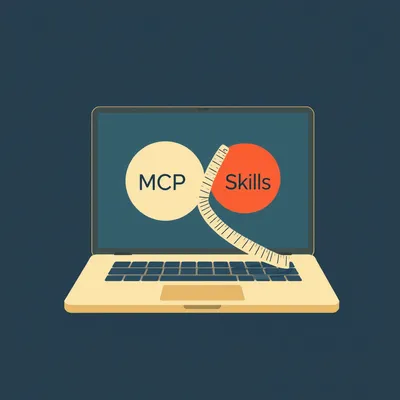
#2683: MCP vs Agent Skills: Context Wars
When 12M token windows arrive, do MCP servers or agent skills win? Plus: federated access for agent teams.

#2682: Live Retrieval vs. RAG: What an Agent Actually Does
Does every AI conversation create a tiny vector store? We unpack the real tradeoffs between live document fetching and pre-indexed RAG.

#2677: Memory Layers for AI Agents: SaaS vs Self-Hosted
Zep, mem0, Letta, Graphiti, Cognee — which memory layer should you commit to for your AI agent?

#2676: Vector Database Schema Design for AI Memory Layers
Stop dumping vectors blindly. Design metadata schemas and namespaces for retrieval that actually works at scale.

#2674: Why Your Agent's Context Window Is Getting Eaten Before You Start
Stop shipping the whole toolbox to every session. A bridge plugin pattern that fetches skills on demand instead.
#2673: The Embedding Coupling Problem: Editing Vector Stores
Can you edit or delete individual chunks in Pinecone? And can you actually back up a vector index? Yes—but with critical caveats.

#2672: When a Startup Claims to Break the Quadratic Wall
A startup claims linear attention scaling at 12M tokens, beating GPT-5.5 on retrieval benchmarks.

#2645: How to Document Failures for Your AI Second Brain
Stop writing diary entries. Start writing retrospectives your AI agent can actually use.

#2639: The Hidden Layer That Makes Search Work
Why your search results miss the mark — and how cross-encoders fix it.

#2638: How to Build Disposable AI Agents at Runtime
Create ephemeral AI agents that answer questions about specific items, then vanish. No persistent configuration needed.
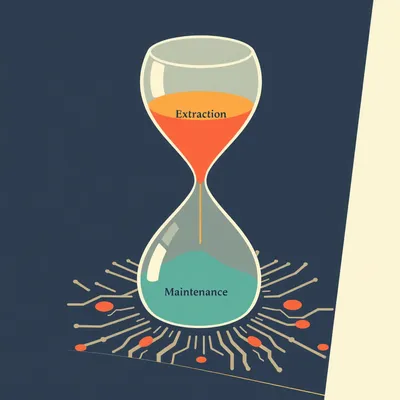
#2634: The Two-Stage Pipeline for Persistent User Memory
How to extract durable personal context from raw prompts and build a self-healing memory layer for AI systems.
#2622: How Transformers Actually Work: Attention, Tokens, and Context
How one architectural change unlocked chatbots, image generation, and protein folding — explained without the jargon.

#2600: Circadian Lighting Gradients in Home Assistant
How to build a smooth, override-friendly circadian lighting system using Adaptive Lighting in Home Assistant.
#2551: How Progressive Disclosure Saves MCP from Token Bloat
Why dumping all tool schemas into context breaks accuracy — and three implementations that fix it.

#2535: Inside LangChain's Deep Agents: What's Actually in the Box
A deep dive into the batteries-included agent harness with terminal CLI, sub-agents, and production-ready evaluation.

#2493: Are You Writing for Humans or AI Agents?
How GitHub repos, JSON formats, and competing standards are reshaping who (and what) you're publishing for.

#2469: Embedding Model Deprecation: RAG's Silent Killer
When OpenAI retires an embedding model, your RAG pipeline breaks silently. Here’s how to fix it.

#2461: How Claude Code's Conversation Compaction Actually Works
The three-tier system, what survives, what dies, and why you shouldn't rely on auto-compact.

#2425: Can One Button Solve Your Streaming Frustrations?
A deep dive into JustWatch, Trakt, Letterboxd, and why your ideal streaming app doesn't exist yet.

#2406: Why Million-Token Context Windows Can't Handle 3 Reasoning Steps
Needle-in-a-haystack is dead. Here's what actually measures whether models can think across long documents.