
Computer Vision
67 episodes · Page 2 of 3
#3953: Bats in Your Bumper: Parking Sensors vs. Lane Keeping
Ultrasonic parking sensors vs. highway lane keeping—two radically different technologies that answer the same question.

#3539: Mapping a Room with Just Your Phone
Can your phone turn a video walkthrough into a measured 3D model? We break down the tools and the real-world limits.
#3272: Can Your Walk Really Identify You?
Gait recognition is leaving the lab. But is your walk actually unique, or just a handful of patterns?
#3100: How Cars Predict Black Ice Before Your Foot Hits the Brake
From ABS to AI: how cars evolved from surviving crashes to predicting them before drivers notice danger.
#3038: Animating Toy Story: Math, Patience, and No Undo Button
Before Pixar could make Woody blink, animators typed coordinates by hand and waited hours to see if it worked.
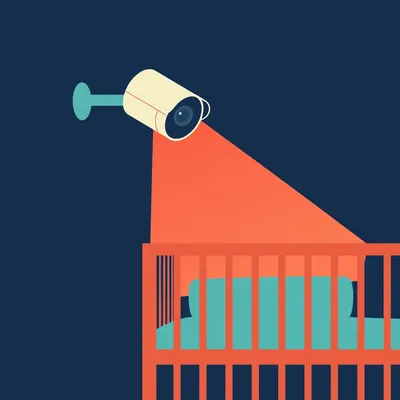
#2939: Can a Security Camera Detect a Baby Not Moving?
Can AI tell when a baby is about to fall—or has stopped moving? We break down what's possible and what's not.
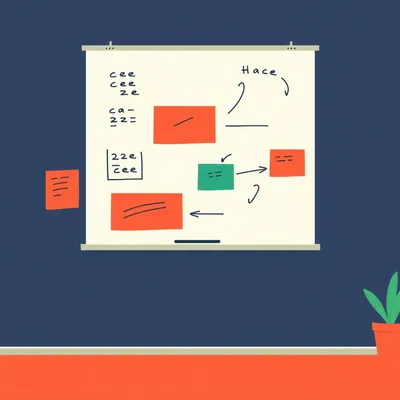
#2641: Bridging Analog and Digital Note-Taking
How Nano Banana finally solves the text rendering problem, turning messy whiteboard photos into polished tech diagrams.
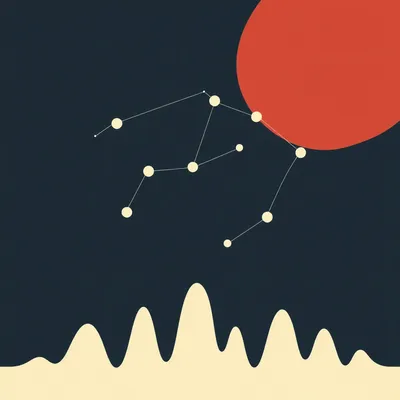
#2563: How Audio Fingerprinting Actually Works
Spectrogram peaks, constellation maps, and hash matching — the elegant mechanics behind identifying any song in seconds.

#2546: The Invisible Engineering Behind a Single Click
The technical stack behind click-to-edit features in tools like Canva and Google Photos — from segmentation to inpainting.

#2544: How to Make AI Architectural Renders Photoreal Without Breaking Geometry
Fixing the uncanny valley in AI-enhanced architectural renders — without breaking the geometry.
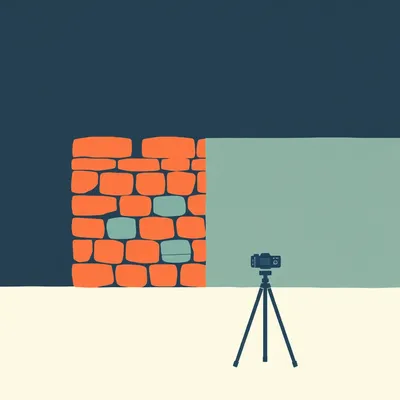
#2539: When Does AI Stop Hallucinating and Start Reconstructing?
What happens when you feed hundreds of photos into an AI world generator — do you capture reality or just a convincing dream?
#2487: Why AI Calls Everything a "Prediction" (Even Images)
Machine learning calls everything a "prediction" — even generated images. Here's why the terminology matters more than you think.

#2352: The Structured Output Gap in Vision APIs
How do object detection APIs like Gemini, AWS Rekognition, and YOLO compare for automated annotation workflows?

#2325: Why Depth Is the Hardest Thing for AI to See
Can AI turn your apartment photos into a precise 3D model? Explore the tech behind photogrammetry and spatial reconstruction.
#2089: Open-Source vs. Military ATR: The Drone Recognition Gap
A public GitHub model spotted by a listener reveals the massive gap between hobbyist AI and lethal military drone detection systems.
#1964: The Three Layers That Make AR Finally Work
See a 3D arrow pointing to the exact bolt you need, or read a street sign in real-time translation.
#1963: RPA: Dead or Just Getting Smart?
Traditional RPA is brittle and blind. See how AI vision and agentic orchestration are turning it into a self-healing powerhouse.
#1962: Moravec's Paradox: Why Robots Can Write Poetry but Can't Fold a Fitted Sheet
We explore the tech letting robots "reason" about physical tasks using vision-language-action models.

#1855: When AI Makes Game Assets, Who Owns the Art?
From blocky polygons to photorealistic assets, AI is transforming how 3D models are made.

#1817: The Hidden Taxonomy of AI: Why Specialized Models Outperform Giants
Explore the vast ecosystem of niche AI models for computer vision and document understanding, far beyond large language models.

#1799: The Original AI Blueprints: BERT & CLIP
Before GPT, two models changed everything. Discover how BERT and CLIP taught machines to read and see the world.

#1792: Google's Native Multimodal Embedding Kills the Fusion Layer
Google’s new embedding model maps text, images, audio, and video into a single vector space—cutting latency by 70%.

#1589: When AI Hallucinates History
Is AI-enhanced history a restoration or a hallucination? Explore the tech turning "digital tombstones" into living, high-definition memories.
#1541: Why Your Phone Beats Your PC at Video
Explore why mobile devices handle real-time video AI better than desktops and how the NPU gap is finally closing in 2026.