
TTS and Voice Cloning
Text-to-speech models, Chatterbox, voice cloning, prosody and the pronunciation problems of synthetic speech.
- 1

Why Your TTS Sounds Great in English, Terrible Everywhere Else
English AI voices are polished, but global languages hit a wall. Here's why text-to-speech breaks down for Hebrew, Hindi, and beyond.
- 2

The TTS Developer's Dilemma: Size vs. Speed
Stop guessing. We break down the critical trade-offs between model size, latency, and sample rate for production-ready voice apps.
- 3
The Serverless Paradox: Why TTS Eats Your Budget
How batch processing and smart queue management can slash TTS costs for episodic podcast production.
- 4
Can AI Read the Room? TTS Prosody Explained
Can TTS models truly infer emotion from text, or just mimic patterns? We break down the science of prosody.
- 5
Why Your TTS Model Nails "Shabbat" but Not "Keren Hishtalmut
Why multilingual TTS models handle loanwords but fail at niche vocabulary — and what you can do about it.
- 6

How Chatterbox Locks Your Voice Clone Across Thousands of Generations
Why most single-shot TTS models drift over time—and how Chatterbox's cached embedding approach solves it.
- 7

Drawing the Melody: SSML's Hidden Power
How SSML gives developers narrative control over AI voices — and why ElevenLabs became its center of gravity.
- 8

Why Chatterbox Still Leads Open-Source TTS
We break down the architecture of Chatterbox, the open-source TTS model powering this podcast, and why it remains state of the art.
- 9

Why Resemble Gave Away Its Best Voice Model
Resemble AI sells deepfake detection but open-sourced Chatterbox, a top TTS model. Here's the strategic logic.
- 10

Why 30 Seconds of Audio Beats 3 Minutes for Voice Cloning
Why adding more audio made Daniel's voice clones worse — and what it reveals about how voice embeddings actually work.
- 11

How to Build Your Own TTS Audiobooks
From M4B containers to chapter timing drift — the technical pipeline for creating audiobooks with synthetic voice.
- 12

When Your TTS Model Eats the Numbers
Numbers, dates, and acronyms break text-to-speech in specific, documented ways. Here's where normalization lives — and why it depends on your model.
- 13

TTS Can't Pronounce Hebrew Inside English
Your TTS reads Hebrew words with English phonetics. Here's why — and why the obvious fix doesn't work yet.
- 14

When Your TTS Model Updates Itself
Resemble pushed new Chatterbox weights to Hugging Face. Our pipeline started using them without a single config change.
- 15

Why Voice Clones Lisp: Sibilants, Codecs, and the Sounds We Lose
Sibilants and plosives are the most fragile sounds in speech — and every stage of the audio chain is quietly built to destroy them.
- 16

Hebrew in Latin Letters: A TTS Pipeline Fix
A token classifier that finds Hebrew words written in Latin letters so TTS stops mangling them — built for under $3.
- 17
Why Your Voice Clone Sounds American
Your cloned voice drifts toward American English. Here's what's actually happening — and why "neutral" is a myth.
- 18
Voice Cloning: 10 Seconds to Steal Your Voice
Ten seconds of audio is all it takes to clone a voice. Here's what the law actually protects — and what it doesn't.
- 19
How Voice Cloning Works From Six Seconds of Audio
Six seconds of reference audio is all Chatterbox needs. The real work happened in the half-million hours of training before you showed up.
- 20
Teaching a TTS Model His Own Accent
One man fine-tuned a text-to-speech model on his own voice to get Irish-accented English that can say Hebrew words mid-sentence.
- 21
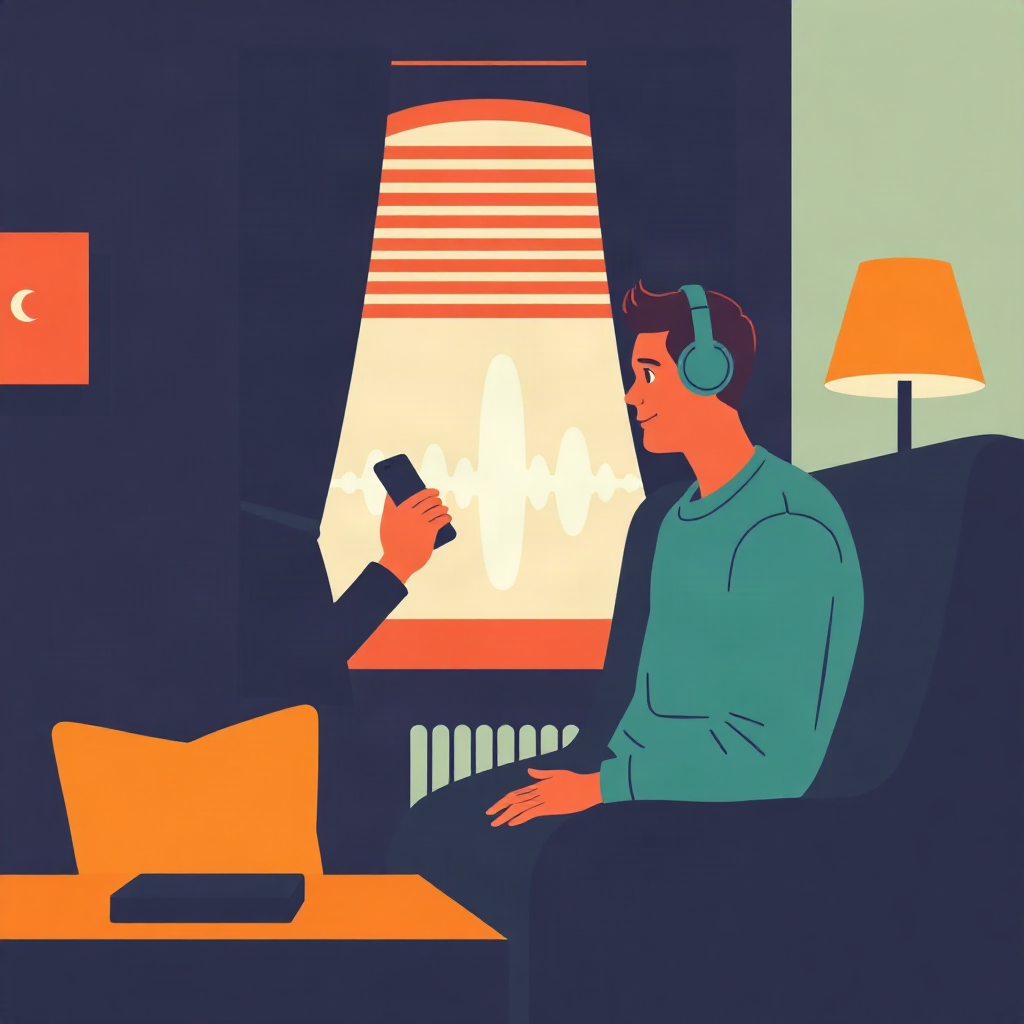
Me and My Voice Clone
Daniel talks to his own voice clone. He recorded his lines on a phone; the clone's lines are Meorav v2, a model trained on 88 minutes of his voice.
- 22
Benchmarking a TTS Model on Your Own GPU
Real-time factor, warm-up artifacts, and why an 8-bit quantized speech model might not run any faster.
- 23

Talking to Your Own Voice Clone
What actually happens when you sit down and talk with an AI clone of your own voice — and what Evan Ratliff's Shell Game revealed.
- 24
Why Synthetic Speech Needs Fake Room Noise
Synthetic voices can drop to digital black between sentences — so engineers add fake room tone to make the silence sound real.