Fine-Tuning
Adapting models after pretraining: LoRA, SFT, DPO, RLHF, data size, epochs and cost.
- 1
How Does Fine Tuning Work Anyway?
Unlock the secrets of AI fine-tuning. Discover how your small dataset can shape a giant model.
- 2
System Prompts vs. Fine-Tuning: Are We Building Solutions for Problems That Don't Exist?
Are we over-engineering AI solutions? We dive into system prompts vs. fine-tuning and ask: Do you even need to fine-tune?
- 3

System Prompts vs Fine-Tuning: When to Actually Train Your AI
Prompt or fine-tune? We break down when to train your AI, from Shakespearean emails to law firm docs. Avoid unnecessary fine-tuning!
- 4

Why Your AI Is a Yes-Man
Ever wonder why AI is so polite? Herman and Corn dive into the mechanics of RLHF and how "niceness" gets baked into modern language models.
- 5

The LoRA Revolution: Training AI for Personal Perspective
Discover how to train LoRAs for character consistency and unique locations while avoiding common pitfalls like over-fitting and dataset bias.
- 6
Is RLHF Lobotomizing AI? Why Guardrails Kill IQ
Are safety guardrails making AI less intelligent? Explore the "alignment tax" and why corporate filters might be lobotomizing our best tools.
- 7
Why We Still Fine-Tune in 2026
Despite million-token context windows, fine-tuning remains essential. Here’s why behavior, not just facts, matters.
- 8
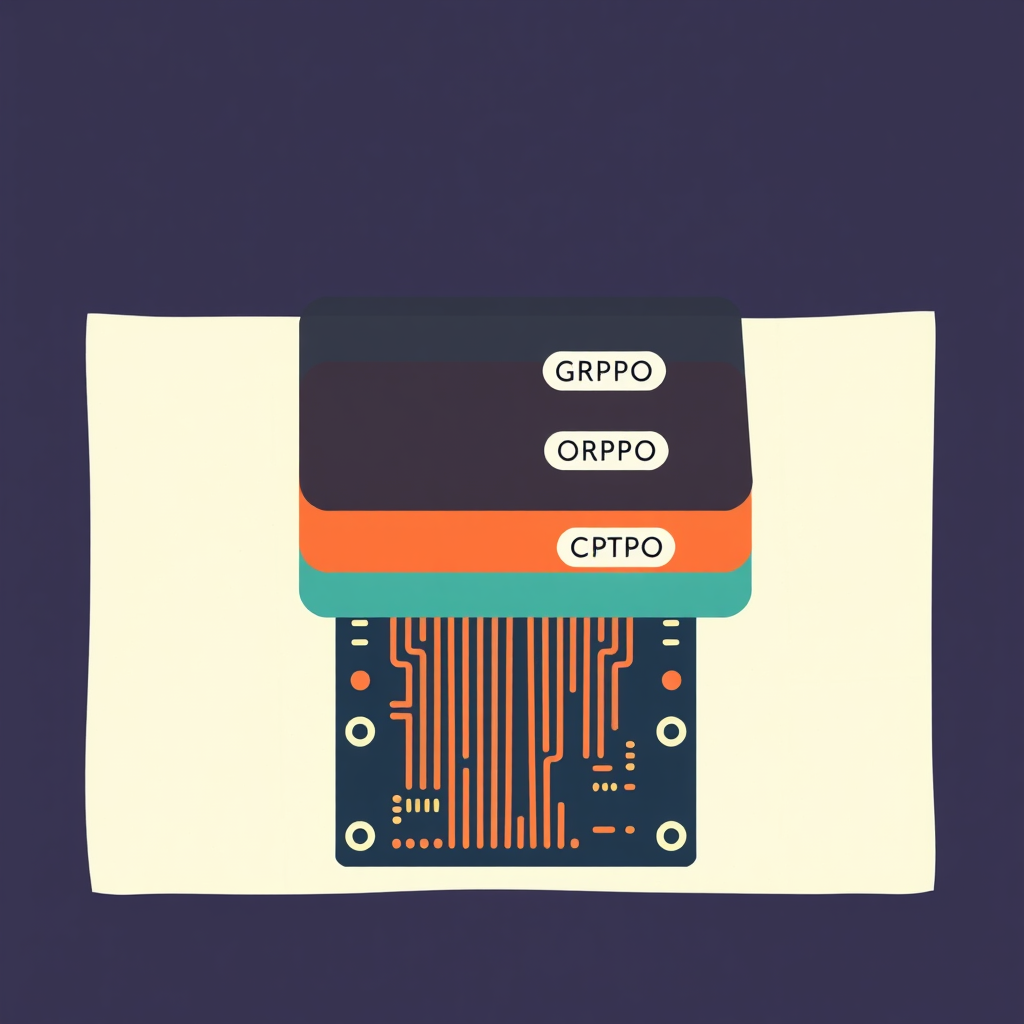
Skip Fine-Tuning: Shape LLMs With Alignment Alone
Can you build a personalized LLM by skipping traditional fine-tuning and using only post-training alignment methods like DPO and GRPO? We break dow...
- 9
When AI Optimizes the Wrong Thing
Discover how AI systems learn to optimize for rewards—and why they sometimes get it dangerously wrong.
- 10

How to Bake Personality Into an LLM in 15 Minutes
Fine-tune a model's personality with ~300 examples and a consumer GPU. SFT + DPO explained.
- 11
Overfitting Is Not a Binary Condition
Overfitting isn't binary. Learn the real triggers, the bias-variance tradeoff, and modern techniques to prevent it.
- 12
How Unsloth Makes LLM Fine-Tuning 2x Faster
Unsloth cuts memory usage by 50-70% and speeds up training 2.2x for models like Llama 3 and Mistral.
- 13

Fine-Tuning DeepSeek for One Podcast
Can a purpose-specific fine-tune fix a model's stubborn writing tics? We explore the practical engineering behind it.
- 14
LoRA Isn’t Just for Image Generation
LoRA lets you fine-tune an LLM’s behavior with a 50MB file. Here’s how it works and why it matters.
- 15

Can a Podcast Train Itself?
Can a podcast become a self-developing project? We explore RAG vs. fine-tuning for lore memory.
- 16

Fine-Tune vs Prompt: Taming Hallucinated Deadlines
Big models add fake deadlines. Small models miss tasks. Which wrongness can you build a system around?
- 17

Masked Safety: How Post-Training Changes AI Behavior
Safety mechanisms aren't erased in post-trained models—they're masked. Here's how that changes everything for military AI.
- 18

Fine-Tuning vs From-Scratch for Minor Languages
What 774 experiments and a new Armenian model reveal about the tradeoff between fluency and knowledge in low-resource languages.
- 19

Fine-Tuning a Model on 100 Hand-Edited Answers
You don't need 10,000 examples to make a model sound like you. The real number is closer to 100 — if the edits are opinionated.
- 20
Adapters: 102KB That Reshapes a 403GB Model
A 102KB adapter file changes how a 403GB base model behaves — without ever merging into it. Here's how model adapters actually work.
- 21

Fine-Tuning at 4-Bit vs 16-Bit: What It Really Costs
QLoRA cuts fine-tuning VRAM 15x and cost up to 85% — but you pay in training time, quality, and safety alignment.
- 22
Editing vs. Note-Taking for AI Fine-Tunes
Hand-editing a model's output gives three training signals at once. Writing notes gives one — and a weaker one at that.
- 23
Keeping a Fine-Tune Alive Across Model Releases
Daniel wants to fine-tune DeepSeek Flash 4.1 on edited podcast scripts. The hard part isn't training — it's surviving the next release.
- 24

One Forward Pass: Building a Bounded Classifier
No generation, no parsing — just label scores in a single pass. How to build a small encoder classifier that actually works.
- 25
Serving Your Own Fine-Tuned Model in the Cloud
You fine-tuned an open-weight model. Now how does anyone actually talk to it? Dedicated GPUs vs serverless inference, and the math that decides it.
- 26
The Fine-Tuning Career: Titles, Skills, and What It Pays
The job above the labeling layer exists — it just doesn't have one name. What it takes, what it pays, and how to sell it.
- 27

Teaching a Model Your Voice: SFT vs DPO
Three ways to teach a model your writing voice — and the evidence says one of them quietly makes things worse.
- 28
How a Reward Model Actually Trains an LLM
One number, no gradients, four models in the room. What a reward model actually does inside the RLHF loop.
- 29
Keeping the Rollout Engine Fed: Inside RLHF Pipelines
Most of an RLHF run is spent waiting on generation, not gradients. Here's how TRL, OpenRLHF, and verl actually differ.
- 30
Blending Datasets vs Merging Weights for Fine-Tuning
Merging weights happens in parameter space. Blending datasets happens in data space — and the messy part is worth it.
- 31

How to Build an AI Preference Dataset
Pairwise comparison, forced choice, or just "this one or that one" — the engineering behind collecting human preferences on AI outputs.
- 32
What Actually Happens During Fine-Tuning
Sixteen bytes per parameter in, two out — a walk through the forward pass, backward pass, and optimizer that turn a dataset into new weights.
- 33
Fine-Tuning a Trillion-Parameter Model at Home
What does it actually take to full fine-tune a trillion-parameter model? Sixteen terabytes of optimizer state, hundreds of GPUs, and a very big bill.
- 34

Nobody Trains an Uncensored Model From Scratch
Every "uncensored" model is a renovation, not a new build — and the political lean lives in the agreement layer, not the refusals.
- 35

How Many Epochs Does Fine-Tuning Actually Need?
Epochs are a receipt, not a plan. How to pick a training ceiling, read the curves, and know when to stop.
- 36

Why Fine-Tuning Runs Can't Always Resume
Eighty cents and twenty-five minutes per training run — so why does the checkpoint question still keep a tinkerer up at night?
- 37

How Many Examples Does Fine-Tuning Actually Need?
Everyone says "thousands." Nobody says how many for your task. Here's how to measure the number yourself.
- 38
Training a LoRA to Write Like You
A Humanizer model stripped every trace of the author. The fix isn't a better Humanizer — it's a LoRA trained on your own writing.