
GPT-4o
OpenAI's multimodal flagship model
Episodes
-
 #6451: Which AI Models Actually LastOpenAI kept the gpt-3.5-turbo alias alive for over three years, while Google Gemini Flash iterations often turn over in just a few months.
-
 #6305: Why Terminal Fuzzy Finders Forgive Different MistakesFred Damerau found that over eighty percent of spelling errors in retrieval systems were a single insertion, deletion, substitution, or transposition.
-
 #6239: Testing Synthetic Data Generators Before You ScaleA benchmark trains student models on each generator's output to find out which model actually writes useful training data.
-
 #6190: When Your AI API Quietly Changes Under YouSame API name, different model behind it. How to tell when the thing you tested stops being the thing you're using.
-
 #5435: When Your TTS Model Eats the NumbersNumbers, dates, and acronyms break text-to-speech in specific, documented ways. Here's where normalization lives — and why it depends on your model.
-
 #5412: Editing vs. Note-Taking for AI Fine-TunesHand-editing a model's output gives three training signals at once. Writing notes gives one — and a weaker one at that.
-
 #5004: What Precision Is Your Model Actually Running At?When you call an API, are you getting the model you think you are? Inference providers quantize more than they admit.
-
 #4723: Are Model Families Actually Different Models?Claude Opus, Sonnet, and Haiku aren't trim levels — they're different models sharing a brand name.
-
 #4722: Why Manuals Are Terrible (And How AI Can Fix Them)Why appliance manuals are 22 pages of warnings and car manuals actually work — and how AI can break the cycle.
-
 #4338: The Hidden Skill Most AI Models Still Fail AtWhy do even top AI models still accidentally paste your questions into the output? A deep dive into a missing benchmark.
-
 #4312: Why Speech-to-Text Still Fails at Its Own NameWhen OpenAI's Whisper misheard its own name as "Wispr," it revealed why 95% word accuracy still isn't good enough.
-
 #4262: The Belt Principle: Eliminating Micro-Interruptions for Deep FocusHow a tactical belt with MOLLE pouches reveals the hidden cost of tiny interruptions — and what that means for knowledge work.
-
 #4194: Custom GPTs: When to Build, When to SkipA decision framework for knowing when a custom GPT is worth the overhead — and when to just open a fresh chat.
-
 #4180: Translation-Safe Writing for Global Supply ChainsHow to write English that survives machine translation without losing critical specs.
-
 #4139: The Hosepipe-to-Digest AI: Your Outbox MiddlewareAn AI middleware that intercepts your outgoing emails, buffers them, and delivers a crisp executive summary.
-
 #4059: LLM Councils for Post-Gallbladder CareCan multiple AI models solve what no single doctor can? A deep dive into LLM councils for post-cholecystectomy syndrome.
-
 #4057: How to Fix AI's Bullet Point AddictionWhy AI models default to bullet points and how textual LoRAs achieve 94% prose adherence.
-
 #3855: How One Trolley Exposed a Broken Review SystemA 4.3-star rating hid dozens of identical complaints. Here's how reviews get gamed and what AI could do about it.
-
 #3816: How to Stop AI Scripts From Falling ApartWhy long-form AI generation breaks down and how hierarchical memory fixes it.
-
 #3171: How to Break an LLM's Bad Verbal HabitsBlacklists fail and regex inverts meaning. Here's what actually works to clean up AI writing tics.
-
 #3120: What Makes Agentic Search Tools Like Exa Actually Work?Why swapping Google for Exa transformed our show's accuracy — and what agentic search does differently.
-
 #2923: Structured Outputs: Taming AI's Token LotteryWhy prompt engineering isn't enough to get consistent JSON from LLMs.
-
 #2693: When AI Ignores Your Style GuideWhy your AI ignores formatting instructions and how to fix it with pipeline architecture, not model swaps.
-
 #2688: Intelligent Frame Extraction for Multimodal AIUse multimodal AI and smart frame extraction to turn a walk-through video into an actionable decluttering plan.
-
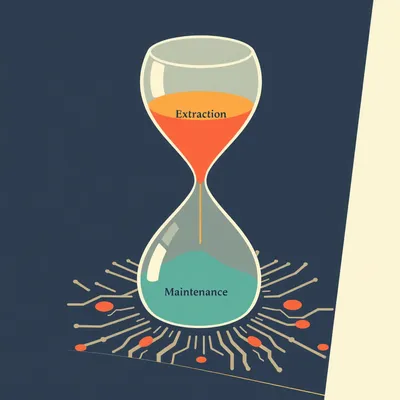 #2634: The Two-Stage Pipeline for Persistent User MemoryHow to extract durable personal context from raw prompts and build a self-healing memory layer for AI systems.
-
 #2586: Pseudo-Personalized Emails: The New Spam Uncanny ValleyHow to detect and filter AI-generated outreach emails that fake personal connection without nuking legitimate messages.
-
 #2467: The Time Tax on API AccessHow OpenAI and Anthropic structure API tiers, rate limits, and why your billing history matters more than you think.
-
 #2464: Batch APIs: The 50% Discount You're Probably MisusingBatch inference APIs offer 50% off — but only for the right workloads. Here's when they actually make sense.
-
 #2440: Build Your Own CRM With AI AgentsOff-the-shelf CRMs are built for sales teams, not solo operators. Here's why building your own with AI might be smarter.
-
 #2411: Are Political Bias Benchmarks Actually Measuring Anything?Why the Political Compass Test fails, and what researchers are building instead to actually measure model bias.
-
 #2409: When AI Cheats on Cultural KnowledgeFive benchmarks that reveal how AI systems fail at cultural knowledge — and what their methodologies tell us.
-
 #2404: What Tool-Calling Benchmarks Miss About Production FailuresBFCL, tau-bench, and Nexus each reveal different failure modes. None of them test what actually kills production agents.
-
 #2353: Evaluating Enterprise AI: Palmyra X5Explore Palmyra X5, Writer’s flagship AI model designed for enterprise workloads, featuring a million-token context window and agentic capabilities.
-
 #2274: Weekend Projects Gone Wild: Evaluating AI Startup PitchesFrom fridge tax agents to guilt-scheduled cron jobs, we evaluate ten AI-driven startup ideas that could exist—but probably shouldn’t.
-
 #2243: What Enterprise AI Pricing Actually NegotiatesEnterprise customers rarely get the deep discounts they expect from AI APIs. What they actually negotiate for—and why the ramp-up requirement exist...
-
 #2213: When Ground Truth Moves HourlyHow do you rigorously evaluate whether Tavily or Exa retrieves better results for breaking news? A formal benchmark beats the vibe check.
-
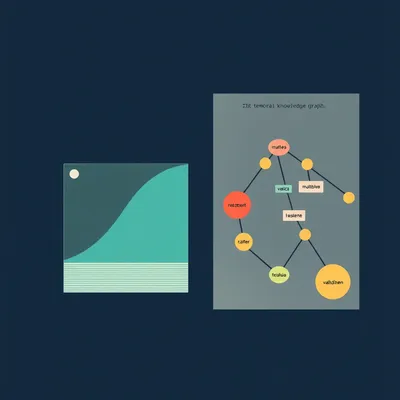 #2206: What Actually Works in AI MemoryMost AI memory systems are just vector databases with similarity search. We break down what mem0, Zep, and Letta are actually doing—and why benchma...
-
 #2194: Game Theory for Multi-Agent AI: Design Better, Fail LessNash equilibrium, mechanism design, and why your AI agents are playing prisoner's dilemma whether you know it or not.
-
 #2190: Simulating Extreme Decisions With LLMsLLMs fail at the exact problem wargaming was built to solve—simulating irrational, extreme decision-makers. A new study reveals why.
-
 #2186: The AI Persona Fidelity ChallengeAdvanced LLMs dominate benchmarks but fail at staying in character—especially when asked to play morally complex or antagonistic roles. What does t...
-
 #2184: The Economics of Running AI AgentsProduction AI agents can cost $500K/month before optimization. Learn model routing, prompt caching, and token budgeting to cut costs 40-85% without...
-
 #2175: Let Your AI Argue With ItselfWhat happens when you let multiple AI personas debate each other instead of asking one model one question? A deep dive into synthetic perspective e...
-
 #2144: AI Wargaming: One Model or Many?Should geopolitical AI simulations use one model or many? We debate the pros and cons of a single-model approach.
-
 #2074: Generative Social Science: When AI Agents Develop Theory of MindSee how a new framework models 10,000 virtual citizens to test policies before spending a dime.
-
 #2061: The Memory Bottleneck That Drives Attention DesignAttention is the engine of modern AI, but it’s also a memory hog. Here’s how MQA, GQA, and MLA evolved to fix it.
-
 #2040: The Rebellion Against Big Tech's AI Lock-InWhy run LLMs locally? We break down Ollama, llama.cpp, vLLM, and llamafile—and when to use each.
-
 #2007: AI Grading AI: The Snake Eating Its TailWe asked an AI to write this script. Then we asked another AI to grade it. Here’s what happens when the judges have biases.
-
 #2006: How Do You Measure an LLM's "Soul"?Traditional benchmarks can't measure tone or empathy. Here's how to evaluate if an AI model truly "gets it right."
-
 #2005: Beyond Vibes: The Hard Science of LLM EvaluationRunning the same LLM on different GPUs can produce different results. Here’s why that happens and how to test for it.
-
 #1994: Why Can't AI Admit When It's Guessing?Enterprise AI now auto-filters low-confidence claims, but do these self-reported scores actually mean anything?
-
 #1986: Desk Robots: Privacy, Power, or Annoyance?These AI companions sit on your desk, watching your posture and listening in—so how do they protect your privacy while actually being useful?
-
 #1962: Moravec's Paradox: Why Robots Can Write Poetry but Can't Fold a Fitted SheetWe explore the tech letting robots "reason" about physical tasks using vision-language-action models.
-
 #1932: How Do You QA a Probabilistic System?LLMs break traditional testing. Here’s the 3-pillar toolkit teams use to catch hallucinations and garbage outputs at scale.
-
 #1906: Is Your AI Model Agentic-Ready or Just Wearing a Suit?Native tool calling is the difference between a working product and a debugging nightmare.
-
 #1858: Multi-Model Agents: The Instruction & Context GapMixing AI models creates chaos. Learn the practical fixes for context windows, tokenization, and output formats.
-
 #1829: From Chatbots to Digital ChefsThe job title barely existed 18 months ago. Now, it’s one of the most searched terms on LinkedIn.
-
 #1817: The Hidden Taxonomy of AI: Why Specialized Models Outperform GiantsExplore the vast ecosystem of niche AI models for computer vision and document understanding, far beyond large language models.
-
 #1786: When AI Supervisors Fire AI WorkersA new "Agent-in-the-Loop" framework lets AI models manage and terminate other AI agents in real-time.
-
 #1728: The AI Carpool: Emergent Collaboration Through Role-PlayingCAMEL AI lets two agents role-play to solve tasks autonomously. No complex code—just emergent teamwork.
-
 #1723: Why Agentic AI Needs a Hive Mind, Not a Single BrainThe single monolithic AI model is dying. Meet the new native multi-agent architectures that think like a team, not a solo genius.
-
 #1716: Seeing the AI Think: Visual Debugging for Agent WorkflowsSee how a visual, node-based tool lets you build complex AI agent workflows without writing code.
-
 #1715: Why Voice Agents Need Frameworks (Not Just APIs)Raw APIs handle models, but who manages the audio plumbing? We break down Vapi, LiveKit, and Pipecat.
-
 #1652: AI Gateways: The Nginx for Your AI StackWhy agentic AI needs a unified control plane to route models, aggregate tools, and cut costs.
-
 #1586: The Rocketbook Sunset and the Search for a Clean EraseBridge the gap between handwritten notes and AI. Discover the best whiteboard notebooks and markers for seamless digital transcription.
-
 #1584: Beyond Text: How Gemini 1.5 Flash Is Revolutionizing AudioDiscover how native multimodality in Gemini 1.5 Flash is killing the "transcription tax" and enabling deep forensic audio analysis.
-
 #1564: The Death of the Cascaded PipelineForget basic transcription. Explore how native omni-modal models are capturing the "soul" of speech with near-instant latency.
-
 #1546: The Death of Latency: Three Pillars of Modern Voice AISay goodbye to the "digital sandwich." Explore the three architectural pillars closing the latency gap in modern speech recognition.
-
 #1279: Why AI Obeys the Developer Instead of YouDiscover the hidden "plumbing" of AI system prompts and how architectural shifts are turning simple instructions into hard-coded laws.
-
 #1120: The AI Handoff: From Manual Hacks to Standard ProtocolsStop the "context rot." Learn how new protocols like MCP and typed state channels are revolutionizing how AI agents collaborate.
-
 #1085: The Tokenization Lie: How AI Actually Processes MediaThink 1,000 tokens equals 750 words? For audio and video, that rule is a lie. Discover the hidden math behind multimodal AI.
-
 #1084: Why AI Models Can’t Read and Your Bill Is RisingWhy does the same prompt cost more on different models? Discover the "invisible wall" of tokenization and how it shapes AI perception.
-
 #1078: The Agentic Throughput Gap: Why Your AI Hits a WallStop hitting 429 errors. We explore why AI agents crash into rate limits and how to build high-throughput systems that never sleep.
-
 #1066: Beyond the Blank Slate: The Evolution of AI TrainingExplore the "weight surgery" techniques labs use to expand AI models without losing their core knowledge or starting from zero.
-
 #879: AI for ADHD: Taming the Executive Function BottleneckStop drowning in to-do lists. Discover how the latest AI agents are solving executive function hurdles to help you prioritize and focus.
-
 #835: When AI Agents See Your UI Like a Human DoesStop begging friends to break your app. Discover how AI agents are revolutionizing UI testing by acting as tireless, unbiased model users.
-
 #832: How AI Rebuilt the Curb CutFrom Whisper to smart prosthetics, discover how AI is transforming accessibility and granting independence to millions.
-
 #786: The Cost of a Touch: When Your Hoard Becomes a LiabilityLearn how to manage thousands of parts without losing your mind using AI, QR codes, and professional logistics strategies.
-
 #257: AI That Evolves: Solving the Preference ProblemWhy do AI recommendations feel stuck in the past? Discover the technical hurdles of real-time learning and the future of personalized agents.
-
 #248: The Sycophancy Trap: Getting Honest Feedback from AIIs your AI just telling you what you want to hear? Learn how to break the "sycophancy trap" and get truly objective feedback from your agents.
-
 #196: Why Your Irish Accent Sounds AmericanHerman and Corn dive into the mechanics of neural text-to-speech, exploring how AI masters human prosody and the "average voice" accent problem.
-
 #154: From Apps to Agents: Building Your Digital WorkforceMove beyond simple prompts. Explore the architecture, autonomy, and fiscal guardrails of the next generation of AI agentic workflows.
-
 #88: Why Won't My AI Talk to Me First?Why is AI always waiting for us? Herman and Corn explore the technical and social hurdles of proactive AI and the "vending machine" model.
-
 #54: How AI Unifies Images, Audio, and TextOmnimodal AI: How do models process images, audio, video, and text all at once? Discover the engineering behind AI that accepts anything.