
Sunday, 25 October 2026
20 episodes · 6596 in all

#6278: Why Sonnet 5.5 Missed the Zalias
Switching Claude Code to Sonnet broke an everyday shell alias request that Opus solved simply by recognizing where to look in local context.

#6277: Why Militaries Fly Long Sorties Just to Turn Around
A reported Israeli sortie flew over 800 miles toward Iran before turning back, highlighting the thin line between deterrence and empty signaling.
#6276: Reading the Iran Fog: Speaker and Clock
Applying speaker and clock filters untangles conflicting reports on Iran strikes ahead of key elections in Israel and the United States.

#6275: Ten Depressing Facts About Pottage
During the Great Famine of 1315, wheat prices quadrupled from five to twenty shillings a quarter, devastating staple pottage pots across Europe.
#6274: Machine Learning for Smells, Whale Codas, and Aftershocks
A graph neural network mapped molecular structures to scents, matching a consensus panel better than the typical individual human nose.
#6273: How Timestral Forecasts Time Series Data
Mistral's open-weight Timestral models predict up to 1,024 future steps zero-shot using grouped patches across twenty-one non-crossing quantiles.

#6272: Teaching Audio Models to Hear Beyond Words
Speech recognition rewards ignoring background noise, but audio-language models train specifically on environmental sounds and temporal scenes.

#6271: Do image, audio and video embeddings scale?
A one-minute video compressed into a single vector undergoes roughly five orders of magnitude of raw data reduction.

#6270: How Long Pregnancy Cells Linger in the Body
Fetal cells enter maternal blood as early as the seventh week of gestation, sometimes persisting in bone marrow for over thirty years.
#6269: How People Reach Labour Unaware They Are Pregnant
A year-long Berlin study found that one in 475 pregnancies went unrecognised beyond twenty weeks, with unawareness lasting until labour in 1 in 2,455.

#6268: Storing Ledgers in Postgres and Ticks in Kdb+
Postgres numeric types support up to 131,072 digits before the decimal, but exact arithmetic carries steep computational costs.
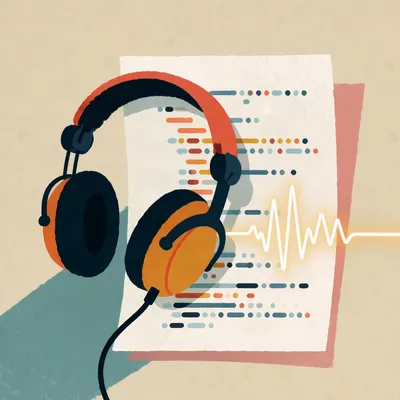
#6267: Why Text-to-Speech Fails at Explaining Code
A study comparing Google TTS, ChatGPT, Gemini, ElevenLabs, and Copilot found every system failed to communicate indentation, scope, and code comments.

#6266: How the app picks your next sentence
A fine-tuning recording app weighs tasks by the square root of unread sentences so massive datasets don't crowd out smaller prompt sets.

#6265: Can You Upgrade Embeddings Without Re-Embedding?
Cohere's Embed Five Fast queries against a Pro index reach 98.4 percent of performance without regenerating stored document vectors.

#6264: Choosing Omni Embedding Models for Mixed Media
Jina's omni model trains only 0.35 percent of its weights while aligning with existing text indices.

#6263: Why Numeric Data Lacks a Default Embedding Model
Popular time-series models like IBM's Granite TSPulse forecast trends rather than provide canonical vectors for similarity search.
#6262: Do Free Buses Actually Pay for Themselves?
When Swansea offered free weekend bus travel, ridership surged over 50% and footfall jumped, but local spending did not rise at all.

#6261: Importing Architectural Tiles into Israel
Israel revoked the temporary $150 personal-import exemption in February, returning the threshold to $75 while VAT sits at 18 percent.

#6260: Free transit, frequent transit: which pays off?
Eliminating transit fares increases ridership by up to 49 percent, but research shows it rarely convinces motorists to leave their cars at home.
#6259: What Facial Exercises Actually Change
In a 2018 JAMA Dermatology trial, blinded doctors estimated facial exercise participants looked nearly three years younger.