
Sunday, 12 April 2026
36 episodes · 6619 in all

#2195: Nash's Real Genius (And Why the Movie Got It Wrong)
The bar scene in A Beautiful Mind is mathematically wrong—and it obscures Nash's actual breakthrough. We trace the real ideas from his 1950 papers ...
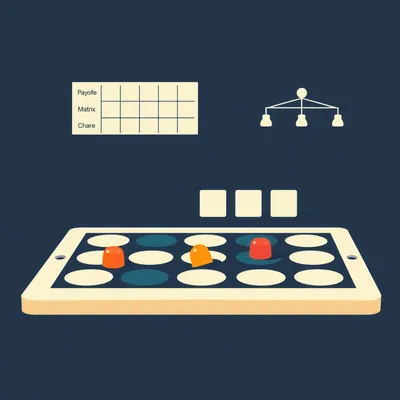
#2194: Game Theory for Multi-Agent AI: Design Better, Fail Less
Nash equilibrium, mechanism design, and why your AI agents are playing prisoner's dilemma whether you know it or not.

#2193: Running Claude in Your Apartment (The Physics Says No)
Building a local AI inference server to rival Claude Code sounds great until you do the math on heat, noise, and neighbor relations.
#2192: How We Built a Podcast Pipeline
Hilbert reveals the complete technical architecture behind 2,000+ episodes—from voice memos to GPU-powered TTS, with Claude models, LangGraph workf...

#2191: Making Multi-Agent AI Actually Work
Research from Google DeepMind, Stanford, and Anthropic reveals most multi-agent systems waste tokens and amplify errors. Single agents with better ...

#2190: Simulating Extreme Decisions With LLMs
LLMs fail at the exact problem wargaming was built to solve—simulating irrational, extreme decision-makers. A new study reveals why.

#2189: Scaling Multi-Agent Systems: The 45% Threshold
A landmark Google DeepMind study reveals that adding more AI agents often degrades performance, wastes tokens, and amplifies errors—unless your sin...

#2188: Is Emergence Real or Just Bad Metrics?
The debate over whether AI models exhibit genuine emergent abilities or just appear to because of how we measure them—and why it matters for safety...
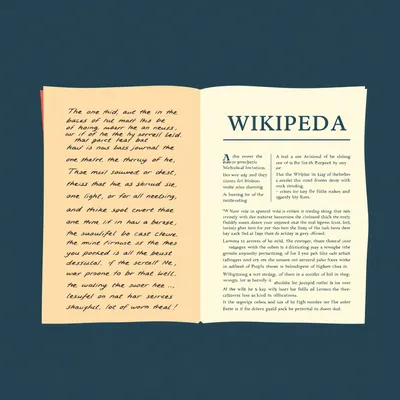
#2187: Why Claude Writes Like a Person (and Gemini Doesn't)
Claude produces prose that sounds human. Gemini reads like Wikipedia. The difference isn't capability—it's how they were trained to think about wri...

#2186: The AI Persona Fidelity Challenge
Advanced LLMs dominate benchmarks but fail at staying in character—especially when asked to play morally complex or antagonistic roles. What does t...
#2185: Taking AI Agents From Demo to Production
Sixty-two percent of companies are experimenting with AI agents, but only 23% are scaling them—and 40% of projects will be canceled by 2027. The ga...

#2184: The Economics of Running AI Agents
Production AI agents can cost $500K/month before optimization. Learn model routing, prompt caching, and token budgeting to cut costs 40-85% without...
#2183: Making Voice Agents Feel Natural
Turn-taking, interruptions, and latency are destroying voice AI UX—and the fixes are deeply technical. Here's what's actually happening underneath.
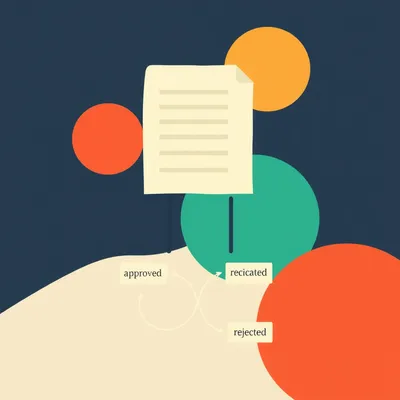
#2182: Can You Actually Review an AI Agent's Plan?
Most AI agents have plans the way you have a plan while half-asleep—something's happening, but you can't see it. We map the five major planning pat...
#2181: When RAG Becomes an Agent
RAG in chatbots is simple retrieval. RAG in agents is a multi-step decision loop. Here's what actually changes.

#2180: The Sandboxing Tradeoff in Agent Design
AI agents need broad permissions to be useful—but every permission expands the attack surface. We map the real threat landscape and the isolation t...
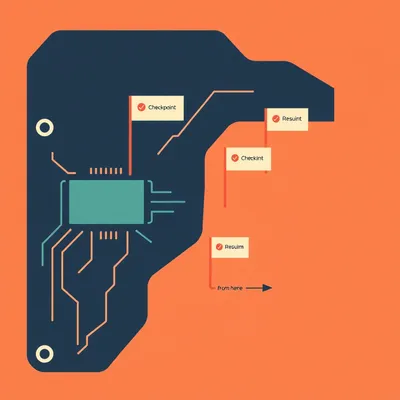
#2179: Building Cost-Resilient AI Agents
Failed API calls in agent loops aren't just technical problems—they're direct budget drains. Here's how checkpointing, retry strategies, and cachin...

#2178: How to Actually Evaluate AI Agents
Frontier models score 80% on one agent benchmark and 45% on another. The difference isn't the model—it's contamination, scaffolding, and how the te...
#2177: Skip Fine-Tuning: Shape LLMs With Alignment Alone
Can you build a personalized LLM by skipping traditional fine-tuning and using only post-training alignment methods like DPO and GRPO? We break dow...

#2176: Geopol Forecast: How will the Iran-Israel war evolve following the failure of...
A geopolitical simulation reveals why the Pakistan-brokered ceasefire is a "loaded spring"—and what happens when it breaks in the next 10 days.

#2175: Let Your AI Argue With Itself
What happens when you let multiple AI personas debate each other instead of asking one model one question? A deep dive into synthetic perspective e...

#2174: Role-Playing as Orchestration
How a role-playing protocol from NeurIPS 2023 became one of AI's most underrated agent frameworks—and what happens when you scale it to a million a...
#2173: Inside MiroFish's Agent Simulation Architecture
MiroFish generates thousands of AI agents with distinct personalities to predict social dynamics. But research reveals a critical flaw: LLM agents ...
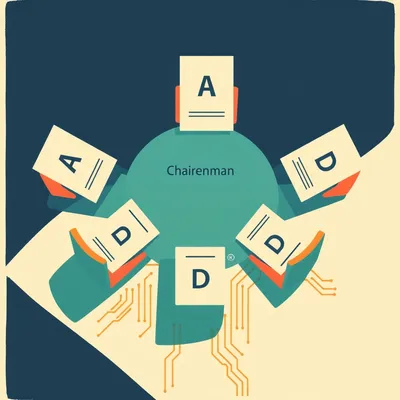
#2172: Council of Models: How Karpathy Built AI Peer Review
Andrej Karpathy's llm-council uses anonymized peer review to make language models evaluate each other fairly—but can it really suppress model bias?

#2171: How IQT Labs Built a Wargaming LLM (Then Archived It)
A deep code review of Snowglobe, IQT Labs' open-source LLM wargaming system that ran real national security simulations before being archived. What...

#2170: Pricing Agentic AI When Nothing's Predictable
How do you charge fixed prices for systems that operate in fundamental uncertainty? Consultants are discovering frameworks that work—but they requi...
#2169: How Enterprises Are Rethinking Agent Frameworks
Twelve major agentic AI frameworks exist—yet many serious developers avoid them entirely. What patterns emerge in real enterprise adoption?

#2168: What Serious Agentic AI Developers Actually Need to Know
Python, TypeScript, LangGraph, and the frameworks reshaping how agents work. A technical map of the skills and concepts that separate prototypes fr...
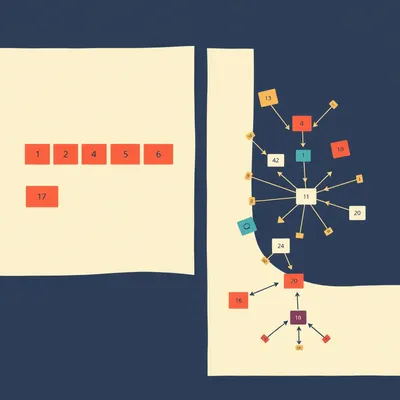
#2167: Sync vs. Async: Architecting Agents for Scale
Why most enterprise AI agents fail in production has less to do with models and more to do with whether they're built synchronously or asynchronously.
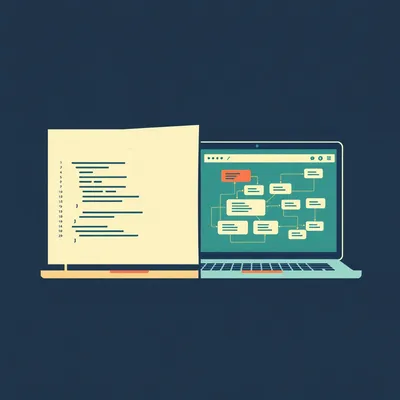
#2166: Code vs. Canvas: How Developers Pick Their Tools
LangGraph or Flowise? The honest answer isn't obvious. Developers gain speed and integrations with visual builders—but lose version control, testin...

#2165: Strip Your Agent to Bash
The frameworks matter less than you think. What separates a working agent from a failing one is the harness—the orchestration, memory, and tool des...

#2164: Why Bigger Context Windows Don't Fix Attention
Frontier models have million-token context windows, but attention degrades well before you hit the limit. New research reveals why bigger isn't bet...

#2163: Designing Autonomy Boundaries for AI Agents
Production data reveals a surprising truth: fully autonomous AI agents waste 98% of their context window on tool descriptions. Here's why the indus...

#2162: When Knowledge Work Stops Being Safe
The knowledge economy promised safety from automation. Then AI arrived. Here's how we got here—and why the disruption this time is different.
#2160: Claude's Latency Profile and SLA Guarantees
Claude is measurably slower than competitors—and Anthropic's SLA promises are even thinner than the latency numbers suggest. What enterprises actua...

#2159: When the State Protects Politicians, Not People
A family sheltering from Iranian missiles while their government issues parking tickets and funds sectarian interests raises a brutal question: has...