
Saturday, 4 April 2026
52 episodes · 6622 in all

#2021: Your Frozen AI Is Getting Smarter (Here's How)
Your AI model might be static, but the system around it can make it learn in real-time.

#2020: 1,000 AI Agents Built a Religion in Minecraft
An experiment drops 1,000 autonomous agents into Minecraft, and they spontaneously invent religion, democracy, and taxes.

#2019: Local AI vs Cloud AI: The Agent Identity Crisis
Your desktop is becoming a life support system for AI agents. We explore the sharp trade-offs between local-first and cloud-native architectures.
#2018: When Micro Frontends Actually Make Sense
The frontend monolith is a nightmare of coordination. Micro frontends promise autonomy, but is the operational complexity worth the cost?

#2017: The Art of Squeezing AI Models onto Your GPU
Those cryptic letters on Hugging Face actually map how much brain power you trade for speed.

#2016: Andrej Karpathy: The Bob Ross of Deep Learning
Why the most influential AI mind prefers a blank text file to proprietary black boxes.

#2015: The Think Tanks Writing AI's Rulebook
As the EU AI Act takes hold, we spotlight the key think tanks shaping global AI policy, safety, and ethics.

#2014: Coding Tools Are Secretly System Agents
They call it a coding assistant, but real users are treating it like a personal operating system.
#2013: Non-Coders Are Hijacking the Terminal
Why finance analysts and researchers are ditching GUIs for command-line AI tools like Claude Code.

#2012: Pixels vs Protocols: The Computer Use Showdown
Is visual AI a bridge or the future? We debate the efficiency and longevity of "Computer Use" agents versus API-first automation.

#2011: Saving AI Knowledge Beyond the Chat Window
We're brilliant at prompting AI, but terrible at saving the answers. Here's why that "digital masterpiece on a chalkboard" vanishes.
#2010: Building Better AI Memory Systems
We obsess over AI inputs but treat outputs like Snapchat messages. Here's why that's a massive blind spot.
#2009: The Plumbing of AI Safety: Guardrails, Not Vibes
We dive deep into the specific libraries, proxy layers, and architectural decisions that keep an LLM from emptying a bank account.

#2008: Needle-in-a-Haystack Testing for LLMs
New AI models claim to be genius-level, but can they actually find a specific fact in a massive document?

#2007: AI Grading AI: The Snake Eating Its Tail
We asked an AI to write this script. Then we asked another AI to grade it. Here’s what happens when the judges have biases.

#2006: How Do You Measure an LLM's "Soul"?
Traditional benchmarks can't measure tone or empathy. Here's how to evaluate if an AI model truly "gets it right."

#2005: Beyond Vibes: The Hard Science of LLM Evaluation
Running the same LLM on different GPUs can produce different results. Here’s why that happens and how to test for it.

#2004: The AI Control Plane Is Here (But Is It Safe?)
Your LLM, tools, and costs are scattered across dashboards. Here’s how a unified AI control plane fixes the chaos.

#2003: The Velocity Paradox: Why Faster Code Means Slower Ships
Agentic coding tools let you build features in minutes, but they also make it easy to build the wrong thing.

#2002: Brainstorming a Stable-by-Design Smart Home
We explore why Home Assistant is so fragile and brainstorm a stable-by-design future for the platform.
#2001: Stop Writing "It Feels Slow" Tickets
The "Golden Trio" of bug reports, why Jira is a tax, and how AI capture tools are changing the game.
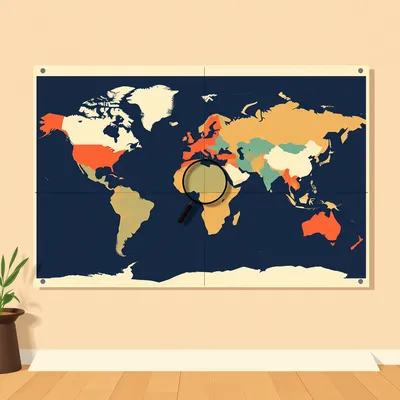
#2000: Why Intelligence Agencies Slice the World into Desks
How the CIA and State Dept slice 195 countries into bureaucratic boxes—and why that creates dangerous seams.

#1999: Why Anti-Zionist Jews Live in Jerusalem
They reject Israel’s existence on religious grounds, yet live in its heart. Discover the theology of the Three Oaths.

#1998: Why Your Brain Lies About Where the Bomb Is
Why your eyes and ears lie to you during missile strikes—and how to count seconds to find the real danger.
#1997: The Long Peace Is Over (Or Is It?)
The data says we’re living in the most peaceful era ever, but it sure doesn’t feel like it.

#1996: Why Leaders Broadcast Victory While Citizens Hear Sirens
A gap opens between official statements and reality, as curated videos clash with live data streams.

#1995: The Human Curriculum Machine
The current education standard isn't neutral—it's a political machine.

#1994: Why Can't AI Admit When It's Guessing?
Enterprise AI now auto-filters low-confidence claims, but do these self-reported scores actually mean anything?

#1993: Hiding the Kitchen: Why AI Shouldn't Show Its Work
Why single-model chatbots fail at complex tasks—and how multi-agent swarms solve it.
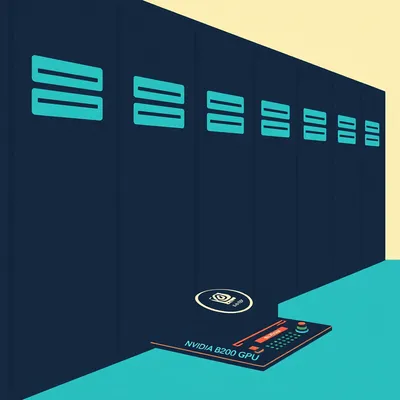
#1992: The Sovereign Compute Shift: Owning vs. Renting AI Iron
Israel is building a sovereign AI supercomputer with 4,000 Nvidia B200 GPUs to keep startups local.

#1991: Why 20 Clean Qubits Beat 1000 Noisy Ones
Israel just unveiled its first 20-qubit superconducting quantum computer, and it's not about size—it's about precision and control.

#1990: Education’s Robot Problem: Standardization vs. Self-Direction
AI is forcing a clash between rigid curricula and self-directed learning. We explore the middle ground.

#1989: Your Cloud Photos Vanish If You Miss a $5 Bill
Is your data safe in the cloud, or is it one missed payment away from oblivion?

#1988: The Eternal Storage That Can't Escape the Lab
Quartz glass promises 10,000-year data storage, but can it scale before 180 zettabytes make it obsolete?

#1987: Can You Ever Quit Your Personal AI?
Your AI knows your workflow, but can you ever leave? We explore the lock-in risks of personal AI agents.
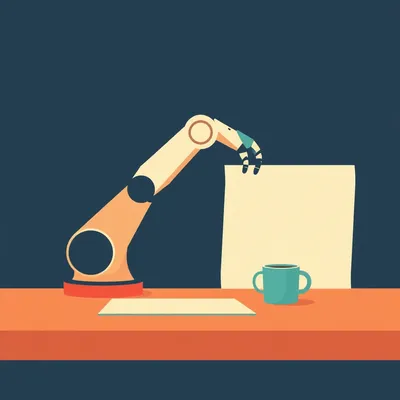
#1986: Desk Robots: Privacy, Power, or Annoyance?
These AI companions sit on your desk, watching your posture and listening in—so how do they protect your privacy while actually being useful?

#1985: AI Tutors vs. Human Error: Who Do You Trust?
AI gets flak for hallucinations, but humans misremember 40% of facts. Why the double standard?

#1984: The Suspicion Gap: When Fluency Breeds Distrust
Why fluency in Arabic can make you a suspect in the Israeli-Palestinian conflict.
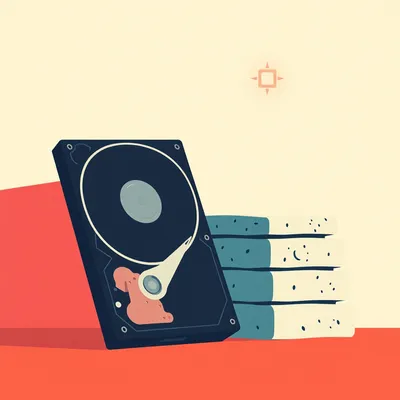
#1983: Why Your Digital Photos Are Slowly Disappearing
Physical paper from the 1700s is more durable than a Word doc from 1994. Here's why digital data is fragile and how archivists fight bit rot.

#1982: The Impossible Task of Controlling a Living Language
How a government board tries to standardize Hebrew while the public invents words on the fly.
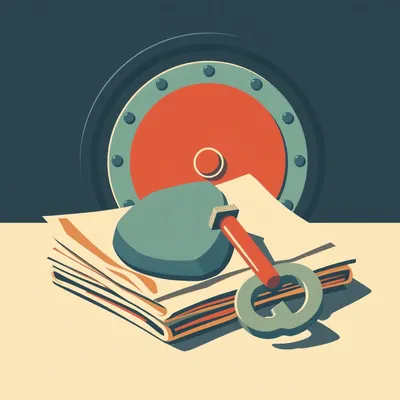
#1981: The Brutal Triage of Saving Art in a War Zone
From bomb-proof vaults to empty frames, discover the high-stakes logistics of saving history under fire.

#1980: Why Ancient History Is So Violent: The "Juicy Bits" Bias
We think the ancient world was a non-stop slasher flick, but is that because the boring, peaceful parts just didn’t survive?
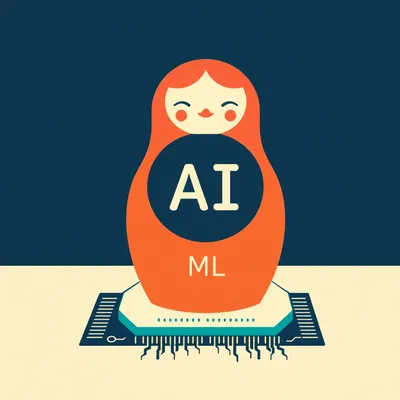
#1979: When Marketing Swallows the Tech
Is AI the same as Machine Learning? We break down the nested hierarchy of artificial intelligence, from symbolic logic to neural networks.
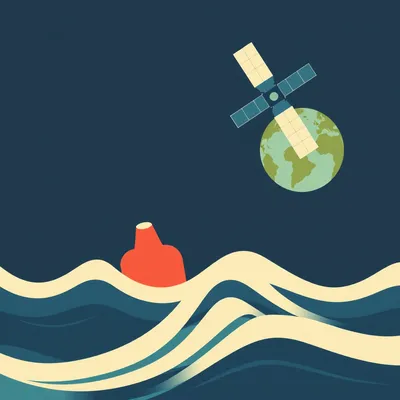
#1978: The Ingenious Fail-Safe Engineering of Emergency Beacons
From 98% false alarms to pinpoint rescue: how a tiny plastic device saves lives across oceans and mountains.
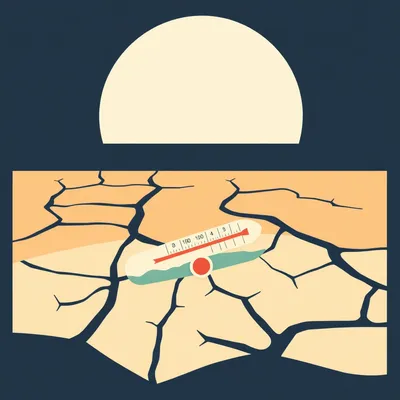
#1977: Why Earth Can't Hit 60°C
Death Valley hit 53.9°C, but the planet seems stuck. Here’s the physics behind Earth’s natural heat ceiling and the biological danger zone.

#1976: What Counts as a City That Never Dies?
From Jericho's water spring to Aleppo's Silk Road fortress, discover the secrets of 11,000 years of urban survival.

#1975: The Global Choreography of Weather Balloons
Why we still launch 1,000 balloons daily into the stratosphere—and why satellites can't replace them.

#1974: When Ancient Borders Refuse to Stay Still
Using satellite maps and ancient texts, we trace the shifting boundaries of the biblical Land of Israel from the River of Egypt to the Euphrates.
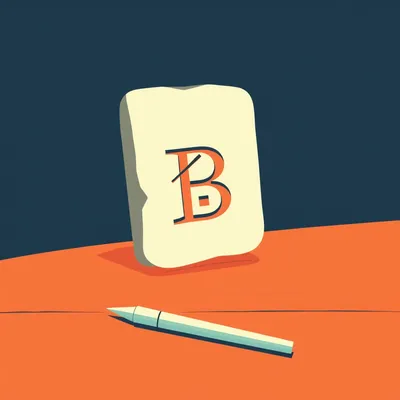
#1973: How Trade Necessity Invented the Alphabet
Forget Sunday school villains—Canaanites invented the alphabet and built the foundation of the modern world.

#1972: When a Dialect Gets an Army
How do languages split apart? We trace Latin's evolution into French, Spanish, and Italian to reveal the forces of geography and politics.

#1971: Vyvanse, Asthma, and the Fight-or-Flight Lungs
Why a stimulant meant for focus can also open your airways—and the risks of mixing it with rescue inhalers.
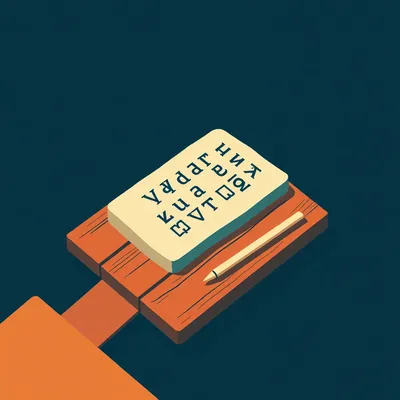
#1970: How 3,300-Year-Old Sailors Built the Alphabet
The letters on your screen trace back to an ancient maritime empire. Discover how Phoenician traders engineered the first alphabet.