
Science and Nature
Natural and formal sciences: physics, chemistry, biology, earth science, and mathematics.

#2526: How Peer Review Actually Works (and Fails)
The history of peer review, the Lancet's biggest scandals, and why arXiv is changing everything.

#2525: Who Actually Reads Academic Journals?
Half of all papers are read by nobody but the author and reviewers. So why do 300,000 journals exist?

#2524: The Myth of the Inner Monologue
Most people don't have a constant inner monologue. Discover the five surprising ways your mind actually works.
#2523: The OECD’s Quiet Power Over Environmental Data
How a “rich country club” became the world’s most reliable source for environmental data—and why that matters.

#2522: How Science Bridges Hostile Borders
Ireland, Slovenia, and Spain push to exclude Israel from Horizon Europe—while history shows science cooperation works across enemy lines.

#2516: Overfitting Is Not a Binary Condition
Overfitting isn't binary. Learn the real triggers, the bias-variance tradeoff, and modern techniques to prevent it.
#2513: Are Your Thoughts Lying to You?
The science of automatic thoughts, cognitive distortions, and whether you can actually learn to control your thinking for a happier life.
#2509: How Shabbat Reveals a Blind Spot in Air Quality Indexes
Jerusalem's Shabbat cuts traffic pollution 4x more than Western weekends—but standard air quality indexes barely register the change.
#2497: Tracing One Python Print Through 6 Abstraction Layers
What actually happens when you print "Hello" in Python? Six layers, 562 system calls, and a hardware-enforced kernel boundary.
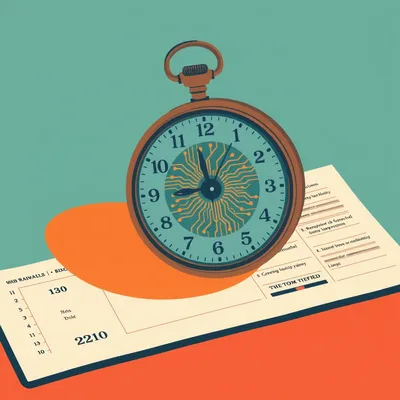
#2450: The Time Zone King and the Database That Runs the World
How a missed train led to global time zones, why DST exists for bug hunting, and the volunteer database that keeps the internet on time.

#2437: The False Precision of GPS Coordinates
Why 8 decimal places of GPS data is mostly noise, and how tectonic plates move faster than your coordinate system updates.
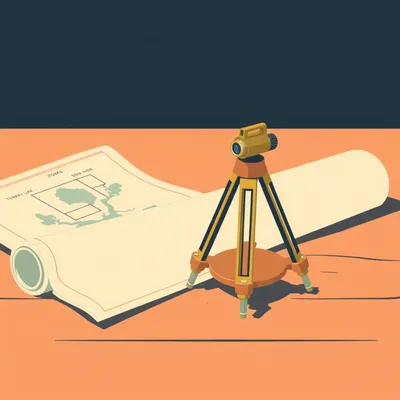
#2436: The One-in-Ten-Thousand Design Constraint
How survey-grade precision and Python tools shape local map projections — and the silent failures that break your analysis.

#2427: The Art of the Non-Productive Day: A Sloth's Guide
A deliberate, hour-by-hour template for guilt-free laziness, backed by neuroscience and sloth wisdom.
#2419: Methylation vs. IEMs: Untangling the Confusion
Methylation isn't a health dial. Learn how it actually works in the body vs. rare genetic IEMs.

#2416: Ghost Murmur: Heartbeat Detection or Disinformation?
Did the CIA locate an airman by his heartbeat from 40 miles away? We examine the physics and the story.
#2415: Autism Numbers vs. the Noise
What the data actually says about global autism rates, diagnostic history, and why the numbers keep changing.
#2405: LLM Benchmarks Are Full of Noise: Statistical Rigor in AI Evals
Why most benchmark claims in AI are statistically indefensible — and what to do about it.
#2402: Geospatial Gold Rush: Who's Hiring Satellite Sleuths?
From crop health to cargo routes, discover which industries are paying top dollar for geospatial analysis skills—and the tools they use daily.

#2379: The Geological Lottery: Why Oil Is So Unevenly Distributed
Discover how oil forms, why it’s concentrated in a few regions, and whether we’ve found it all.
#2364: The $1000 Military Clock You Can Build for $30
Learn how to build a precise dual-timezone clock using an ESP32 microcontroller, LCD displays, and USB-C power.